How to Grow and Dry Your Own BBQ-Ready Herb Blends at Home
Grow rosemary, thyme, and oregano in your garden-they’re rich in aromatic oils and handle high heat beautifully. Harvest mid-morning for peak oil content, then air-dry low-moisture herbs in a dark, ventilated spot for 5–7 days. Once brittle, strip leaves and blend with garlic powder, smoked paprika, and a touch of chili flake. Store in airtight jars away from light to preserve potency. This method guarantees bold, balanced flavor that enhances grilled meats and veggies without overpowering them-discover how to fine-tune blends for each dish next.
Notable Insights
- Grow hardy herbs like rosemary, thyme, oregano, sage, and marjoram for heat-resistant, aromatic BBQ blends.
- Harvest herbs mid-morning after dew dries to capture peak essential oil content for maximum flavor.
- Air-dry low-moisture herbs like rosemary and thyme in a dark, ventilated space for 5–7 days.
- Use oven or dehydrator drying for high-moisture herbs like basil to preserve potency and prevent spoilage.
- Store dried herb blends in airtight, labeled jars away from light and heat for up to 60 days.
Pick the Right Herbs for a Smoky BBQ Blend
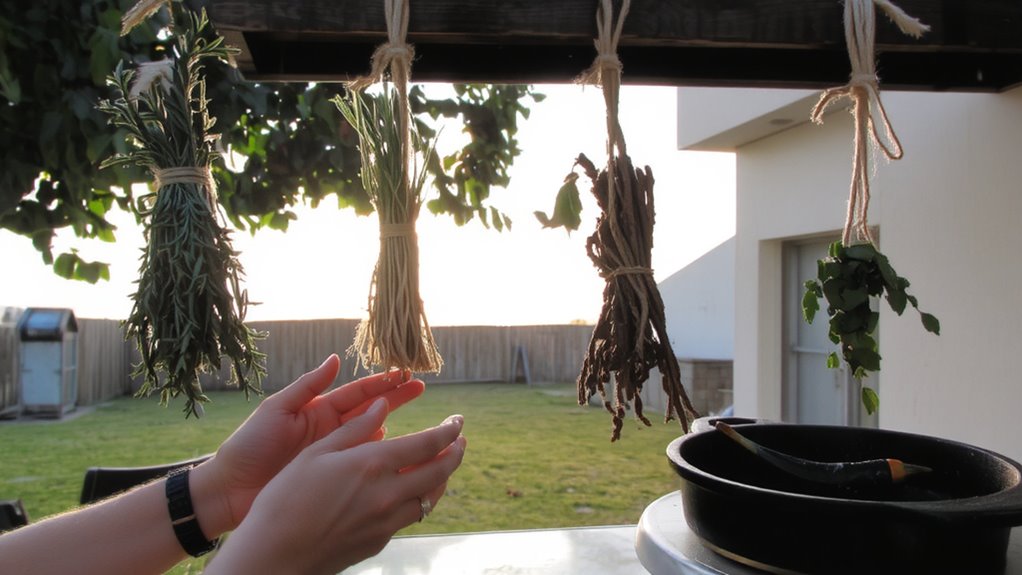
While some herbs fade under high heat, choosing the right ones guarantees your BBQ blend holds up and deepens in flavor when grilled. You’ll want rosemary and thyme-they’re tough, resinous, and packed with aromatic oils that survive intense heat. These dried herbs don’t just endure grilling; they thrive, releasing a rich, woodsy depth that mirrors the smoke itself. Oregano, marjoram, and sage also stand strong, making them essential in any balanced mix of herbs and spices. Unlike soft-leaved herbs like basil or parsley, which turn bland after drying, these hardy varieties retain potency for months. When blended, they form a robust foundation that enhances grilled meats and charred vegetables without overpowering. You’ll notice the flavor evolves as it cooks, gaining complexity. For best results, pair them with dehydrated garlic, chili seeds, and dried lemon zest to build a blend that’s smoky, bright, and deeply layered-perfect for your next cookout.
Dry Fresh Herbs for Maximum Potency
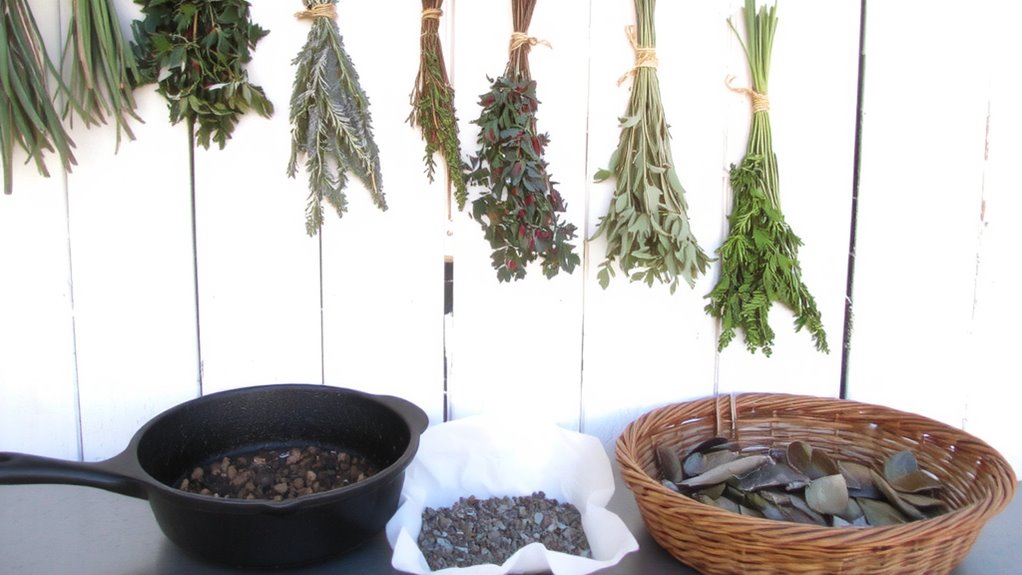
Since timing and technique directly impact potency, harvesting your herbs at mid-morning-after the dew’s gone but before the sun peaks-ensures you capture the highest concentration of essential oils. To dry herbs properly, choose the right method based on moisture content. Low-moisture herbs like rosemary, oregano, and thyme respond best to air drying; hang them upside down in a dark, dry, well-ventilated space for 5–7 days until the leaves snap easily. High-moisture herbs such as basil and mint need faster drying-use an oven at 120–170°F or a dehydrator at 95°F for 4 to 8 hours. You’ll know herbs are dry when stems feel brittle. Properly dried herb material preserves volatile oils critical for potent spice blends. Store your dry herbs in airtight glass jars away from light and heat, using them within 1–2 months for peak flavor in your BBQ-ready blends.
Mix Your Signature BBQ Spice Blend
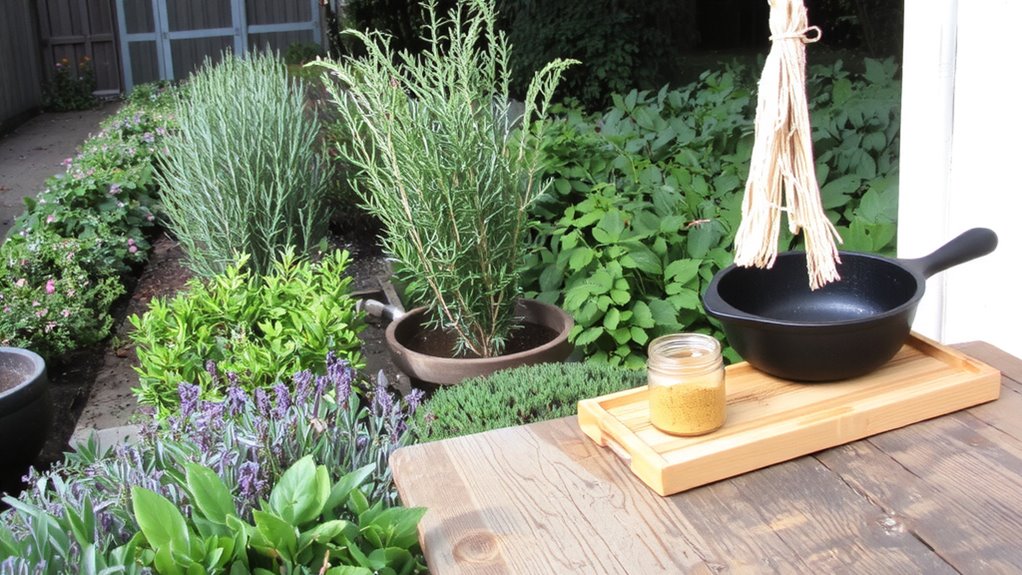
Once you’ve dried your herbs to preserve their essential oils, you’re ready to build a BBQ spice realistic that delivers both flavor and balance on the grill. Start with a base of dried herb proportions: combine 2 parts dried oregano, 2 parts rubbed sage, 1 part dried thyme, plus equal parts garlic and onion powder. This homemade spice foundation is earthy and aromatic, letting herbs like basil add subtle layers when included. For depth, mix in 1 tablespoon of smoked paprika per ½ cup of blend-its rich, campfire-like essence mimics slow-smoked BBQ perfectly. Add 1 teaspoon of crushed red pepper flakes per ¼ cup to introduce mild heat that complements, not dominates. Finish with 1 teaspoon of finely ground rosemary per ¼ cup; its sharp, pine-like notes hold up under high heat. This spice blend performs consistently across meats and veggies, enhancing rather than masking. A well-balanced mix guarantees every bite tastes intentional and genuinely homemade. For added convenience, pair your homemade blend with one of the top-rated outdoor pizza ovens to create a full-flavored, wood-fired grilling experience in your backyard.
Store and Use Your Homemade Seasoning
To keep your homemade seasoning performing at its best, store it in an airtight container away from light and heat-this isn’t just convenient, it’s essential for preserving the volatile oils that give herbs their punch. Using fresh herbs from your own herb garden guarantees maximum flavor, but once dried, spices and herbs degrade faster if exposed to moisture or sunlight. Label each jar with the blend name and date, since potency declines after about 60 days. Keep the container in a cool, dark cabinet, nowhere near the stove, to maintain aromatic integrity. For use, apply 1 tablespoon of rub per pound of meat or veggies, adjusting to taste. You can also create a quick marinade by blending 2 tablespoons of your mix with ½ cup olive oil and lemon juice-ideal for chicken, beef, or grilled vegetables. For best results, consider pairing your homemade blends with Top Seasoning Picks to compare flavor profiles and enhance your culinary creations.
Customize for Beef, Chicken, or Veggies
What makes one herb blend perfect for a juicy ribeye while another shines on a grilled zucchini? It’s all about pairing intensity with ingredients. For beef, go bold-combine garlic powder, smoked paprika, and coarsely ground pepper to stand up to high-heat searing and rich fat. These spices add depth and a smoky kick that enhances without overwhelming. Chicken, though, needs balance. Stick to milder herbs and let garlic powder and a touch of smoked paprika support, not dominate. When seasoning veggies, opt for aromatic finesse: dried oregano, crushed rosemary, and basil bring out natural sweetness without bitterness. A light hand with crushed rosemary prevents piney sharpness, while a pinch of smoked paprika adds subtle complexity. Tailor heat levels accordingly-scale back cayenne for veggies, amp it up for meat. Matching your blend to the protein or plant guarantees every bite hits right.
Use Herbs at Their Best: Grow, Dry, or Buy
You’ve matched your herb blend to the protein or vegetable, but now the quality of those herbs makes all the difference-whether you grow them yourself, dry them properly, or choose trusted store-bought options. If you grow your own, harvest mid-morning after the dew’s gone but before peak sun to preserve essential oils. Tough herbs like rosemary, thyme, oregano, and sage dry well and keep flavor, while soft ones like basil and parsley lose potency fast-use them quickly. In humid areas, you’ll need an oven at 120–170°F or a dehydrator, tossing herbs every 30 minutes to dry evenly over 2–4 hours. For BBQ rubs, a mix of dried thyme, oregano, marjoram, garlic, onion powder, and toasted seeds works best. Store your herb blends in airtight jars away from heat and light, and use within 1–2 months-freshness makes the flavor pop.
On a final note
You’ve got the tools to grow, dry, and blend herbs that elevate your BBQ with real flavor. Store-bought mixes often lack freshness and customization, while your homemade version delivers stronger aroma and tailored taste. Properly dried herbs retain essential oils, boosting potency. Whether seasoning beef, chicken, or veggies, your blend performs better because you control the quality. It’s practical, cost-effective, and enhances outdoor cooking with authentic, consistent results.