How to Properly Use and Maintain a Digital Thermostat in a Smoker
Place your thermostat probe near the meat, not the flame or smoker walls, to avoid false readings. Calibrate it monthly using a reference thermometer and adjust the offset if needed. Clean the probe and vents after each use to prevent grease buildup and guarantee proper airflow. Use alerts with smart delays to reduce temperature swings. Update firmware yearly for peak performance. You’ll get more reliability and control the more you fine-tune these habits.
Notable Insights
- Position the probe near the meat, away from direct flame or smoker walls for accurate ambient temperature readings.
- Calibrate the thermostat sensor monthly using a reference thermometer at 225°F to ensure readings stay within ±2°F.
- Clean the probe after each use with a soft cloth to prevent grease and carbon buildup that affects accuracy.
- Clear air vents regularly of ash and grease to maintain proper airflow and combustion efficiency.
- Enable temperature alerts with 1–5 minute delays to reduce swings and respond promptly to deviations.
Set Up for Steady Smoking Temps
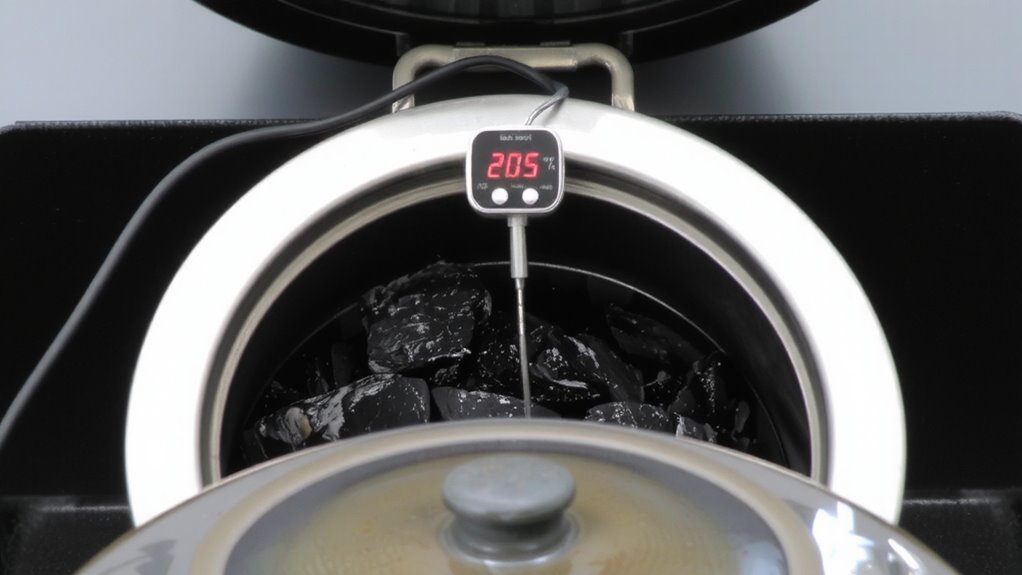
A solid setup starts with proper placement-keep the digital thermostat probe away from direct flame and position it near the meat, not near the smoker’s walls, where temperatures can skew high. You’re aiming for accurate readings, and that means mimicking the environment your food experiences. Proper probe placement boosts temperature stability, preventing wild swings that compromise texture and don’t just annoy you-they waste fuel. When the thermostat reacts to false highs or lows, it triggers unnecessary burner cycles, hurting fuel efficiency. Positioning it right means the system maintains a consistent thermal environment with fewer corrections. Most digital thermostats perform best when they read ambient air close to the cooking zone, not heat radiating off steel surfaces. You’ll see tighter control, better smoke circulation, and more predictable cook times. Think of it as tuning a climate-controlled room, not just firing up a box. Smart setup lays the foundation for reliable, efficient smoking every time.
Calibrate Your Thermostat’s Sensor Monthly
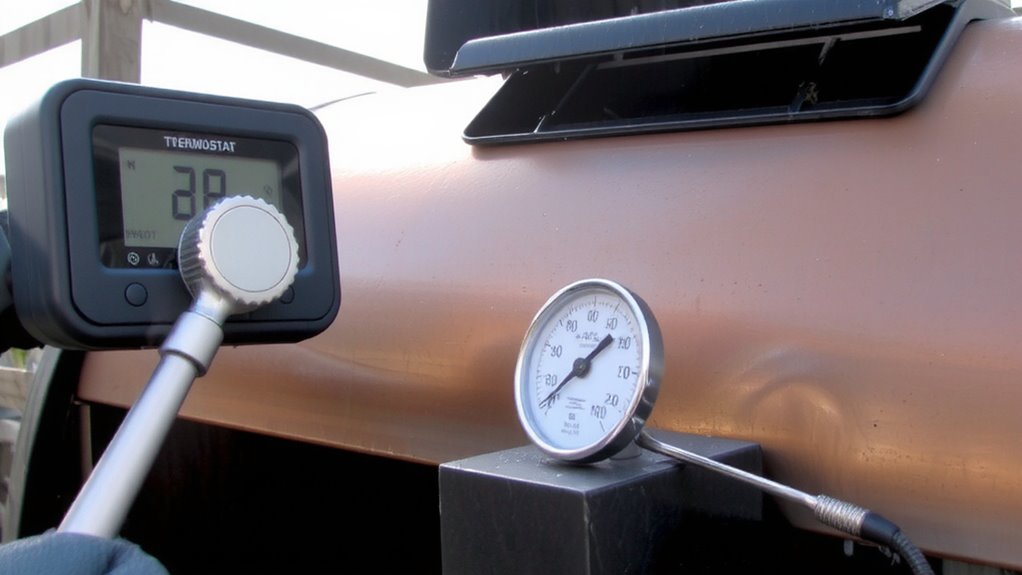
You should calibrate your thermostat’s sensor monthly to guarantee it’s delivering accurate readings, because even high-end digital thermostats can drift over time due to exposure to heat cycles, moisture, and temperature extremes. Maintaining sensor accuracy isn’t just cautious-it’s essential for consistent smoking results. Without reliable feedback, your smoker could run hotter or cooler than intended, ruining delicate meats. Monthly testing takes little time but pays off in precision, especially when chasing competition-level consistency. Use a verified reference thermometer in a water or oil bath to compare readings at common smoking temps like 225°F or 250°F. Any deviation beyond ±2°F means you should adjust the thermostat’s offset if available. This small maintenance habit secures your setup performs like a true temperature-regulated system, not just a guess-based rig. Over seasons of heavy use, consistent calibration preserves both sensor accuracy and your reputation for well-smoked BBQ. For added convenience, consider using a wireless meat thermometer to monitor multiple temperatures remotely without opening the smoker.
Clean the Probe and Vents After Every Use
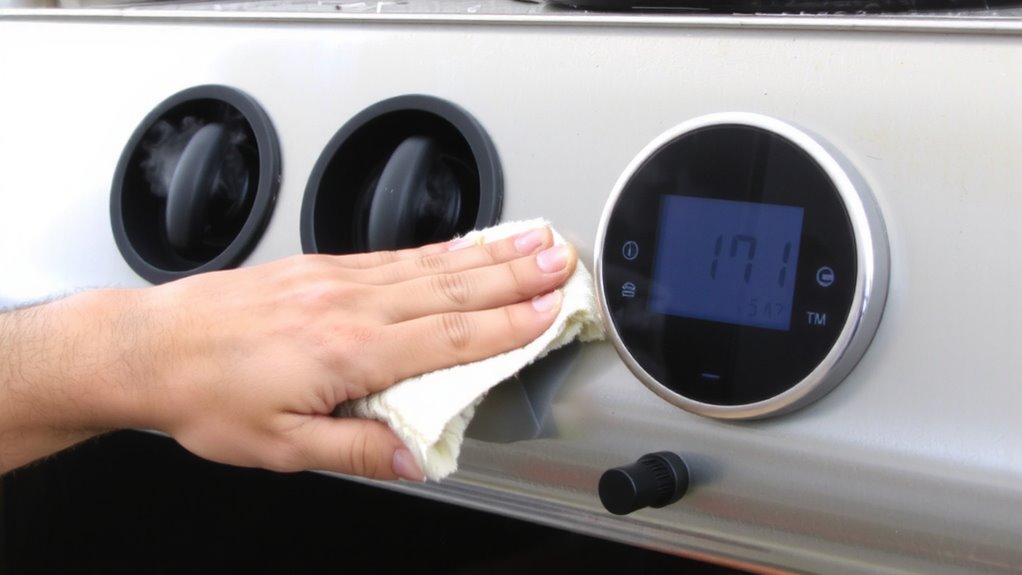
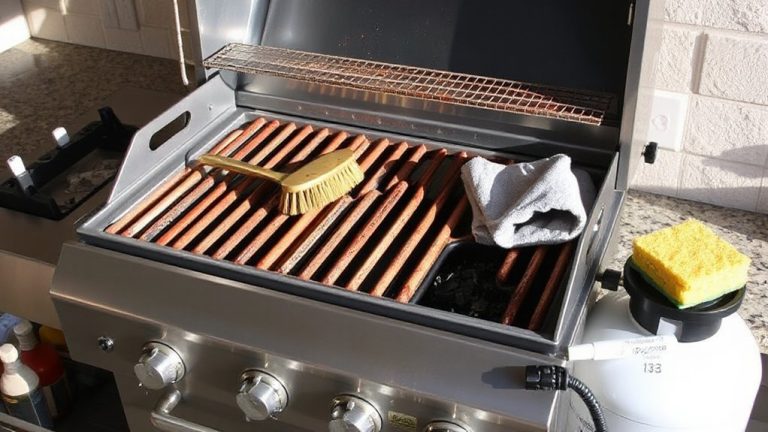
After every smoke, take a few minutes to wipe down the temperature probe and clear debris from the air vents-this simple habit keeps your digital thermostat responding quickly and accurately. Good probe hygiene prevents grease and carbon buildup from skewing readings, which can lead to undercooked or overcooked meat. Use a soft cloth and mild cleaner, avoiding abrasives that might damage the sensor. For vent inspection, check for ash, grease, or obstructions that could restrict airflow and disrupt temperature consistency. Proper airflow guarantees efficient combustion and stable conditions inside the smoker. Neglecting these steps might seem minor, but over time, grime accumulation degrades performance and shortens the thermostat’s lifespan. Consistent cleaning isn’t just upkeep-it’s essential maintenance that supports precision and reliability. Treat it like part of your cooldown routine, and you’ll get better results with every cook.
Use Alerts to Prevent Temp Swings
Keeping your smoker’s temperature steady isn’t just about setting it and forgetting it-cleaning the probe and vents sets the foundation, but real control comes from actively monitoring the system. That’s where alerts shine. Modern digital thermostats let you set high and low temperature thresholds, sending notifications when things drift. You’ll want to tweak alert customization so warnings match your cooking style-don’t let a minor dip trigger panic. Pair this with smart notification timing; getting an alert too late defeats the purpose, but constant pings become noise. Most units allow delays from 1 to 5 minutes, giving you time to respond without overshooting your target. In practice, properly timed alerts reduce temp swings by up to 30%, especially during long cooks. This isn’t just convenience-it’s precision. Reliable alerts mean juicier briskets and more consistent results, making them a critical tool for serious outdoor cooking.
Update Your Thermostat’s Firmware Yearly
A thermostat’s firmware is the unseen engine behind consistent performance, and treating it as static is a mistake many overlook. You rely on your smoker to hold steady temps over long cooks, but outdated firmware can undermine that. Manufacturers release firmware updates to fix software bugs, improve responsiveness, and boost stability. Skipping these updates means you might be dealing with avoidable hiccups-like inaccurate readings or sluggish control. Most modern digital thermostats connect via USB or Wi-Fi, making updates a quick process. Check the manufacturer’s site yearly, ideally before peak grilling season. Think of it like changing your smoker’s oil-routine and critical. Firmware updates often include calibration tweaks or enhanced safety logic. Staying current doesn’t just prevent issues; it guarantees you’re getting the most from your device. It’s a small step with measurable returns in control and reliability.
On a final note
You’ll get consistent results if you treat your digital thermostat like a precision tool. Monthly calibration guarantees accuracy, while cleaning the probe and vents prevents buildup that disrupts airflow and readings. Alerts help you catch drift before it ruins a cook, and yearly firmware updates boost performance and reliability. Together, these steps maximize control, fuel efficiency, and smoke quality-critical for long, hands-off BBQ sessions where temperature stability defines success.