Building a Safe and Efficient Rock-Ring Fire Pit for Dutch Oven Meals
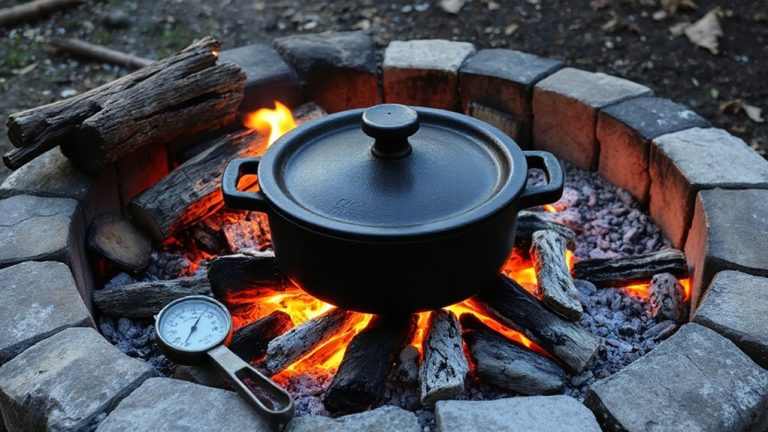
Pick a spot at least 10 feet from tents and trees, on packed dirt with good drainage and downwind of camp. Use dry, dense rocks like granite-never river or porous stone-to build an 8–12 inch ring that’s stable and heat-resistant. Arrange the rocks tightly in a circle to contain flames evenly, ideal for Dutch oven cooking. Maintain airflow with hardwood coals, control temperature carefully, and always extinguish the fire completely. You’ll find the full details on optimizing every step for performance and safety just ahead.
Notable Insights
- Place the fire pit at least 10 feet from tents, trees, and structures to ensure safety.
- Use dense, dry igneous rocks like granite or basalt to prevent cracking or explosion from heat.
- Build a rock ring 8–12 inches high and 18–24 inches wide for stable Dutch oven support.
- Position the pit according to prevailing wind direction to minimize smoke exposure.
- Fully extinguish the fire, disperse ashes, and return rocks to restore the site completely.
Pick the Right Spot for Your Rock Ring Fire Pit
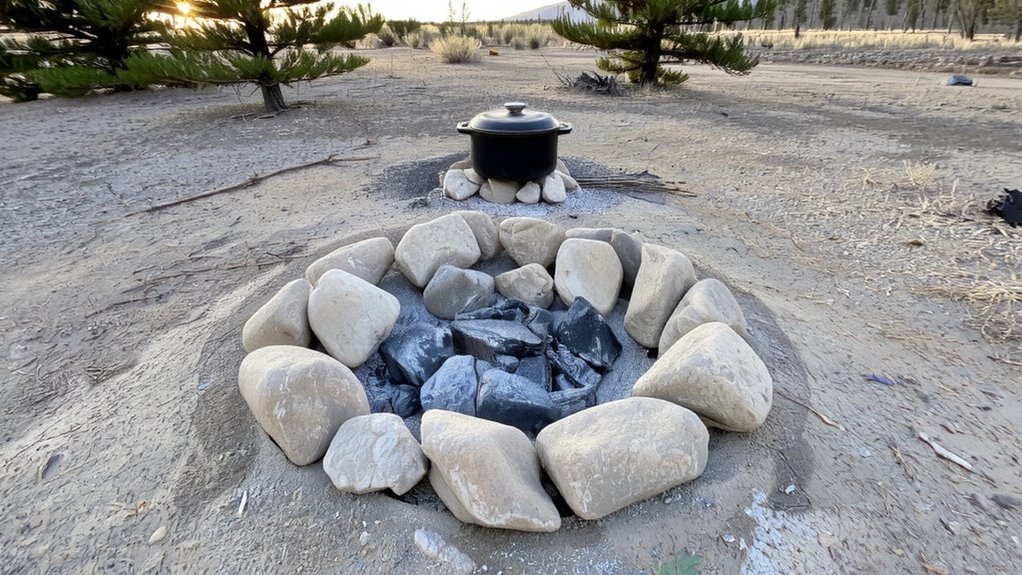
Location, more than any other combustible factor, determines both the safety and success of your rock-ring fire pit. You’ll want to pick a spot at least 10 feet from tents, trees, or structures-safety isn’t just smart, it’s non-negotiable. Pay close attention to soil drainage; damp or clay-heavy ground traps moisture, making fire-building harder and increasing steam buildup that can shift rocks unpredictably. Ideally, choose packed dirt or gravel with a slight slope to encourage water runoff. Wind direction matters just as much. You don’t want smoke blowing toward your cooking or sitting area, so observe prevailing winds and position the pit accordingly. A well-placed fire pit uses natural airflow to feed flames efficiently while keeping smoke away from food and people. Smart positioning improves heat control and overall usability-critical when you’re timing Dutch oven meals in changing outdoor conditions. For safe cleanup after cooking, consider using a high-quality grill brush to remove food residue without harmful bristles.
Choose Heat-Resistant Rocks That Won’t Crack
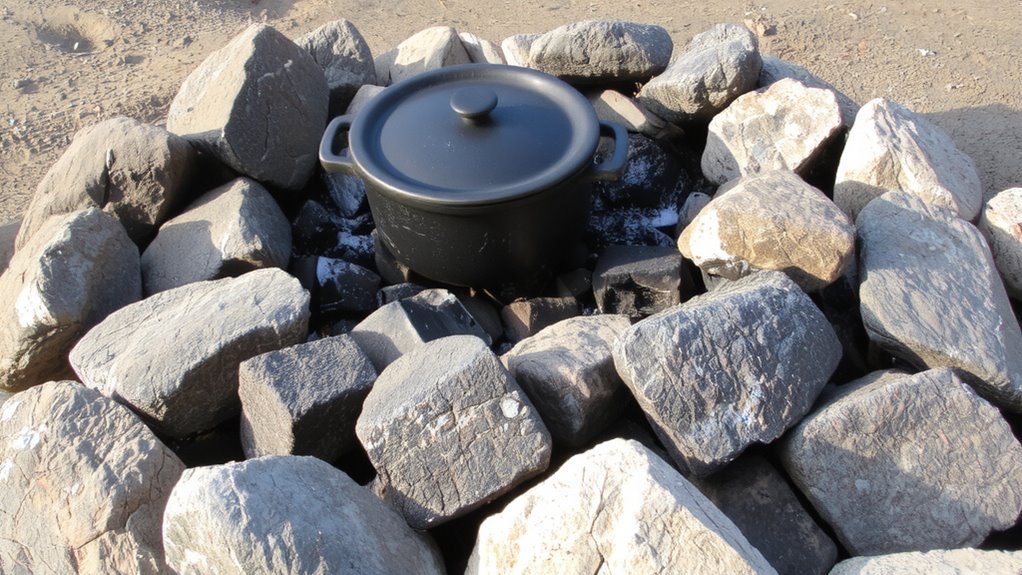
While not all rocks are built to withstand intense heat, picking the right ones for your fire pit could save you from dangerous cracks or even explosions. You’ll want to focus on rock durability when selecting materials-dense, igneous rocks like granite or basalt hold up best under prolonged fire exposure. These types resist thermal shock, the rapid temperature change that causes weaker stones to fracture or pop. Avoid porous rocks like sandstone or limestone, as they absorb moisture and are more likely to crack when heated. Even some river rocks, though smooth and appealing, can be risky if they contain trapped water. Your safest bet is dry, solid stone with minimal fissures. Observing how rocks behave over time in fire conditions helps refine your choices. Prioritizing thermal shock resistance guarantees a safer, longer-lasting fire ring tailored for consistent Dutch oven cooking. For reliable performance, choose heat-resistant rocks specifically recommended for fire pit use.
Build a Stable Rock Ring for Dutch Oven Cooking
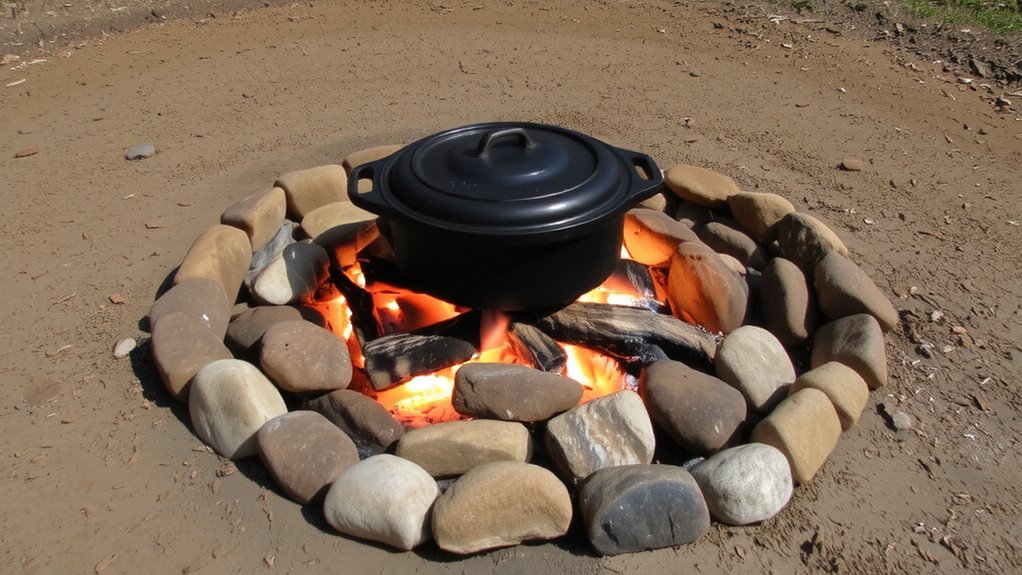
A well-constructed rock ring isn’t just about stacking stones-it’s about creating a functional, heat-efficient base that supports consistent Dutch oven cooking. Prioritizing rock stability guarantees your setup won’t shift under weight or heat, while proper fire containment keeps flames and coals safely centralized. Use flat, dense rocks of similar thickness to form a circular wall 8–12 inches high and 18–24 inches wide. This size accommodates most Dutch ovens and maintains even radiant heat distribution. For added durability and peace of mind, consider incorporating a fire pit ring liner to protect the surrounding rocks from intense, prolonged heat.
| Feature | Benefit |
|---|---|
| Uniform rock size | Enhances structural integrity |
| Overlapping joints | Improves rock stability |
| Compact base | Prevents shifting during use |
| Circular shape | Promotes balanced fire containment |
| Moderate height | Shields flames without restricting access |
This design supports long cooking sessions with minimal maintenance and maximum safety.
Control Heat and Airflow for Even Cooking
If you’ve built a solid rock ring, you’re already halfway to mastering Dutch oven cooking over an open fire-now it’s time to fine-tune the heat and airflow to achieve consistent, even results. Proper heat distribution is essential, and your rock ring plays a key role by radiating warmth evenly around the oven. To control temperature, you’ll need effective airflow regulation. Position your fuel inside the ring so combustion is steady but not excessive-too much oxygen creates hot spots, while too little chokes the fire. Use hardwood coals for stable, long-lasting heat, and avoid overcrowding the pit, which hinders airflow regulation. Lift the Dutch oven lid occasionally to check cooking progress, but minimize opening it to preserve heat distribution. Adjust coal placement around the base and lid to balance temperature. With practice, you’ll learn how subtle tweaks in airflow and fuel placement improve meal outcomes.
Start and Manage Your Dutch Oven Fire Safely
Since safety and performance go hand in hand when cooking outdoors, starting your Dutch oven fire the right way sets the tone for everything that follows-skip the proper steps and you risk uneven heat, excessive smoke, or worse, a dangerous flare-up. Always prioritize fire safety: clear debris, have water nearby, and never leave flames unattended. Use dry, seasoned wood and start with a small tinder bundle, gradually adding larger logs to control intensity. Mastering cooking techniques means understanding how flame height and coal placement affect temperature. Too much fire scorches food; too little prolongs cooking.
| Emotion | Risk if Ignored | Reward if Followed |
|---|---|---|
| Fear | Burn injuries | Peace of mind |
| Frustration | Failed meals | Delicious results |
| Anxiety | Fire spread | Safe, controlled heat |
Why a Rock Ring Works Best for Dutch Oven Fires
While you’re aiming for consistent heat control during Dutch oven cooking, a rock ring isn’t just a neat circle of stones-it’s a functional upgrade that stabilizes airflow and contains embers far better than bare ground or makeshift setups. The rocks act as a barrier, shielding flames from wind and promoting even heat distribution around your pot. You’ll notice how thermal retention improves, as the stones absorb heat and slowly release it, reducing hot spots and flare-ups. This means more predictable cooking times and better results, whether you’re baking cornbread or simmering stew. Unlike metal rings that can degrade, natural rock rings endure with minimal upkeep. You’re not just building a fire-you’re engineering a mini oven. The structure supports steady airflow from the base, which sustains combustion efficiency. When properly arranged, the stones enhance both radiant and convective heat. It’s a simple setup, but one that markedly boosts performance for outdoor BBQ and one-pot meals.
Leave No Trace: Restore Your Fire Site
Once your Dutch oven meal is finished and the fire has burned down, it’s essential to restore your fire site to its natural state, especially when cooking in shared or ecologically sensitive areas. Begin site cleanup by fully extinguishing the fire-douse it with water, stir the ashes, and repeat until cool. Remove all charred debris, leftover food, and non-natural materials. Disperse campfire ashes widely, not in piles, to avoid soil pH disruption. Then, dismantle the rock ring and return stones to their original locations to prevent erosion and support natural regeneration. Avoid burying waste, as it hinders decomposition and attracts wildlife. Thoughtful restoration reflects responsible outdoor cooking; it preserves the environment and guarantees others enjoy the same pristine setting. A well-executed site cleanup isn’t just courteous-it’s critical for sustainable recreation. Your actions directly influence ecological health and long-term access to public lands.
On a final note
You’ve built a stable rock ring that withstands intense heat and supports consistent airflow-key for Dutch oven success. Proper rock selection prevents explosive cracking, while positioning and fire management guarantee even cooking. This setup offers reliable performance over open flames, outperforming makeshift pits. When you’re done, dismantling and restoring the site leaves nature undisturbed. It’s efficient, safe, and environmentally responsible, making it the ideal choice for backcountry and camp-based outdoor cooking.