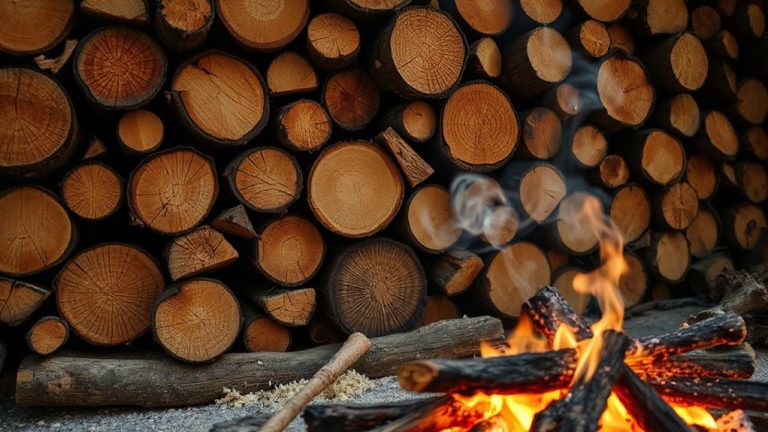
The Science Behind Mesquite’s Intense, Earthy Flavor in Texas-Style Brisket
You get that bold, earthy flavor in Texas-style brisket because mesquite burns hotter and faster than other woods, delivering intense initial sear and locking in moisture. Its high lignin content produces thick, potent smoke loaded with guaiacol and syringol-compounds that create deep smokiness and spicy-sweet notes. Used right, it gives authentic Central Texas taste; too much, and bitterness creeps in. Pitmasters blend it with oak or pecan to balance the punch. Mastering mesquite means respecting its power-and knowing what comes next makes all the difference.
Notable Insights
- Mesquite’s high lignin content produces dense smoke that imparts a bold, earthy flavor to brisket during smoking.
- Lignin breaks down into guaiacol and syringol, phenolic compounds responsible for smoky depth and spicy-sweet aromatic complexity.
- Guaiacol dominates at high temperatures, creating a robust smoke flavor and forming the brisket’s signature smoke ring.
- Syringol enhances aroma with sweet, floral notes, balancing mesquite’s intensity for a nuanced flavor profile.
- Controlled burns and wood blending prevent acrid bitterness, preserving mesquite’s desirable earthy characteristics in Texas-style brisket.
Why Central Texas Pitmasters Choose Mesquite for Brisket
While some pitmasters experiment with milder woods, you’ll find most Central Texas brisket experts swear by mesquite for good reason-it burns hot and fast, delivering the intense initial heat needed to sear the brisket’s exterior and lock in moisture during the essential first hours of smoking. This wood variety imparts a bold, earthy flavor that’s become synonymous with authentic Central Texas barbecue. Its dominance isn’t just about performance; it’s rooted in regional tradition, passed down through generations of pitmasters who’ve fine-tuned their craft using local resources. Though harder to control than oak or hickory, mesquite’s reliability at high temperatures makes it ideal for long smokes. You’ll notice experienced hands rarely switch wood variety once they’ve mastered mesquite’s intensity. It’s not just fuel-it’s a signature. Choosing mesquite means committing to a method that values consistency, depth of flavor, and the cultural weight of a longstanding regional tradition. For those seeking the most consistent and flavorful results, pairing authentic mesquite flavor with high-quality fuel is essential-consider trying one of the top-rated best mesquite pellets for optimal smoke performance.
Why Mesquite Burns Hot and Fast
Heat. That’s what you get when mesquite hits the fire-intense, immediate, and demanding attention. You’ve probably noticed how quickly it flares up compared to oak or hickory, and that’s no accident. Mesquite’s high heat intensity delivers temps upwards of 1,000°F, ideal for searing brisket fat and locking in flavor fast. But that power comes with a trade-off: a rapid burn rate. It doesn’t linger like slower woods, so you’ll need to monitor and replenish more often. This isn’t a set-it-and-forget-it fuel; it favors hands-on pitmasters who value control. The aggressive burn works best when managed in short, focused bursts-perfect for the initial sear or a mid-cook boost. While it demands skill, mastering mesquite’s heat means mastering one of Central Texas’s most iconic cooking tools. Use it right, and that fast flame becomes an advantage. For consistent results, consider pairing mesquite with best smoking wood picks that balance heat and flavor.
Why Lignin Makes Mesquite Smoke So Intense
Smoky depth-that’s where mesquite really earns its reputation, and lignin is the reason. You’re dealing with a wood high in lignin, a complex polymer that burns hot and produces thick smoke density unmatched by many hardwoods. This intensity isn’t for the faint of heart-it penetrates brisket fast, so timing matters. Unlike slower-burning woods that require long smoke sessions, mesquite’s punch means you get bold flavor quickly, but overdoing it leads to bitterness. Proper wood aging helps stabilize moisture and improves combustion, allowing for more consistent smoke rather than flare-ups. Still, even well-seasoned mesquite throws heavy smoke, so experienced pitmasters often blend it with milder woods. That balance lets you harness the power of lignin without overwhelming the meat. Used wisely, it delivers a sharp, earthy profile essential to authentic Texas-style brisket-intense, yes, but controllable with the right technique. Choosing the right best fire pit wood ensures quality smoke for optimal flavor development.
How Guaiacol and Syringol Shape Brisket Flavor
When lignin breaks down during combustion, it releases key phenolic compounds-guaiacol and syringol-that are largely responsible for the signature taste and aroma of mesquite-smoked brisket. You’re tapping into serious flavor complexity when these molecules penetrate the meat, each playing a distinct role. Guaiacol delivers a smoky, slightly sweet intensity that forms the backbone of the smoke ring, while syringol contributes a more nuanced, spicy-sweet note that elevates the overall aroma profile. Together, they create a bold yet balanced sensory experience unique to hardwood smoking. You’ll notice how guaiacol dominates at higher temperatures, amplifying depth, whereas syringol shines in controlled burns, adding refinement. Their synergy isn’t just about smoke intensity-it’s about layered, persistent flavor that lingers on the palate. That’s why mesquite, when managed well, doesn’t just add smoke; it builds structure, enhancing both taste and smell in ways few woods can match.
How to Use Mesquite Without Bitterness
Though mesquite delivers an unmatched depth of flavor, you’ll risk bitterness if the wood burns too hot or unevenly. To maintain flavor balance, use mesquite in moderation-its intense smoke can overpower if used alone. Instead, opt for strategic wood pairing, blending mesquite with milder woods like oak or pecan to temper its sharp edges while preserving its signature earthiness. Burn it at stable, controlled temperatures; mesquite ignites quickly and spikes in heat, which promotes creosote buildup and acrid notes. A well-ventilated smoker helps regulate airflow and prevents incomplete combustion. Seasoned, dry mesquite chunks burn cleaner than green or wet wood, reducing harsh byproducts. You’re not just managing smoke-you’re guiding chemistry. When handled with precision, mesquite enhances brisket without tipping into bitterness, offering a robust yet balanced profile that defines elite Texas-style barbecue.
On a final note
You get bold, smoky brisket when mesquite’s high lignin content breaks down into guaiacol and syringol during its hot, fast burn, delivering that intense, earthy flavor Central Texas pitmasters prize. Used carefully, mesquite enhances without overwhelming. Its predictable combustion and rich aromatic compounds make it effective, though balancing exposure prevents bitterness. For serious barbecue, mastering mesquite means respecting its power-it’s not just fuel, but a flavor catalyst when managed with precision.