The Future of Clean Cooking: Innovations and Advancements in Biofuel Technology for Grills
You’re already seeing how clean cooking goes beyond food to the fuels powering your grill. Biofuels like advanced ethanol, wood pellets, and biomass briquettes offer renewable, low-smoke alternatives that cut emissions and health risks. They outperform charcoal and propane in sustainability while smart grill designs enhance efficiency with precise heat control and reduced fuel use. Though upfront costs are higher, long-term benefits in air quality and fuel independence make them a smart choice-and there’s more shaping this shift you’ll want to know.
Notable Insights
- Biofuels like advanced ethanol and biomass briquettes offer cleaner, renewable alternatives to charcoal and propane for grilling.
- Sustainably sourced wood pellets provide consistent heat with lower emissions and minimal ash production.
- Smart grill technologies use sensors and airflow control to optimize combustion and reduce fuel consumption by up to 30%.
- Biofuels cut net carbon emissions by up to 80% compared to traditional charcoal, especially when derived from waste oils.
- Despite higher initial costs, biofuel grills reduce long-term maintenance and health risks through cleaner burning technology.
What Is Clean Cooking? Why Biofuels Are the Future
Clean cooking isn’t just about what you cook-it’s about how you power your grill. You’re likely overlooking the environmental and human cost of traditional fuels. Biofuels offer a cleaner alternative, reducing both emissions and reliance on unsustainable sources. For millions, energy poverty means unsafe cooking methods that endanger lives. Switching to biofuels tackles this by providing accessible, renewable fuel for grilling. Plus, you get serious health benefits-fewer smoke emissions mean reduced respiratory risks, especially outdoors where airflow can still carry pollutants. These fuels burn more efficiently than charcoal or propane in certain designs, offering steady heat with less soot. Innovative biofuel grills now match the performance of conventional models, making the shift practical for home users and food vendors alike. This isn’t just progress-it’s a necessary evolution in how we think about outdoor cooking. The future runs on cleaner energy, and you’re already part of it.
Top Biofuel Options for Eco-Friendly Grilling in 2024
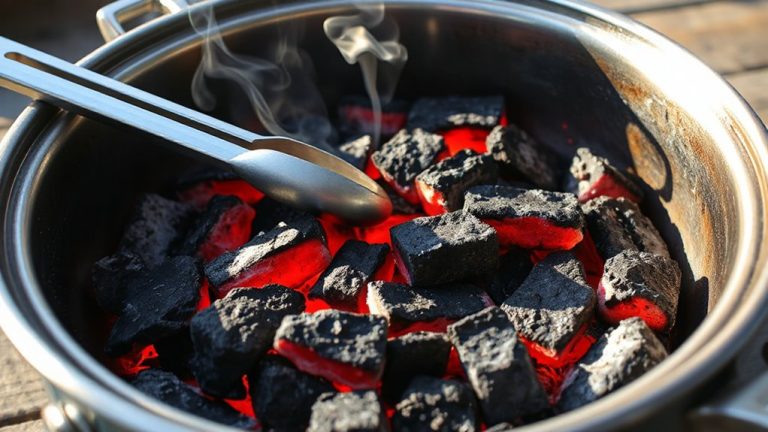
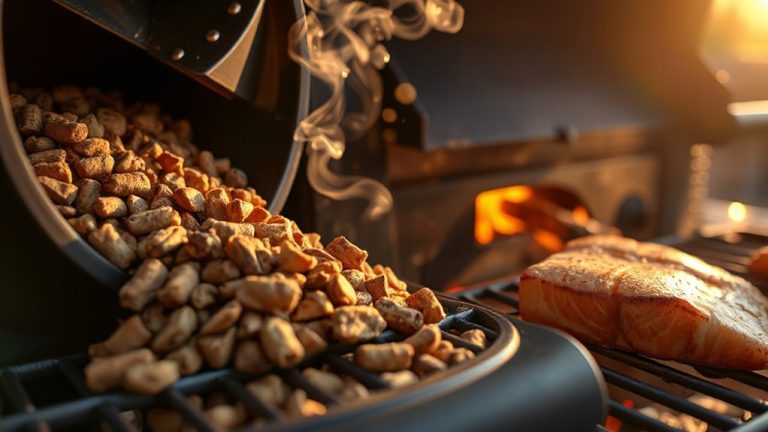
You’ve probably heard the buzz around cleaner ways to fire up the grill, and now it’s time to look at what’s actually powering eco-friendly BBQs in 2024. You’ll find that advanced ethanol blends, sustainably sourced wood pellets, and compressed biomass briquettes lead the pack. Ethanol burns cleanly and is easy to store, making biofuel storage simple in small spaces. Pellets offer consistent heat and are ideal when you’re grilling through longer sessions, especially across peak grilling seasons. Briquettes, made from agricultural waste, deliver steady temperatures and produce minimal ash. Each option balances performance with environmental care, though convenience varies. Ethanol lights quickly but costs more over time, while pellets need dry storage to prevent moisture damage. Briquettes are affordable but require better airflow. Your choice depends on how often you grill and how much prep you’re willing to manage.
Why Biofuels Beat Propane and Charcoal
While propane and charcoal have long dominated backyard grilling, biofuels are proving to be a smarter long-term choice for both performance and planetary health. You get cleaner combustion, fewer carcinogens, and reduced greenhouse emissions-ideal if you care about air quality and sustainability. Unlike propane, which relies on fossil fuel extraction, or charcoal, often sourced from deforested areas, biofuels come from renewable organic matter, supporting fuel independence and helping strengthen energy security. They’re domestically producible, cutting reliance on imported fuels and volatile global markets. Modern biofuel blends burn hotter and more evenly than charcoal, rivaling propane’s convenience without the carbon cost. You’ll notice less soot and easier cleanup, too. Though initial fuel costs can be slightly higher, the long-term environmental and geopolitical benefits make biofuels a responsible upgrade. For eco-conscious grillers seeking reliability and impact, they’re quickly becoming the preferred choice.
Smart Biofuel Grills: How Design Boosts Efficiency
Because modern engineering is redefining what outdoor cooking can be, smart biofuel grills now integrate design features that substantially boost efficiency and usability. You’ll find they use smart sensors to monitor fuel levels and adjust heat automatically, giving you consistent temperatures without constant oversight. Airflow optimization plays a key role-strategically placed vents and fan systems guarantee complete combustion, reducing waste and smoke. These grills respond to environmental shifts, like wind or ambient temperature, adapting in real time. Their compact, insulated chambers retain heat better than traditional models, cutting fuel use by up to 30%. You get faster preheat times and more precise control, whether searing steaks or slow-cooking ribs. Unlike basic burners, these systems are built for performance and ease, minimizing flare-ups and maintenance. With smart sensors and airflow optimization working together, your grilling isn’t just cleaner-it’s genuinely smarter, more reliable, and built for today’s eco-conscious cook.
Biofuels vs. Propane vs. Charcoal: Carbon Impact
Grilling’s carbon footprint varies dramatically depending on fuel choice, and when you compare biofuels, propane, and charcoal, the differences in emissions become impossible to ignore. Charcoal’s production releases high levels of CO₂, especially with unsustainable fuel sourcing, while propane burns cleaner but still derives from fossil fuels, adding to your carbon tally. Biofuels, however, often come from renewable feedstocks like waste oils, reducing net emissions markedly. With improved emission tracking, studies show biofuel grills can cut greenhouse gases by up to 80% compared to charcoal. Propane offers consistent performance, but its extraction and transport offset some benefits. Biofuels outperform both when lifecycle emissions are measured, especially when derived locally. You’re not just choosing a heat source-you’re shaping your environmental impact. Fuel sourcing transparency and accurate emission tracking reveal that biofuels aren’t just promising; they’re currently the most climate-responsible option for eco-conscious grillers.
Switching to Biofuel Grilling: Cost, Safety, and Setup Tips
You’ve weighed the climate impact and seen how biofuels outperform charcoal and propane across their lifecycle emissions, but making the switch isn’t just about environmental benefits-it’s also about practicality. You’ll find biofuel grills have slightly higher upfront costs, but they often lead to lower maintenance costs over time thanks to cleaner combustion and fewer residue buildups. Still, proper user training is essential-handling bioethanol or renewable diesel requires understanding flashpoints and ventilation. Most models ignite quickly and offer consistent heat, though temperature control can take practice. Always set up on stable, non-flammable surfaces and keep safety gear nearby. While they emit fewer pollutants, never operate indoors or under low clearance areas. With the right setup and awareness, biofuel grills deliver strong performance, reliability, and sustainability-all without sacrificing convenience or flavor.
On a final note
You’re making a smart choice with biofuel grilling-cleaner emissions, renewable sources, and steady heat. Modern biofuel grills offer efficiency close to propane, far surpassing charcoal in sustainability. Though initial costs may be higher, long-term savings and reduced environmental impact justify the switch. With improved burner designs and bioethanol or biomass options, you get reliable performance and easier cleanup. Safety’s enhanced too, with fewer flare-ups. For eco-conscious outdoor cooking, biofuels aren’t just viable-they’re leading the way.