The Impact of Ethanol Fuel on Your Portable Campfire Grill Performance
You’ll appreciate ethanol for its clean burn and portability, lighting quickly with little smoke and no soot. It reaches 1,500–1,700°F-hot enough for searing thin cuts but not ideal for thick steaks. Fuel lasts 1.5–2 hours per gallon, less than propane, and evaporates faster in heat or wind. While it’s great for quick, clean cooking on the go, the trade-offs in heat and runtime matter. There’s more to evaluate if you’re serious about performance.
Notable Insights
- Ethanol fuel delivers a clean burn with minimal smoke, ideal for delicate foods but limits smoky flavor infusion.
- It reaches 1,500–1,700°F, sufficient for searing thin cuts but inadequate for thick steaks or high-heat cooking.
- Ethanol burners are lightweight and portable, requiring no tanks or complex setup, perfect for outdoor use.
- One gallon of ethanol lasts 1.5 to 2 hours, offering shorter runtime compared to propane’s 4–5 hours.
- Higher evaporation rates in heat or wind reduce fuel efficiency and consistent flame performance during extended use.
Why Ethanol Is Popular for Portable Grills
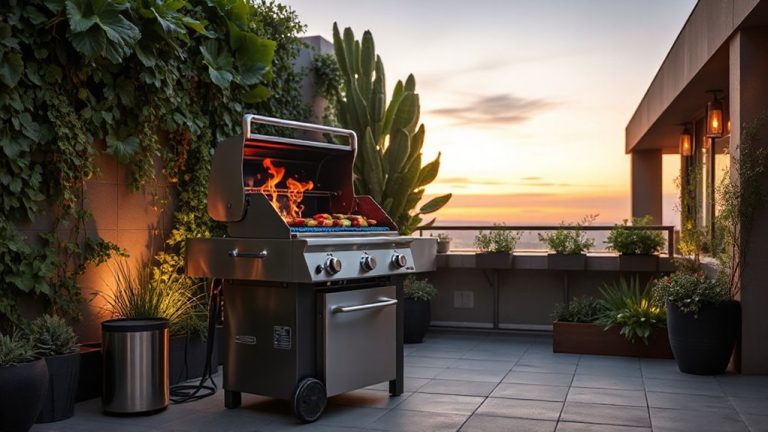
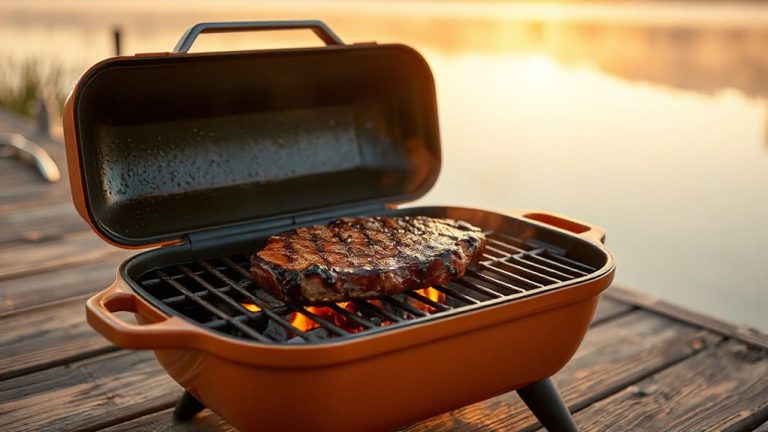
While you might expect a fuel source to be judged solely by its heat output, ethanol’s popularity in portable grills comes down to more than just how hot it burns. You’ll appreciate the clean flame it produces, which minimizes smoke and allows for subtle flavor infusion without the overpowering taste of charcoal or propane. That’s especially useful when you’re grilling delicate foods like fish or vegetables, where purity of flavor matters. Plus, the portability benefits are hard to ignore-ethanol burners are compact, lightweight, and don’t require bulky tanks or complicated connections. You can take them to a rooftop, a campsite, or a tailgate with minimal setup. Spills are rare and cleanup is simple, often needing just a damp cloth. While it doesn’t replicate a wood-fired roar, its consistent flame and ease of use make it a practical choice for urban grillers and minimalists who value convenience without completely sacrificing taste.
Does Ethanol Get Hot Enough to Cook Well?
You might enjoy how cleanly ethanol burns and how easy it is to carry your grill anywhere, but the real test comes when you need serious heat for cooking. Ethanol provides decent heat intensity, usually reaching 1,500–1,700°F-enough for searing thin cuts or warming food, but not quite matching charcoal or propane for heavy-duty grilling. Flame control is precise with most burners, letting you adjust the output smoothly for better cooking accuracy. Still, ethanol struggles with thick steaks or high-heat stir-fries where sustained, intense flames are essential.
| Fuel Type | Max Temp (°F) | Flame Control |
|---|---|---|
| Ethanol | 1,700 | Good |
| Propane | 3,600 | Excellent |
| Charcoal | 2,500+ | Fair |
For light meals and controlled environments, ethanol works-but don’t expect restaurant-level searing.
Ethanol vs. Propane: Which Fuel Lasts Longer?
A single gallon of ethanol typically fuels a campfire grill for about 1.5 to 2 hours, while propane packs more staying power, delivering 4 to 5 hours of burn time per gallon under similar cooking conditions. That difference highlights propane’s superior fuel efficiency and longer burn duration, making it a more practical choice when you’re grilling for groups or cooking over several hours. Ethanol’s shorter runtime means you’ll likely need to refill more often, which can interrupt your flow and add to the overall cost. While ethanol burns cleanly and offers a pleasing flame, it simply doesn’t stretch as far as propane. If uninterrupted, extended use is important to you-say, during a weekend camping trip-propane’s consistency and efficiency give it the clear edge. Planning ahead? Factor in burn duration and how much cooking you intend to do.
Can You Sear Steak With Ethanol?
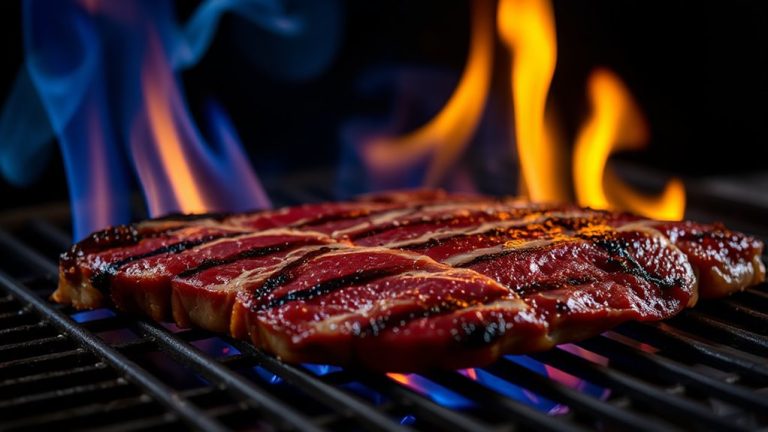
Is it possible to achieve a proper sear on a steak using an ethanol-fueled campfire grill? Yes, but it depends heavily on your cooking technique and the grill’s heat retention. Ethanol burns cleaner than wood or propane, but it typically reaches lower peak temperatures-usually around 1,500°F, which is below the ideal searing range of 1,800–2,000°F. Without intense radiant heat, you’ll need to press the steak slightly or extend contact time to develop a crust. Grills with ceramic components improve heat retention, helping maintain consistent surface temperatures during searing. Still, you won’t get the same rapid Maillard reaction as with gas or charcoal. Success requires preheating thoroughly and using a tight-sealing grill to minimize heat loss. While ethanol won’t replace a high-BTU burner for searing, with the right setup and technique, you can still produce a flavorful, well-seared steak outdoors.
How Fast Does Ethanol Evaporate During Grilling?
Ethanol’s burn efficiency hinges on more than just flame output-it’s shaped by how quickly the fuel evaporates before it even ignites. You’ll notice the evaporation rate spikes when grilling in warmer conditions, meaning you lose usable fuel before it combusts. Ambient temperature plays a key role: the hotter it is, the faster ethanol vaporizes, reducing burn time and consistency. Even in mild weather, open fuel trays expose ethanol to airflow, accelerating loss. Here’s how evaporation varies under common conditions:
| Ambient Temperature (°F) | Evaporation Rate (g/hr) | Grilling Impact |
|---|---|---|
| 60 | 18 | Minimal loss |
| 70 | 25 | Moderate loss |
| 80 | 34 | Noticeable drop |
| 90 | 46 | Significant waste |
| Windy (any temp) | +15–20 | Rapid depletion |
This means you’re losing fuel-and control-faster than you think.
Is Ethanol’s Clean Burn Worth the Trade-Offs?
Why go through the trouble of using ethanol if you’re losing fuel before it even burns? You’re trading convenience for performance, and that raises questions. Ethanol burns cleanly, which helps reduce your environmental impact-no soot, minimal emissions-making it a greener option than charcoal or gas. But that clean flame comes at a cost. Without the smoky byproducts, you lose something essential: flavor retention. Real BBQ lovers know smoke infusion matters, and ethanol’s near-invisible flame doesn’t deliver it. Plus, the fuel’s high evaporation rate means less efficiency. You’ll refill more often and spend more over time. Sure, cleanup’s easier and ignition’s quick, but if you’re after rich, smoky taste and long grilling sessions, ethanol might leave you wanting. It’s a thoughtful choice for eco-conscious campers, but not for flavor-first grillers. Weigh the trade-offs-your taste buds and trip plans will decide.
On a final note
You’ll find ethanol burns cleanly and simplifies cleanup, ideal for quick meals with minimal smoke. Yet, its lower heat output-typically below 1,000°F-limits searing compared to propane’s 2,000°F flare. Fuel efficiency lags, too, since ethanol evaporates faster and delivers shorter burn times. While convenient and eco-conscious, it trades peak performance for portability. For light grilling, ethanol works; for high-heat mastery, propane still wins.