Skewering Dense Meats Like Venison Steaks for Thorough Internal Cooking
Skewering dense venison steaks with metal rods guarantees even heat penetration and consistent doneness, especially over open flames where temperature control is tricky. Metal conducts heat through the meat’s core, preventing undercooked centers. Cut venison into 1.5-inch cubes, marinate for at least two hours, then thread snugly-allowing slight space for airflow. Grill or broil for smoky char, and let rest before serving. Proper skewering isn’t just practical-it’s key to tender, juicy results every time.
Notable Insights
- Cut venison into uniform 1.5-inch cubes to ensure even heat penetration during cooking.
- Use metal skewers to conduct heat internally, promoting thorough and consistent doneness.
- Marinate venison for at least 6 hours to tenderize and enhance moisture retention.
- Space meat evenly on skewers with small gaps to allow uniform heat circulation.
- Rest skewered venison 5–7 minutes after cooking to retain juices before slicing.
Skewer Your Steak to Cook Thick Venison Evenly
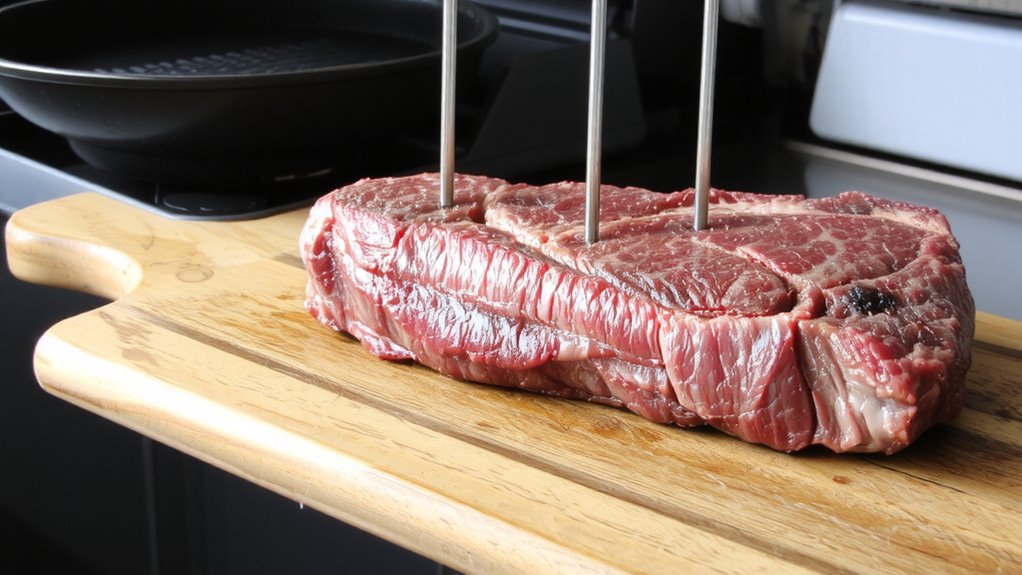
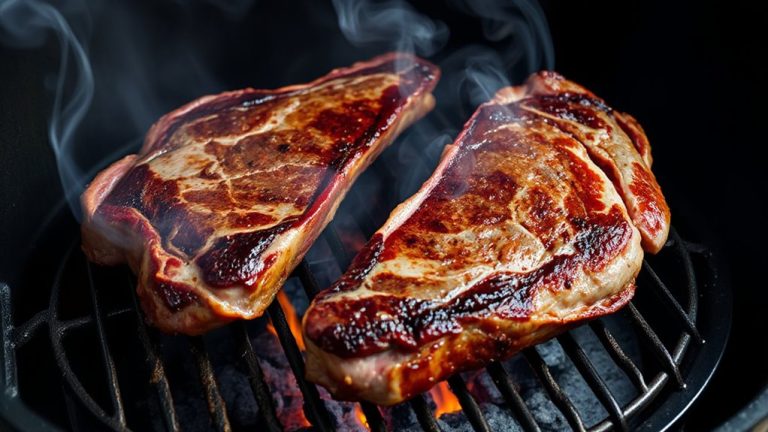
While thick venison steaks can be a challenge to cook evenly over high heat, skewering them helps distribute the temperature more uniformly during grilling. You’ll find that properly spaced skewers stabilize the meat, reducing warping and promoting consistent contact with the grill surface. Your marinade selection plays a key role here-acidic, oil-based mixtures not only tenderize but also enhance flavor penetration, especially when the steak is pierced. After cooking, don’t skip the resting technique; letting the steak sit for 5–7 minutes allows juices to redistribute, ensuring moisture retention. Skewering doesn’t replace proper prep, but it complements it-particularly with dense cuts prone to uneven doneness. You’re not just speeding up cooking; you’re improving control. For outdoor cooks seeking precision with minimal tools, this method delivers reliable results. It’s not flashy, but it’s effective-especially when grilling over open flame where hot spots are unpredictable.
Use a Metal Skewer for Even Venison Steak Cooking
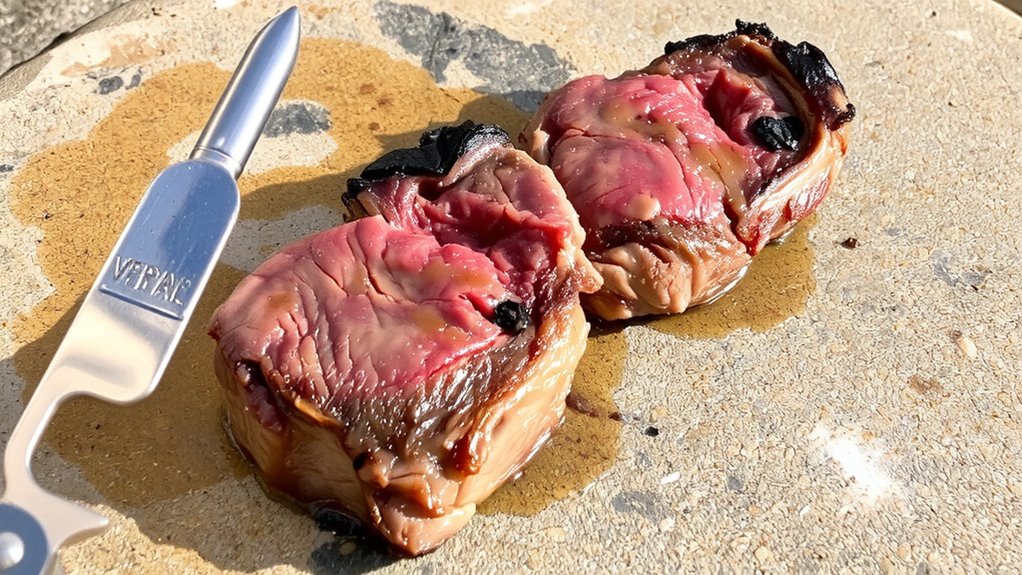
You’ve already seen how skewering venison steaks can promote even cooking, especially with thicker cuts that resist uniform heat penetration. Now, using a metal skewer makes a real difference in heat distribution. Unlike wood, metal conducts heat along its length, gently warming the interior of the steak while the exterior sears-this helps prevent cold spots and guarantees thorough doneness without overcooking the edges. You’ll notice improved meat texture, too: the steak cooks more uniformly, retaining tenderness and reducing the risk of dryness. Stainless steel skewers are durable, easy to clean, and won’t char or weaken over time. Their smooth surface also releases the meat cleanly, minimizing tearing. For consistent results on the grill or over an open flame, metal outperforms other materials. If you’re serious about outdoor cooking, switching to metal skewers isn’t just practical-it’s a small upgrade that directly impacts how evenly and safely your venison cooks from edge to center. Choosing the best skewers for grilling ensures optimal performance and durability for repeated use.
Skewer Your Venison Steak in 4 Fast Steps
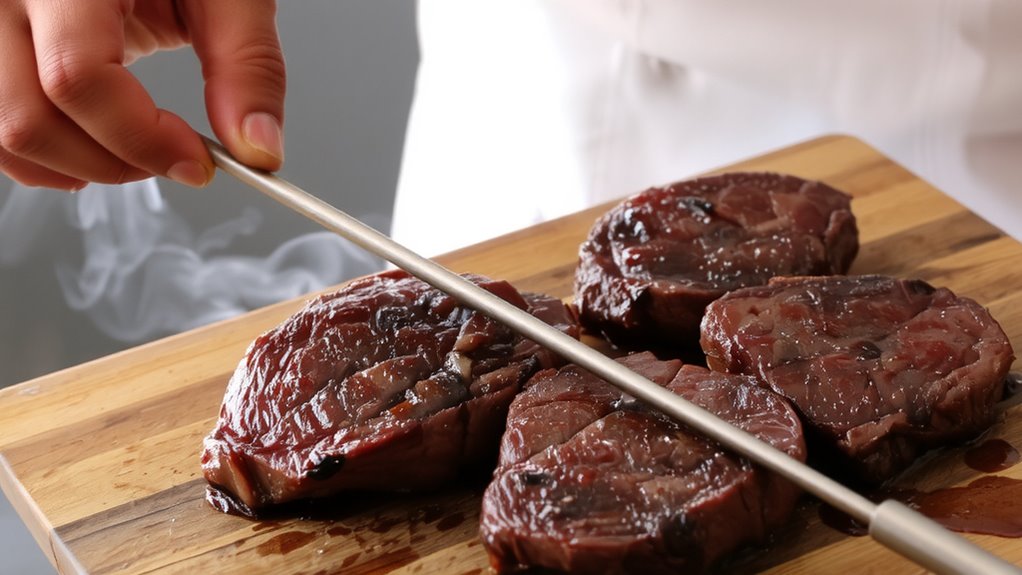
Grabbing your stainless steel skewers is the smart move when you’re after evenly cooked venison steaks, and threading them takes just four quick steps. First, cut your venison into uniform cubes-about 1.5 inches-to guarantee consistent heat distribution. Second, marinate for at least two hours; this boosts flavor and aids in moisture retention, promoting better marinade infusion. Third, pat the cubes dry to prevent sticking and thread them snugly, leaving slight space between pieces for even cooking. Finally, align the meat evenly along the skewer, avoiding overcrowding, so heat circulates properly. Stainless steel holds and transfers heat more efficiently than alternatives, improving overall heat distribution. This method isn’t just practical-it’s effective for outdoor cooking, where control is limited. Proper skewering enhances performance, giving you reliable results whether using a grill, pan, or broiler.
Cook Skewered Venison Steaks: Grill, Pan, or Broil?
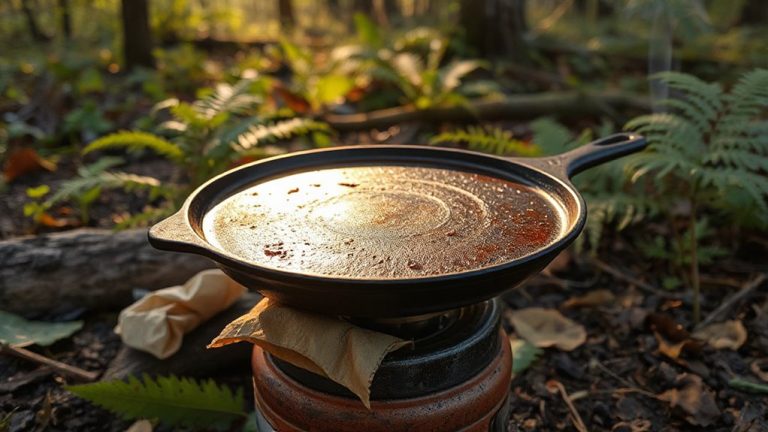
When it comes to cooking skewered venison steaks, your choice of heat source makes a clear difference in flavor, texture, and control. Grilling gives excellent flavor infusion thanks to smoky char and direct flame, ideal for tender, evenly cooked results-just mind the cooking time, as high heat can overcook lean venison fast. A cast-iron skillet offers superior control, searing quickly while locking in juices, though you sacrifice some smokiness. Broiling works well indoors, mimicking grill-like browning under intense top heat, but rotate skewers for even cooking. Grills deliver authenticity and depth, especially with wood chips for added aroma. Skillets suit precise timing and consistent browning. Broilers are convenient but require close monitoring. Each method affects cooking time differently-grill and broil cook faster than pan-searing. Pick based on your setup and desired outcome, balancing flavor infusion with hands-on oversight.
Fix These Skewering Mistakes to Keep Venison Juicy
Why does your skewered venison sometimes turn out dry or unevenly cooked, despite perfect grilling conditions? You’re likely overlooking two key factors: marinade duration and resting time. If you don’t let the meat soak long enough, the marinade won’t penetrate deeply, leaving the interior tough and bland-aim for at least 6 hours, preferably overnight. On the flip side, over-marinating can break down proteins too much, creating a mushy texture. When skewering, space the pieces evenly to guarantee uniform heat exposure. After cooking, skipping resting time is a critical error; those few minutes allow juices to redistribute. Let it rest for 5–10 minutes tented with foil. Without it, slicing causes moisture to spill out, resulting in dry bites. Balanced skewering, proper marinade duration, and patience with resting time make the difference between tough and tender.
On a final note
You’ll find skewering dense venison steaks not only speeds cooking but guarantees even heat distribution, especially helpful for thick cuts. Metal skewers conduct heat well, reducing the risk of undercooked centers. Whether grilling, pan-searing, or broiling, this method improves control and consistency. Just avoid overcrowding and rotate evenly. When done right, skewering preserves juices and enhances texture, making it a reliable technique for outdoor cooking where precision matters.