Educating Children on “Hot Zone” Boundaries Around Active Cooking Fires
You should teach your kids about the hot zone-the invisible area around a grill or fire pit where radiant heat can cause burns in seconds, even without flame contact. This 3-foot danger zone expands with wind or tall flames, making it especially risky for curious, fast-moving children. Use clear boundaries, real-life comparisons, and simple drills to build awareness. Turn safety into songs or games so rules stick without fear. Reinforcing this routine each time you cook outside guarantees habits last-there’s more to know about making it effective.
Notable Insights
- Teach children that a hot zone is an invisible 3-foot danger area around grills where radiant heat can cause burns without flame contact.
- Use real-life examples like feeling heat above a radiator to help kids understand invisible radiant heat from fires.
- Establish a visible safe boundary using chalk, toys, or plants to mark the 3-foot hot zone around cooking fires.
- Only allow children 12 and older in the hot zone with adult supervision; always actively monitor near fire.
- Practice fire safety drills and use songs to reinforce rules, ensuring children react safely if they enter the hot zone.
What Is the Hot Zone?
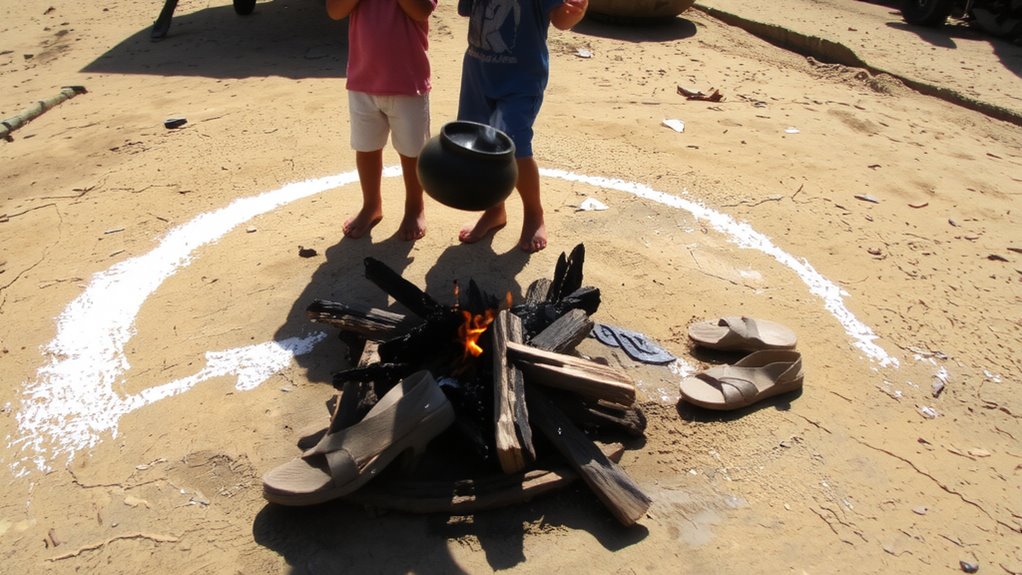
Safety, especially in outdoor cooking, starts with knowing where danger lies-nowhere more so than in the hot zone. You’re in real danger when you enter this invisible boundary around a cooking fire, where intense heat lingers just beyond the flames. The hot zone isn’t marked, but it’s where you’ll feel radiant heat prickling your skin, a clear sign to step back. Understanding fire basics-like how heat rises and travels sideways-helps you predict its reach. This isn’t just theory; it’s essential heat awareness. Every outdoor cook needs to respect how quickly this zone can cause burns, even without touching flames. You’ll notice grills and fire pits create a 3-foot danger radius, often more with wind or tall flames. Recognizing that boundary keeps you safe. Smart positioning, proper tools, and disciplined movement reduce risk. Good outdoor cooking requires control, and control starts with knowing exactly where the hot zone begins-and staying out of it. Choosing the right equipment, such as open fire grills, can help maintain safer cooking distances and improve heat management.
Why Kids Need to Know About the Hot Zone
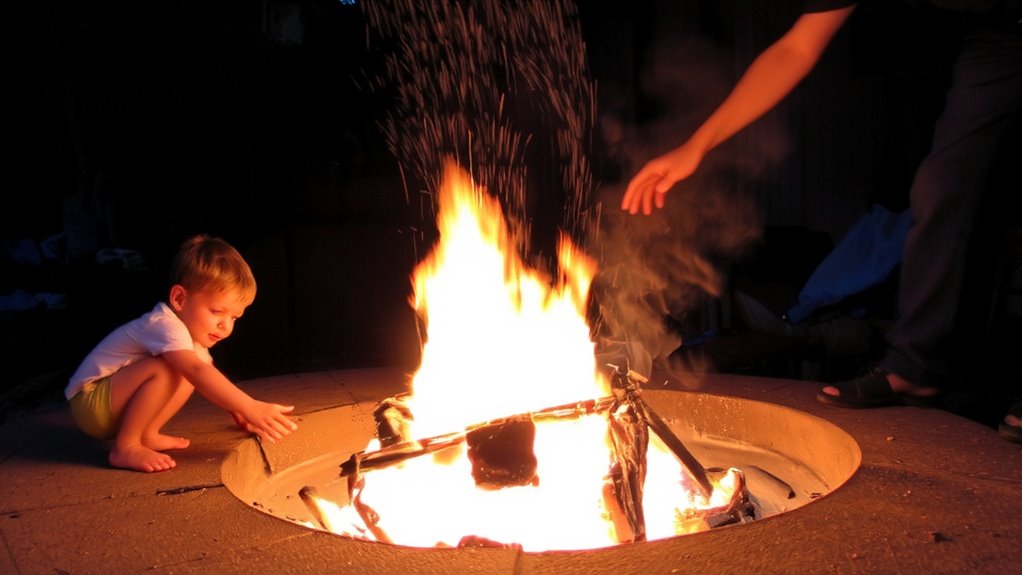
You already know the hot zone isn’t something you can see on the ground-it’s an invisible ring of intense heat that wraps around a fire or grill, and it’s stronger than most kids realize. This heat halo extends farther than expected, sometimes several feet, making unintentional contact easy during outdoor cooking. Kids dart around, curious and excited, often unaware they’re stepping into fire risks just by getting close. Teaching them about this invisible boundary isn’t just smart-it’s essential for burn prevention. Even brief exposure in the hot zone can cause serious injury. Unlike obvious flames, radiant heat doesn’t warn with smoke or color. Understanding the hot zone helps children respect distance, not just flames. It shifts safety from reaction to prediction. In real-world backyard use, this awareness reduces accidents during chaotic moments. With grills and campfires common in family settings, knowledge becomes a practical shield. You’re not just sharing facts-you’re building habits that protect.
How to Teach Kids About the Hot Zone Safely
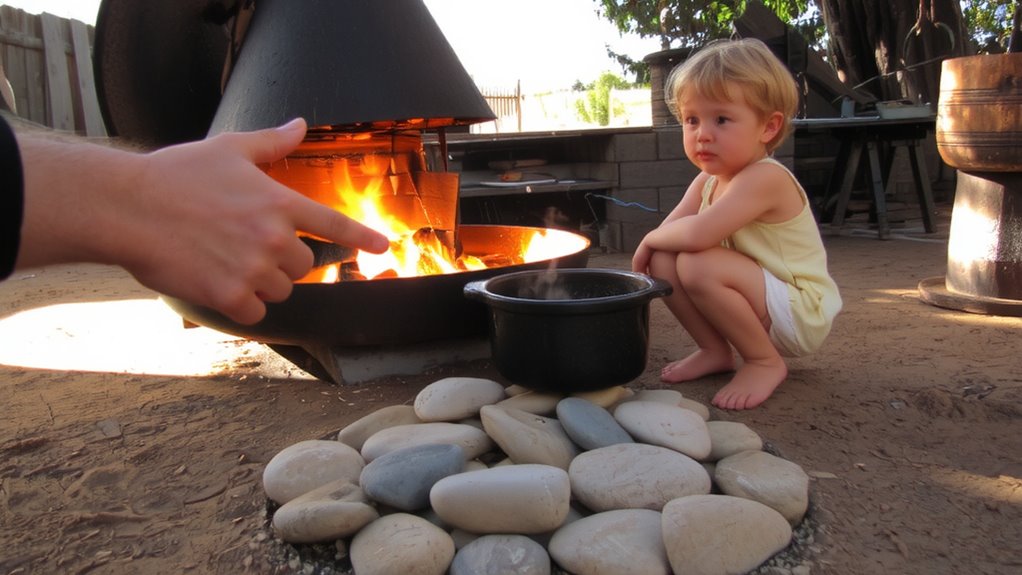
While kids might not see the danger in standing near a sizzling grill, teaching them about the hot zone starts with making the invisible visible through clear, relatable lessons. You can use everyday comparisons-like how the air above a radiator feels hot-to explain radiant heat. Turn learning into action with fire drills that simulate safe reactions when someone gets too close. These practice runs build muscle memory and reduce panic in real situations. Singing safety songs helps younger children remember rules-they stick better with rhythm and repetition. You’ll find that combining visual cues, movement, and music reinforces awareness far more effectively than warnings alone. While outdoor cooking demands vigilance, structured, engaging instruction gives kids tools to stay safe without constant adult correction. It’s not just about fear-it’s about understanding how heat behaves and why boundaries matter in practical, measurable ways.
Set the Rules: Where Kids Should Stand
When setting boundaries around a barbecue, it’s not enough to simply tell kids to stay back-the rules need clear markers they can understand and follow without constant reminders. Establishing a visible safe distance is essential; a three-foot circle around the grill works well in most backyard setups. Use toys, chalk lines, or potted plants to mark this zone so kids recognize it visually. You should enforce that no one under 12 steps inside unless accompanied by an adult. This rule supports effective adult supervision and reduces accidental contact with hot surfaces. While older children may seem responsible, constant monitoring remains essential-heat radiates beyond the grill itself. Clear, consistent boundaries teach respect for fire and cooking tools. A well-defined standing area isn’t just about safety; it shapes behavior around outdoor cooking long-term. Ultimately, structure prevents accidents more reliably than warnings alone.
What to Do If a Child Gets Too Close
A clear boundary around the grill helps prevent accidents, but even with marked zones and firm rules, children may still step too close. If that happens, your emergency response must be fast and focused. First, move the child away from the heat source-don’t wait. Check for burns, especially on hands, arms, or legs. Minor burns need immediate burn treatment: cool the area under running water for 10–15 minutes and avoid ice or butter, which can worsen damage. Cover with a sterile, non-stick bandage. For more serious burns-blistering, charring, or larger than a quarter-call emergency services right away. Having a first-aid kit nearby improves outcomes markedly. Remember, acting calmly and correctly reduces harm and recovery time. Your preparedness doesn’t replace prevention, but it’s critical when boundaries fail. Effective supervision pairs with practical knowledge to keep outdoor cooking safe for everyone.
Make Learning Fun: Hot Zone Games for Kids
How do you turn safety rules into something kids not only remember but actually enjoy? You turn them into games. Try “fire tag,” where one child is “it” and chases others around a designated safe zone, but no one can enter the marked hot zone around the pretend fire. It teaches boundary awareness through play. Another favorite is “flame freeze,” where kids move freely until you shout “flame freeze!”-then they must stop instantly, just like they should when near real cooking fires. These games build quick reflexes and reinforce spatial limits in a low-risk environment. They’re not just fun-they’re functional, using repetition and physical cues to strengthen memory. Educators and parents report better compliance after consistent game use, proving that engaging methods outperform lectures. When kids practice safety this way, they internalize rules without fear, making outdoor cooking safer for everyone.
Make Hot Zone Safety a Daily Routine
You’ve likely built routines around meal prep and cleanup, but regularly reinforcing hot zone safety is just as essential-and far too often overlooked. Making Fire Safety a consistent part of your outdoor cooking habit isn’t just smart; it’s a critical layer of Burn Prevention. Each time you fire up the grill, remind kids to stay outside the three-foot hot zone. This boundary isn’t arbitrary-it’s based on radiant heat spread and flare-up risks. Consistent reinforcement turns rules into reflexes. Treat safety like you do preheating: non-negotiable and done every time. Over time, children learn to self-regulate, recognizing danger zones without constant reminders. Real-world application cements understanding more than one-off lessons ever could. When hot zone boundaries become routine, you’re not just cooking-you’re modeling responsibility. That daily repetition strengthens awareness, reduces accidents, and establishes lifelong Fire Safety habits rooted in practical, observable actions everyone can follow.
On a final note
You now understand the hot zone-the three-foot danger area around a cooking fire where heat radiates intensely. Teaching kids this boundary prevents burns and fosters responsibility. By setting clear rules, using engaging games, and practicing daily routines, safety becomes second nature. Your consistent guidance guarantees children respect fire without fear. Outdoor cooking demands vigilance, and your role in modeling safe behavior directly influences their long-term habits around grills and open flames.