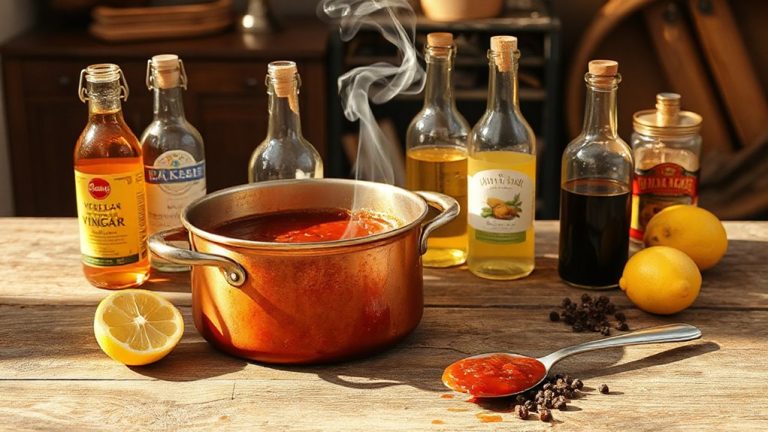
A Detailed Analysis of How to Master Salt-Curing Techniques for Outdoor Cooking Delights
You’ll get deeper flavor and better texture by salt-curing instead of just seasoning, since the process uses osmosis to draw out moisture and concentrate taste. Stick to fattier cuts like pork belly or firm fish such as tuna-they hold up best outdoors. Dry curing beats brining in warm, dry conditions by forming a pellicle that helps smoke adhere. Keep temps between 36–40°F to slow spoilage while allowing even penetration. With clean tools and proper airflow, you’ll avoid contamination and build rich, savory results that go far beyond the grill-discover how to refine each step for consistent, standout dishes every time.
Notable Insights
- Salt-curing enhances flavor and texture by using osmosis to remove moisture and concentrate savory richness in meat and fish.
- Select fatty or thick cuts like pork belly, duck breast, or tuna for even curing and resistance to over-drying outdoors.
- Dry curing is ideal for warm, dry outdoor conditions, promoting pellicle formation for better smoke adhesion and browning.
- Maintain curing temperatures between 36–40°F (2–4°C) to ensure microbial safety and consistent salt penetration.
- Practice strict hygiene, use precise salt measurements, and store cured meats properly to prevent spoilage and ensure safety.
Why Salt-Curing Beats Regular Seasoning Outdoors
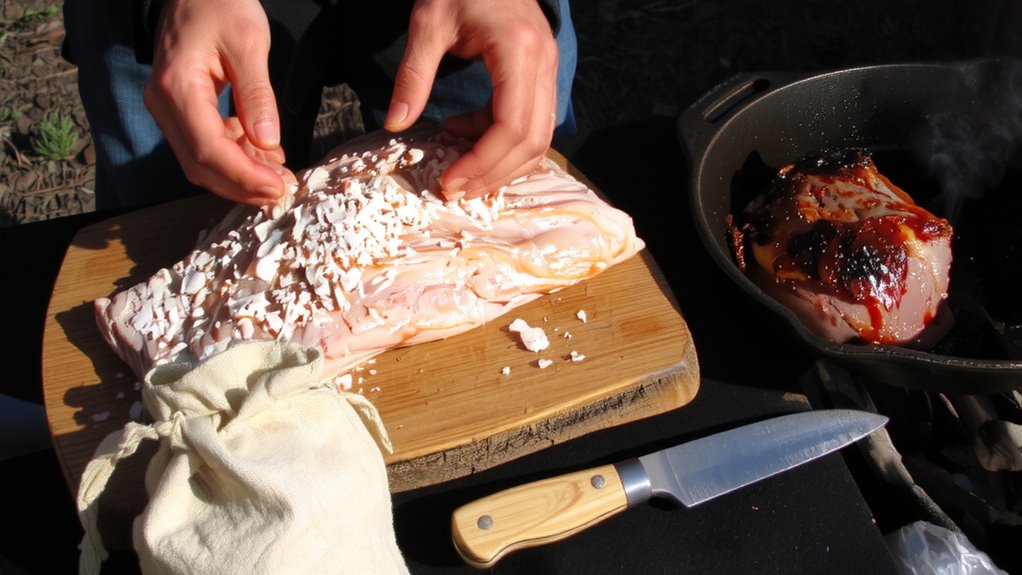
While regular seasoning might seem like enough for your outdoor cook, salt-curing goes a step further by preserving moisture and deepening flavor in ways a simple spice rub just can’t match. You’re not just seasoning the surface-you’re transforming the entire cut through osmosis and controlled dehydration. This process delivers serious flavor enhancement, as salt penetrates deep, drawing out impurities and locking in savory richness. Plus, it promotes texture improvement by firming proteins and creating a more consistent bite, whether you’re grilling over hot coals or smoking low and slow. Unlike quick seasoning, which often only affects the outer layer, salt-curing reshapes both taste and mouthfeel. You’ll notice better browning, improved moisture retention during high-heat cooking, and enhanced overall palatability. It takes a little more planning, sure, but if you’re aiming for professional-grade results with real depth, salt-curing is the smarter, more effective approach for serious outdoor cooking.
Best Meats and Fish for Outdoor Salt-Curing
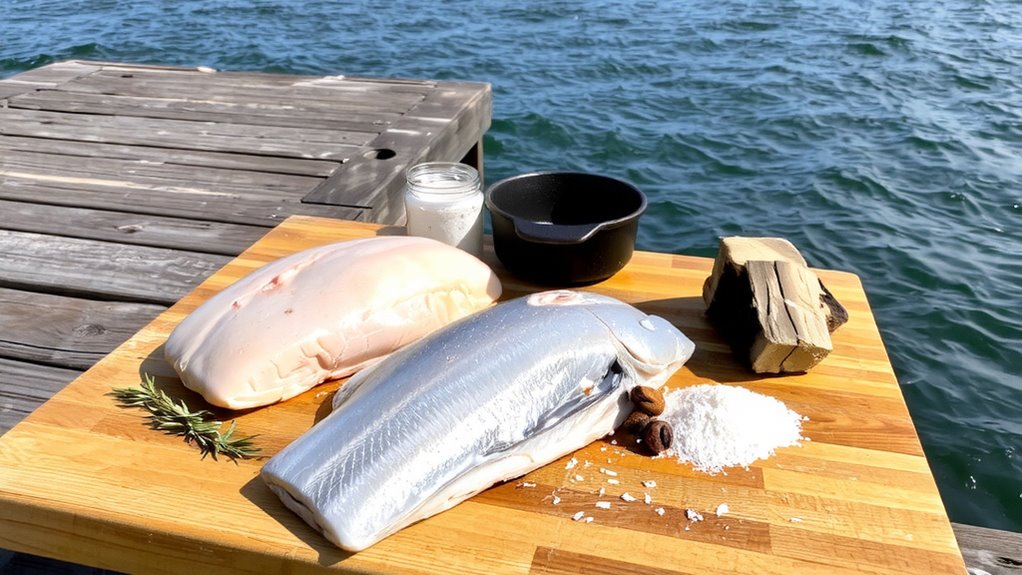
Fat content, cut thickness, and natural moisture levels-those are the real players when choosing the best meats and fish for outdoor salt-curing. You’ll want fattier cuts like pork belly or duck breast; they handle the dry environment well, resisting over-drying while promoting rich flavor development. Lean fish such as tuna or mackerel work beautifully too-their firm flesh accepts salt evenly, boosting taste and aiding texture enhancement. Thick steaks or whole fish hold up better during extended curing, letting salt penetrate gradually without breaking down the structure. Avoid very thin or watery meats-they turn tough or spoil faster under sun and wind. With the right selection, you’re not just preserving-you’re intensifying depth and mouthfeel. Think of salt as a silent partner: it draws out excess moisture, concentrates flavor development, and firms up texture enhancement, especially when nature’s heat and airflow do their part. It’s science-backed, time-tested, and essential for standout outdoor results.
Dry Cure vs. Brine: Which Works Better Outside?
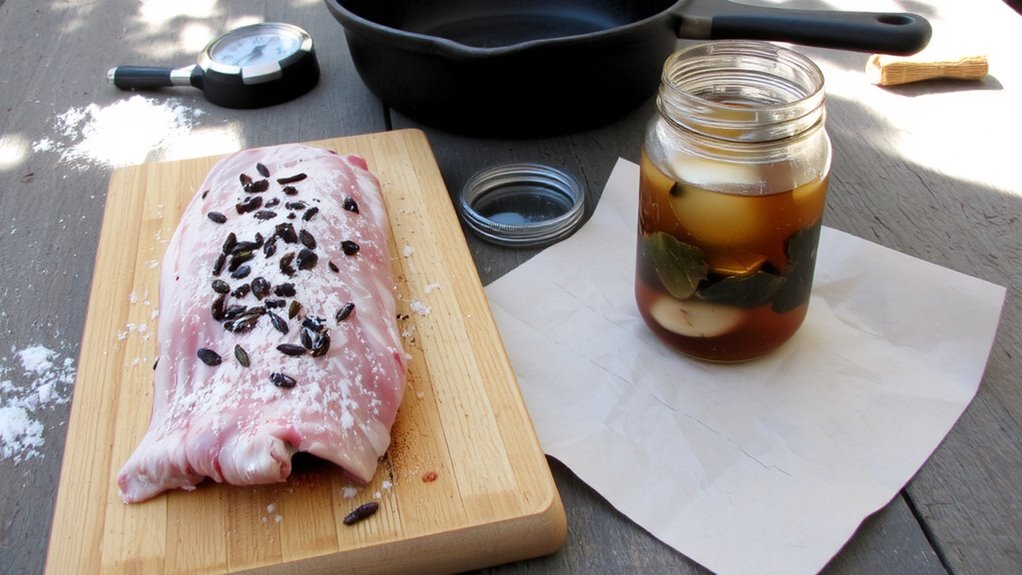
How do you decide between dry curing and brining when preparing meats and fish for outdoor preservation? It largely depends on your environment and desired outcome. Dry curing pulls moisture out more efficiently, making it ideal in dry, warm conditions where excess liquid could spoil. It forms a pellicle, enhancing smoke adhesion during outdoor cooking. Brining, by contrast, infuses moisture, great for lean meats prone to drying out over open flames. But in humid climates, the wet surface raises spoilage risk. For a practical brine comparison, consider weight, portability, and control-dry curing requires no containers and offers more precise salt penetration. Though both methods preserve effectively, dry curing often performs better outside due to stability and simplicity. You’ll get firmer texture, deeper flavor concentration, and less logistical hassle. When cooking off-grid, efficiency wins. Dry curing usually delivers. For best results when brining, choose the best salt for brining to ensure even dissolution and consistent flavor.
How Salt Preserves Meat: And Why Temperature Matters
Since salt’s ability to preserve meat hinges on its control of microbial activity, you’ll want to understand both the chemistry and the environmental factors at play-especially when working outdoors. Salt creates osmotic pressure, pulling moisture from microbial cells and dehydrating them, which slows spoilage. At the same time, it aids in enzyme inhibition, reducing the chemical reactions that break down meat quality. You’re not just seasoning-you’re fundamentally altering the meat’s environment to favor preservation. But temperature matters just as much: too warm, and microbes may still thrive despite salt; too cold, and the cure won’t penetrate evenly. For outdoor cooking, aim for a consistent 36–40°F (2–4°C) during curing. This range supports effective osmotic pressure and enzyme inhibition without freezing the meat. You’ll get safer, more flavorful results when you balance salt concentration with precise temperature control.
How to Cure Safely: Preventing Spoilage and Risks
You’ve already seen how salt and temperature work together to create the right conditions for preserving meat, but keeping your cured products safe means going beyond just the basics of osmosis and fridge settings. Hygiene practices are critical-always use clean utensils, sanitized surfaces, and wear gloves to minimize contamination risks. Even slight exposure to bacteria or mold spores can spoil your batch or create health hazards. Work in a controlled, cool environment whenever possible, especially during the initial cure phase. Avoid cross-contact between raw meat and finished products. Use curing salts with precise measurements-too little won’t protect, too much isn’t safe. Monitor humidity and airflow, since dampness encourages microbial growth. Proper storage, like vacuum sealing and refrigeration, extends shelf life and limits spoilage. When done right, safe curing isn’t just effective-it’s reliable for every outdoor cooking adventure.
Campfire Recipes for Your Homemade Cured Meats
What could be better than savoring the rich, deep flavors of your own cured meats under an open sky, where the scent of woodsmoke mingles with the savory aroma of a well-prepared meal? You’ve put time into perfecting your salt-cure, and now it’s time to elevate it with smoke infusion and smart flavor pairing. Cooking over a campfire isn’t just convenient-it enhances taste through slow, even heat and aromatic wood smoke. Try these pairings:
| Meat Type | Cooking Method |
|---|---|
| Cured pork belly | Wrapped in foil with applewood chips |
| Smoked venison | Skewered with peppers and onions |
| Dry-cured sausage | Grilled over mesquite coals |
Each method maximizes smoke infusion while balancing fat and texture. Flavor pairing with acidic or sweet vegetables cuts richness and deepens complexity. These recipes aren’t just practical-they’re proven performers in backcountry and backyard alike, delivering reliable, delicious results when technique meets fire.
On a final note
You’ve seen how salt-curing elevates outdoor cooking-offering preservation, flavor, and versatility unmatched by basic seasoning. Dry curing gives precise control, while brining suits leaner cuts, each effective when matched to environment and meat. Temperature stability is critical to prevent spoilage, so timing and storage matter. When done right, cured meats enhance campfire dishes markedly, proving that with proper technique, you’re not just cooking outside-you’re mastering it.