The Role of Vinegars in Crafting Unique and Flavorful Barbecue Sauces: A Comprehensive Guide
You’re not just adding tang when you use vinegar in barbecue sauce-it’s the backbone that balances sweetness, cuts through fat, and preserves freshness. Apple cider vinegar brings fruity brightness, while white vinegar offers clean sharpness. The type you choose shapes the sauce’s character, from Eastern Carolina’s vinegary heat to Kansas City’s sweet-tart glaze. Get the ratio wrong, and flavors fall flat. Pick the right one, and you’ll taste the difference in every slow-cooked bite-what comes next might just transform your grill game.
Notable Insights
- Vinegar adds tangy acidity that balances sweetness and cuts through fatty meats in barbecue sauces.
- Different vinegars-like apple cider, white, and balsamic-contribute unique flavor profiles and regional authenticity.
- Acidity from vinegar enhances preservation, improving shelf life and food safety in homemade sauces.
- Regional BBQ styles rely on specific vinegars, such as apple cider in Eastern North Carolina’s pork sauces.
- Simmering vinegar mellows its sharpness and allows better integration with sweet, spicy, and umami ingredients.
Why Vinegar Makes or Breaks BBQ Sauce
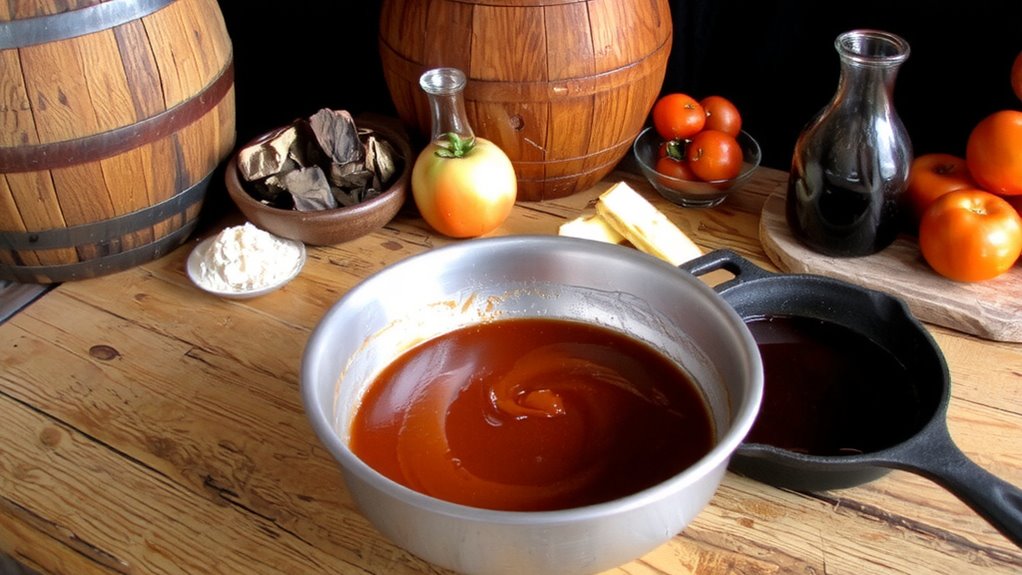
That sharp tang you taste in a good BBQ sauce? It’s vinegar, and it’s doing way more than just adding zing. You see, vinegar’s chemical composition-mainly acetic acid and water-acts as both a flavor enhancer and a preservative, keeping your sauce stable over time. This acidity cuts through fat, balancing rich, smoky notes in grilled meats. But vinegar doesn’t just appear-it’s born from a precise fermentation process where ethanol converts to acetic acid via bacteria. This transformation affects consistency and potency, so the source material (like apple cider or malt) matters. If fermentation goes off track, your sauce might turn too harsh or dull. Either way, it breaks the balance. That’s why understanding vinegar’s role isn’t just useful-it’s essential. Get it right, and your BBQ sauce lifts the whole cook. Get it wrong, and even the best brisket won’t save it.
How Each Vinegar Changes BBQ Sauce Flavor
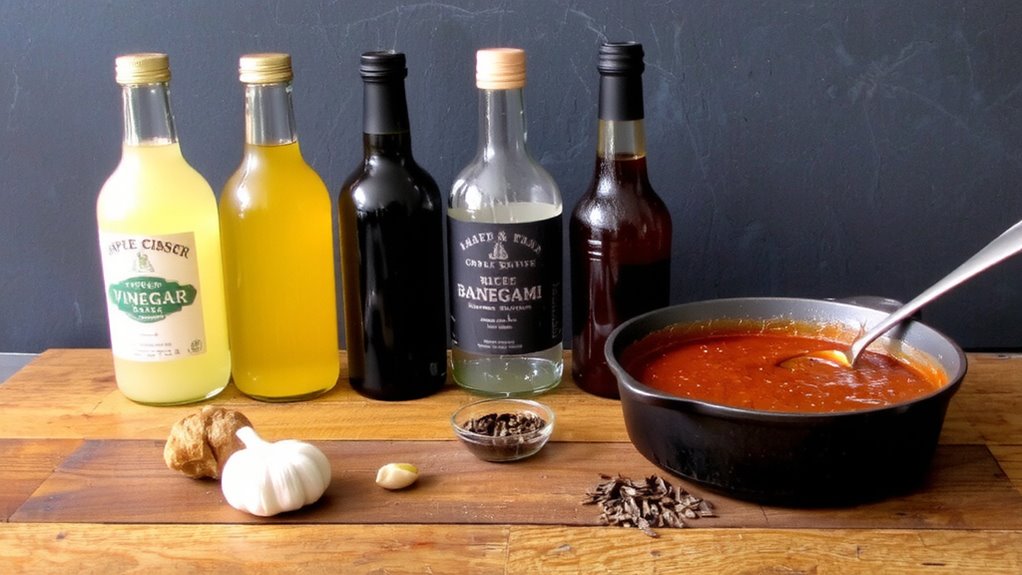
While all vinegars bring acidity to the table, not every type plays the same role in shaping your BBQ sauce’s flavor, and choosing the right one can make a noticeable difference in how your sauce complements the meat. Apple cider vinegar adds a bright tang with a touch of apple sweetness, mellowing spice and enhancing fruit notes-ideal for balanced, approachable sauces. Distilled white vinegar delivers sharp, clean punch, cutting through fat without adding complexity. Malt vinegar offers earthy depth, pairing well with smoked meats but risking overpowering subtler flavors. Red wine vinegar introduces a fruity tang with mild tannins, helping emulsify and stabilize the sauce. Meanwhile, balsamic richness brings both sweetness and complexity, deepening color and contributing caramelized undertones that elevate richer, thicker sauces. Each vinegar alters mouthfeel and taste equilibrium, so consider how its unique profile interacts with sweetness, heat, and smoke. Your choice ultimately shapes the sauce’s character-subtle or bold, tangy or rounded.
Matching Vinegars to Regional BBQ Styles
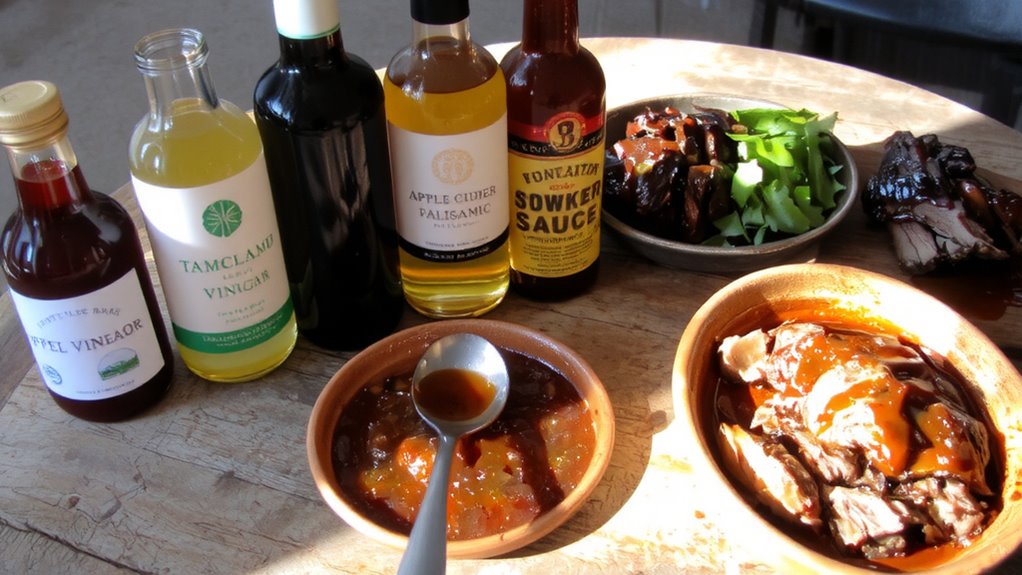
Why do certain BBQ styles taste the way they do? It’s largely due to vinegar pairings rooted in regional traditions. In Eastern North Carolina, sharp apple cider vinegar cuts through fatty pork, giving that tangy bite you can’t miss. You’ll find it’s not just flavor-it’s heritage. Meanwhile, Tennessee relies on milder white vinegar, blending it with a touch of tomato for balance. If you head to South Carolina, yellow mustard-based sauces often include white vinegar, complementing the area’s German-influenced tastes. Kansas City styles? They use apple cider or white vinegar sparingly, letting sweetness dominate. These vinegar pairings aren’t random; they’re shaped by local ingredients and cooking methods passed down for generations. When you match the right vinegar to the regional tradition, you honor the craft. It guarantees authenticity and depth, making your sauce more than just condiment-it becomes a story on the plate.
Balancing Sweet, Spicy, and Sour in BBQ Sauce
What makes a great BBQ sauce work? It’s all about balance-sweet, spicy, and sour must complement, not overpower. You need the tang of vinegar to cut through richness, but not so much that it dominates. Pair that with sweeteners like brown sugar or molasses to add caramel notes and smoothness. Those sugars also help with glazing and bark formation on meats. Then come the spices-chili powders, cayenne, black pepper-to bring heat without scorching the palate. The secret weapon? Ingredients like Worcestershire or tomato paste that deepen flavor with umami depth. When these elements sync, the sauce enhances the meat instead of masking it. Too much sweetness dulls the tang; excess heat overwhelms nuance. Adjust gradually, tasting as you go. A well-balanced sauce lifts your BBQ from good to unforgettable, offering complexity with every bite.
Smart Vinegar Tips for Homemade BBQ Sauce
You’ve already seen how balancing sweet, spicy, and sour elements creates a harmonious BBQ sauce, and now it’s time to fine-tune one of the most impactful ingredients: vinegar. For marinade enhancement, use apple cider vinegar-it tenderizes meat while adding fruity depth. Distilled white vinegar offers sharp acidity ideal for sauce preservation, especially in shelf-stable batches. Reduce harshness by simmering vinegar early to mellow its bite and deepen flavor integration. Pair bold vinegars like red wine or malt with robust spices to maintain balance.
| Feeling | Vinegar Choice Insight |
|---|---|
| Confidence | Proper acidity guarantees safe sauce preservation |
| Satisfaction | Balanced tang boosts marinade enhancement |
| Pride | Crafting from scratch shows mastery of flavor science |
Choose acidity wisely-it shapes both safety and soul in your sauce.
On a final note
You’ve seen how vinegar shapes BBQ sauce, from balancing sweetness to enhancing smoke. Each type-apple cider, white, malt, or balsamic-brings distinct acidity and depth, essential in regional styles like Carolina’s tang or Kansas City’s sweet-sour punch. Choosing the right vinegar elevates flavor while ensuring consistency. When crafting your sauce, taste as you go; acidity should brighten, not overpower. A well-balanced sauce reflects both art and understanding of ingredients.