BBQ Sauce Ratio: 2:1 Savory-to-Sweet for Balanced Flavor
You’re better off starting with a 2:1 savory-to-sweet ratio-it keeps your sauce from turning cloying while letting smoky, umami elements like tomato paste, onions, and smoked paprika shine. Brown sugar and honey add depth without overwhelming, while vinegar or mustard brings balance. Too much sugar dulls complexity, but this ratio holds up across grilling methods and meat types. Getting this foundation right sets you up to refine flavor with confidence-and discover how small tweaks create standout results.
Notable Insights
- Start with a 2:1 savory-to-sweet ratio to build depth without oversweetening the sauce.
- Use brown sugar and molasses for smoky sweetness that caramelizes evenly and enhances flavor.
- Balance excess sweetness with vinegar or citrus to restore brightness and complexity.
- Incorporate umami-rich ingredients like tomato paste and mushroom extract for savory depth.
- Adjust ratios based on regional styles, such as Kansas City’s sweeter 3:1 or Texas’s savory, low-sugar profile.
How the Sweet-Savory Ratio Defines Great BBQ Sauce
While balance is key in any well-crafted BBQ sauce, it’s the sweet-savory ratio that ultimately determines whether your sauce elevates the meat or overpowers it. You want a smoky sweetness that enhances, not masks, the char from the grill-think molasses or brown sugar in moderation, building depth without cloying. Too much sugar and you lose the savory backbone; too little, and the sauce falls flat. A tangy balance, often achieved with vinegar or mustard, cuts through richness and refreshes the palate. Great sauces marry these elements so neither dominates. You’ll notice the best store-bought or competition-style sauces use this harmony deliberately, letting smoke and spice linger while sweetness rounds the edges. This ratio isn’t fixed, but your version should pivot on intent: ribs need more smoky sweetness, pulled pork thrives on tangy balance. Know your meat, then tailor the blend.
Start With a 2:1 Savory-To-Sweet Base
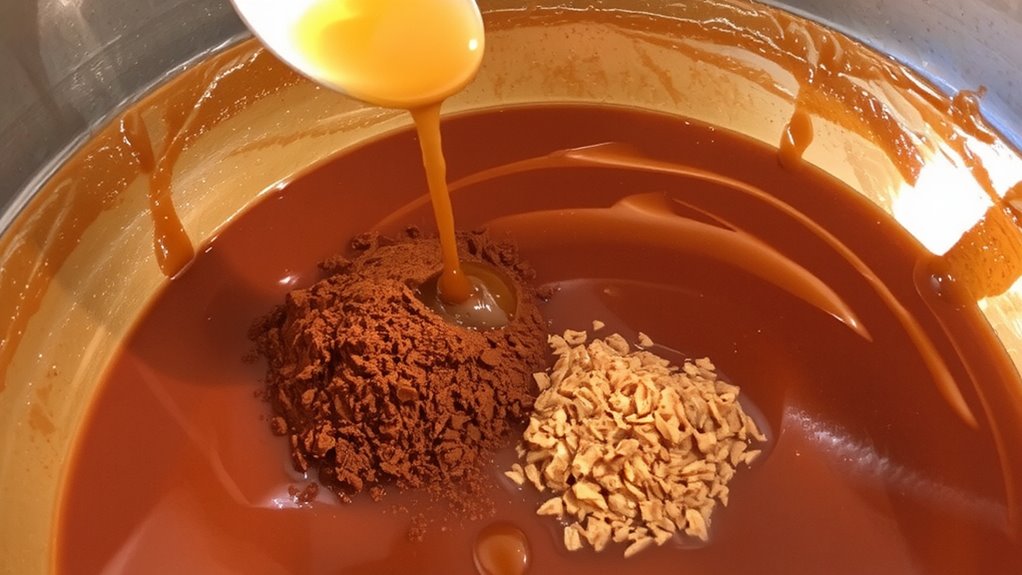
A 2:1 savory-to-sweet ratio gives you a reliable starting point for building depth without oversweetening your BBQ sauce. You’ll find this balance lets savory elements like tomato, onions, and smoked paprika shine while still allowing sweetness to round out the edges. It’s especially effective when you’re experimenting with fruit pairings-think tart cherries with brisket or peach with pork ribs-as they integrate smoothly without dominating. This ratio also provides stability when adjusting spice levels, ensuring heat from chili or cayenne complements rather than clashes with the overall profile. Too much sugar can mute spice, but with a 2:1 foundation, flavors layer logically and hold up during slow cooking. You’ll get consistent results across grilling methods, whether using charcoal, gas, or offset smokers. It’s not a rigid formula, but it’s a smart benchmark that simplifies troubleshooting and encourages thoughtful customization while keeping your sauce grounded in classic barbecue character. For inspiration on trusted flavor profiles, check out expert-tested options in the best BBQ sauces roundup.
Best Sweeteners for Balanced Homemade BBQ Sauce
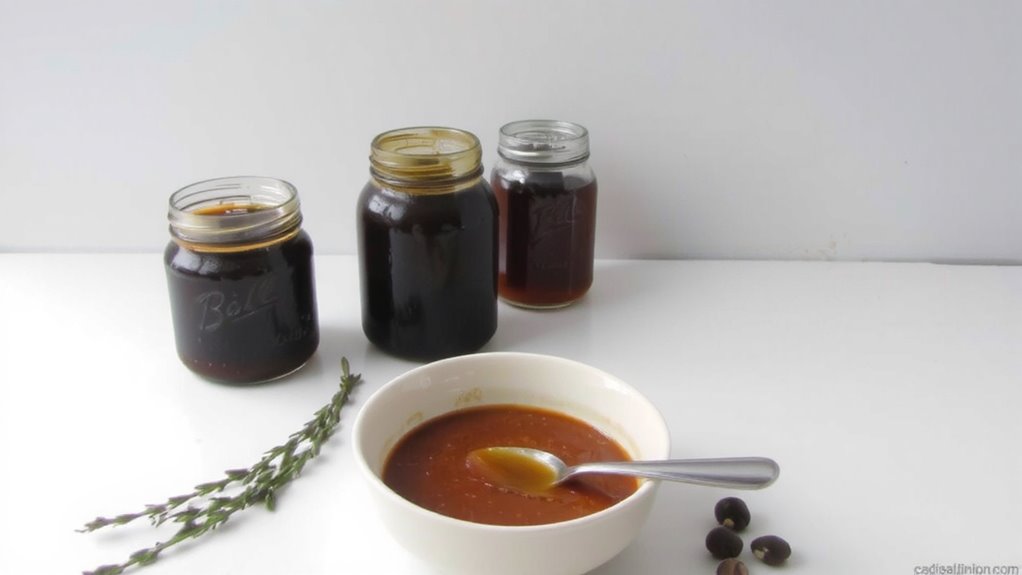
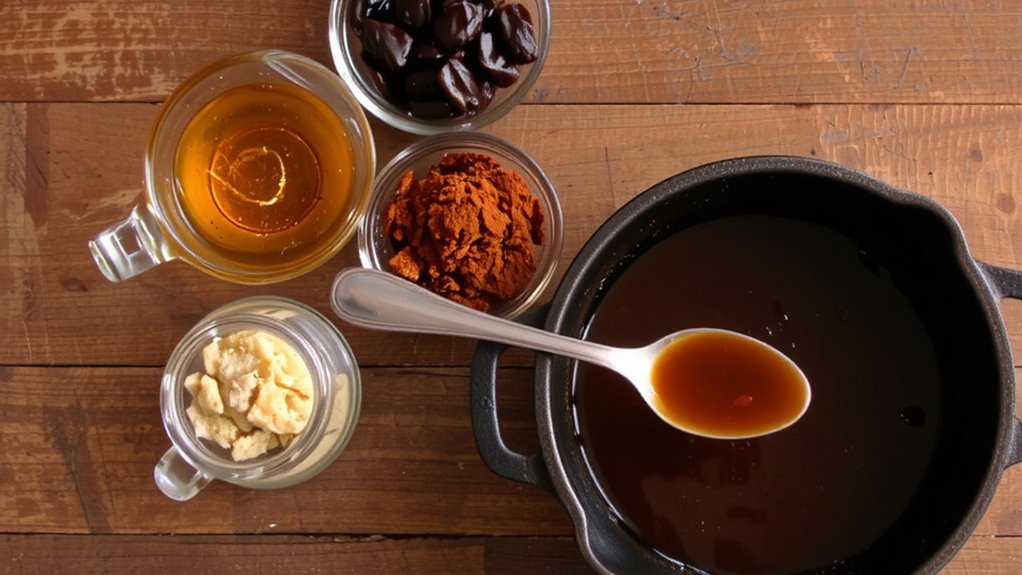
The best sweeteners for balanced homemade BBQ sauce bring more than just sugar-they add depth, texture, and caramelization that enhance the sauce’s overall performance on the grill. You’ll find brown sugar molasses offers a rich, slightly smoky sweetness that holds up well under heat, creating a thick, glossy finish. It caramelizes evenly, preventing burning while boosting complexity. Honey adds floral acidity and a lighter body, ideal when you want sweetness without heaviness-plus, it clings well to meats. Maple brings a nuanced earthiness and subtle bitterness, balancing spicy or tangy notes effortlessly. While corn syrup may be neutral, natural options like honey maple and brown sugar molasses provide layered flavor. You’re better off combining them: a blend of brown sugar molasses and honey often delivers the most rounded result, especially over extended cooking times. Each sweetener behaves differently, so matching it to your heat method and protein type matters just as much as quantity. A well-crafted sauce benefits from using a pan that enhances caramelization, such as one of the best broiling pans for consistent, high-heat performance.
Umami-Rich Ingredients That Build Depth
Think of umami as your sauce’s backbone-the deep, savory layer that makes everything taste more substantial and complete. You can’t skip it if you’re after a sauce with real character. Ingredients like mushroom extract and fermented beans don’t just add flavor-they build complexity, enhancing richness without overwhelming. Mushroom extract dissolves easily, delivering earthy depth, while fermented beans bring a salty, tangy punch that balances sweetness naturally. Best umami seasonings can elevate your homemade BBQ sauce with minimal effort. Here’s how they stack up:
| Ingredient | Flavor Contribution |
|---|---|
| Mushroom extract | Earthy, meaty, long-lasting |
| Fermented beans | Salty, tangy, deeply savory |
| Tomato paste | Sweet umami, thick base |
Use them in moderation-too much and you’ll overpower the blend. Balanced right, they anchor your sauce, giving it the savory weight barbecue craves.
Fixing a Sauce That’s Too Sweet or Too Smoky
Why does your BBQ sauce sometimes hit you with an overwhelming wave of sweetness or an abrasive cloud of smoke? You’ve likely pushed the sugar too far or over-smoked the base. If it’s too sweet, balance it with acidity-add vinegar or citrus to cut through without diluting flavor. Too smoky? That harshness often comes from an over seasoned reduction; thin it with tomato or broth to tame the intensity. Don’t forget to simmer afterward, letting flavors integrate. A sauce that’s unbalanced can quickly slip into bland consistency if you’re not careful-adjust in small increments. Taste as you go. You want depth, not domination. These fixes preserve complexity while restoring harmony. Whether you’re grilling brisket or ribs, a well-tuned sauce elevates the meat without overshadowing it. Precision in correction guarantees your homemade BBQ sauce remains bold, balanced, and worthy of the smoker’s craft.
Customize the Ratio for Regional Styles and Taste
You’re not stuck with one-size-fits-all sauce-tailoring your ratio opens the door to authentic regional expressions and personal taste. Regional preferences shape iconic BBQ styles: Memphis leans tangy with moderate sweetness, while Kansas City embraces a 3:1 sweet-to-savory ratio, relying on molasses and brown sugar. In contrast, Texas prioritizes savory depth with smoked chili and cumin, often cutting sweetness nearly in half. For Carolina vinegar-based sauces, you’ll drop sugar almost entirely, balancing heat and acidity. Taste customization allows you to align with these traditions or deviate intentionally. Adjust ketchup for sweetness, add cider vinegar for brightness, or increase Worcestershire for umami. Small batches let you test variations efficiently. Observing how ingredients interact during simmering guarantees cohesion. Your palate is the final judge, but grounding experiments in regional frameworks improves outcomes. Thoughtful tweaks make your sauce not just personal, but authentic.
On a final note
You’ll find the ideal balance in homemade BBQ sauce by starting with a 2:1 savory-to-sweet ratio, then adjusting to taste. This base supports depth from tomato, smoke, and umami-rich ingredients like Worcestershire or soy, while sweeteners such as molasses or honey enhance without overwhelming. Fine-tuning secures compatibility with your protein and regional style. A well-calibrated sauce should complement, not mask, the meat’s natural flavor, making precision in proportions essential for consistent, flavorful results.