How to Prevent Rust on Outdoor Cast Iron When Camping or Grilling in Humid Conditions
Dry your cast iron right after cooking with a lint-free towel to stop moisture from causing rust, especially in humid outdoor conditions. Use high-smoke-point oils like grapeseed or avocado for seasoning-they form a durable, humidity-resistant layer. Store it in a dry, ventilated spot, never in damp areas. Re-season before and after trips, and scrub off any rust fast with steel wool, then re-season. Proper care keeps it performing well season after season.
Notable Insights
- Dry cast iron immediately after cooking with a lint-free towel to remove all moisture and prevent rust.
- Apply a thin layer of high-smoke-point oil like grapeseed or avocado to create a durable, moisture-resistant seasoning.
- Store cast iron in a dry, well-ventilated area indoors, away from damp outdoor environments.
- Re-season the pan before and after camping trips to maintain a strong protective barrier against humidity.
- Remove surface rust promptly with steel wool, then re-season to stop further oxidation.
Dry Your Cast Iron Immediately After Cooking
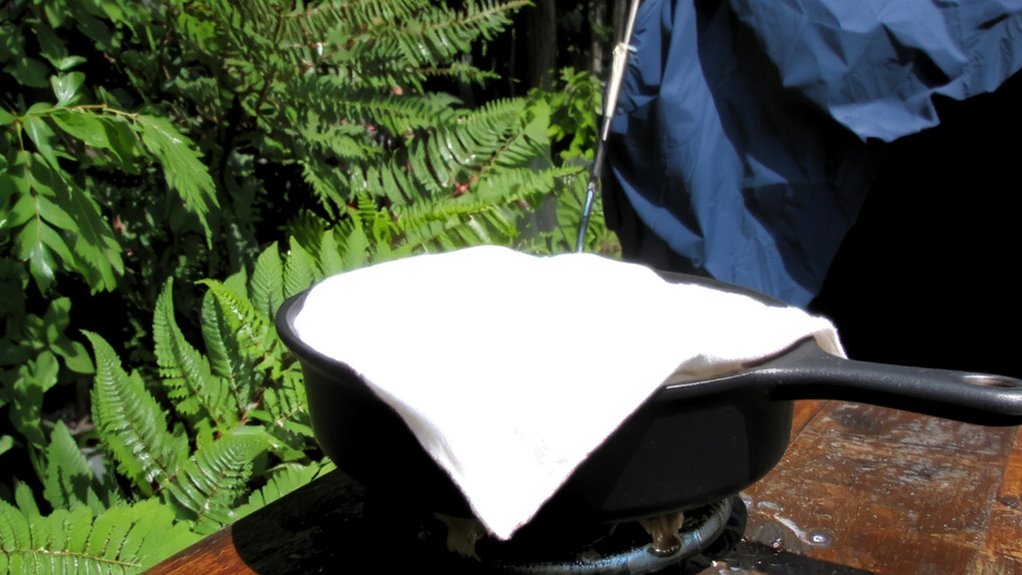
While you might be tempted to leave your cast iron sitting after a long cookout, doing so invites moisture to settle in, and that’s when rust starts creeping in. You need to act fast-residual water from cooking or cleaning can bond with iron, especially in humid outdoor conditions. Air drying alone isn’t reliable; ambient moisture lingers and undermines the process. Instead, grab a lint-free towel immediately after wiping the surface. Your towel choice matters: paper towels may leave fibers, while worn cotton cloths absorb better and won’t scratch. Rub the entire surface, including corners and handle, until completely dry. This step isn’t just about removing visible water-it’s about eliminating microscopic dampness that leads to oxidation. Proper drying is the foundation of rust prevention. Skip shortcuts like air drying, and prioritize thorough, immediate hand-drying with the right fabric. It’s a small effort that extends your pan’s life dramatically.
Use High-Smoke-Point Oil for Humidity-Resistant Seasoning
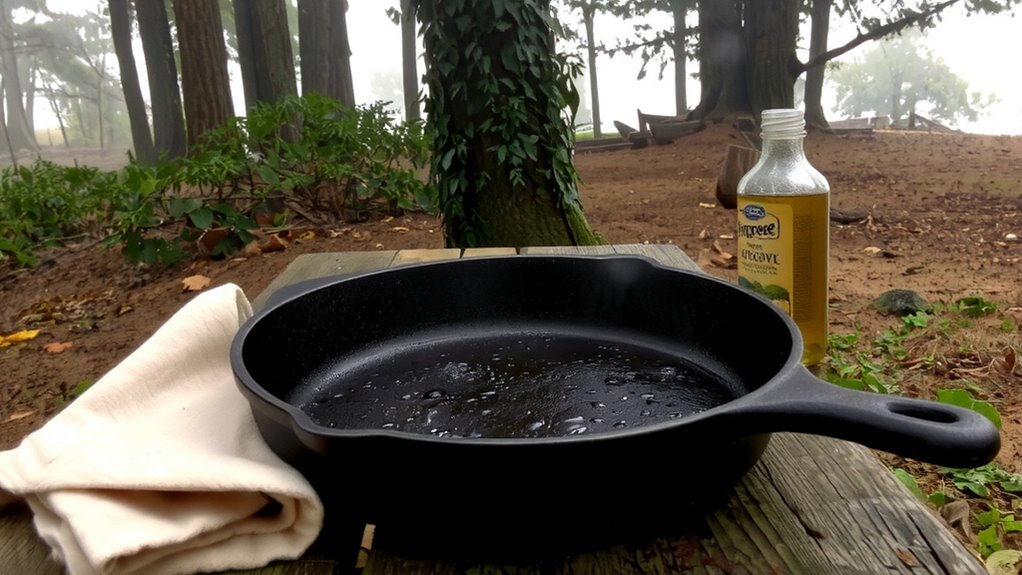
Since moisture and heat are constant challenges in outdoor cooking, choosing the right oil for seasoning your cast iron makes a real difference in long-term durability. You need a high-smoke-point oil to build a strong, humidity-resistant layer that won’t break down under intense grilling conditions. Oils like grapeseed, avocado, or refined safflower offer superior heat resistance and oil stability, meaning they polymerize effectively without leaving gummy residues. When heated past their smoke point, unstable oils degrade, weakening the seasoning and inviting rust. But with a stable oil, you get a harder, more protective coat that stands up to damp air and repeated use. This isn’t just about cooking performance-it’s about preservation. A well-seasoned surface repels moisture far better, which is essential in humid environments. For best results, apply a thin layer and heat it evenly over the fire, letting it cure into a slick, resilient finish that protects every time you cook. For reliable options, check out the best oils for grilling based on performance and smoke point.
Store in a Dry, Ventilated Spot to Block Moisture
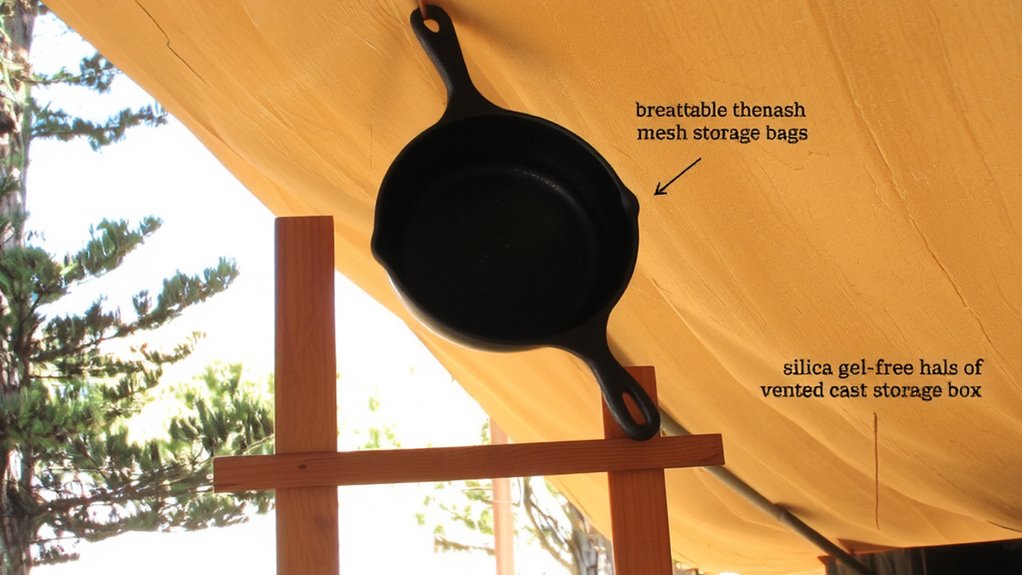
Your cast iron’s longevity hinges on more than just seasoning-it starts the moment you put it away. After each use, especially in humid conditions, choosing the right storage location is critical. You need a spot that’s not only dry but allows for proper ventilation importance. Moisture lingers in enclosed, dark spaces like damp garages or unheated sheds, making them poor choices. Instead, opt for indoor cabinets with airflow or open shelves away from sinks or outdoor doors. Even slight humidity can condense on metal, so elevation from concrete floors and distance from moisture sources matter. A well-ventilated storage location prevents trapped air from accelerating oxidation. While cast iron is rugged, its vulnerability to moisture means thoughtful post-use care is non-negotiable. Smart storage isn’t just practical-it’s an investment in durability and consistent cooking performance.
Re-Season Before and After Humid Adventures
Just because your cast iron is stored properly doesn’t mean it’s fully armored against the elements, especially when you’re hauling it into humid environments for outdoor cooking. Re-seasoning before and after each trip reinforces the protective layer, combating moisture that leads to rust. The right oil types and proper heat levels make all the difference in creating a durable, non-stick surface. Flaxseed oil polymerizes well but can flake; grapeseed and canola offer reliable performance with less risk. Apply thin coats and bake at consistent heat levels to avoid sticky residue or weak bonding. For outdoor grilling enthusiasts, choosing the best cast iron cookware ensures better heat retention and rust resistance in tough conditions. This simple routine guarantees your cookware performs well and lasts decades.
Scrub and Re-Season at First Sign of Rust
If you spot even a speck of rust on your cast iron, don’t wait-it’s already compromising the integrity of the seasoning and leaving the metal vulnerable to further degradation. Early rust identification is key; surface rust appears as reddish-brown spots and feels rough, unlike smooth, seasoned areas. Ignoring it risks deeper pitting and weakening of the cookware. Start with proper scrub techniques: use a stiff brush or fine steel wool with warm water to remove rust without damaging the base metal. Avoid harsh dishwashers or soaking. Once clean and dry, re-season immediately-apply a thin oil layer and bake it to restore protection. This reactive maintenance isn’t just cosmetic; it prolongs your skillet’s performance and heat retention. In humid outdoor settings, quick action guarantees reliability over coals or campfire. Regular inspection and timely scrub-and-re-season cycles maintain durability far better than passive care ever could. For those seeking time-tested durability, consider restoring a Best Vintage Cast Iron Picks piece, known for superior heat retention and craftsmanship.
How Humidity Triggers Rust on Cast Iron Fast
Though cast iron thrives under high heat and rugged outdoor use, it’s surprisingly vulnerable when ambient moisture lingers, because humidity accelerates oxidation the moment water vapor bonds with exposed iron. You might not see it, but that invisible layer of moisture on your skillet is kickstarting a chemical reaction-iron meets oxygen in the presence of water, forming iron oxide, or rust. Even brief moisture exposure, like cooling down after cooking or sitting outside overnight, is enough. Humid air doesn’t need to drip; it saturates surfaces subtly, especially in wooded or coastal camping areas. This constant dampness undermines the seasoning, leaving bare metal open to corrosion. Unlike occasional wetting, sustained humidity creates unrelenting conditions for rust, making prevention critical. You can’t control the weather, but understanding this chemical reaction helps justify immediate drying, thorough seasoning, and protective storage. In humid conditions, proactive maintenance isn’t just smart-it’s essential for preserving performance and longevity.
On a final note
You can keep your cast iron rust-free outdoors, even in humidity, by drying it thoroughly after use and applying a thin coat of high-smoke-point oil. Store it in a ventilated area to prevent moisture buildup, and re-season before and after trips. At the first sign of rust, scrub it off and re-season promptly. Humidity accelerates oxidation, so proactive care is essential for longevity and performance over time.