Baking Cornbread in a Lodge Cast Iron Skillet Over Campfire Coals – Temperature Control Tips
Use medium heat from mature, orange-red coals with a light ash coating for even baking in your Lodge cast iron skillet. Avoid black or overly bright coals-they’ll undercook or scorch your cornbread. Hold your hand 5 inches above the coals; if you last 3–4 seconds, the heat’s just right. Center the preheated skillet in the fire bed, rotate it every 10–15 minutes, and cover loosely with foil to control browning. You’ll get golden, fully cooked cornbread every time-there’s more to mastering campfire baking than just heat control.
Notable Insights
- Use mature orange-red coals with a light ash coating for consistent, even heat.
- Test heat by holding your hand 5 inches above coals; 3–4 seconds indicates ideal temperature.
- Preheat the Lodge cast iron skillet and place it on embers at 350°F to 375°F.
- Rotate the skillet every 10–15 minutes to counteract hot spots and ensure even baking.
- Cover with foil to slow top browning and ensure the center cooks fully without burning.
Choose the Right Coals for Campfire Cornbread
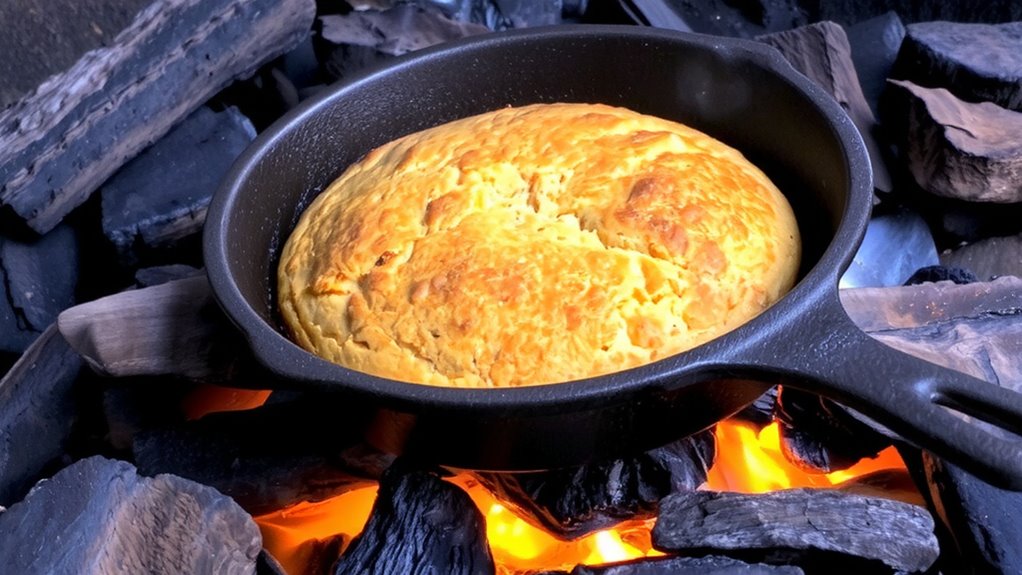
Your campfire’s success starts with the coals-specifically, the ones that glow steadily beneath your cast iron skillet. For campfire cornbread, you need coals with a consistent heat consistency, not sudden flares or cool spots. The ideal coal color is a deep, even orange-red, covered lightly with gray ash-this signals they’re ready. Too black, and they’re dead; too bright, and they’ll scorch your batter. You want radiating heat that mimics an oven, not open flame. Position your skillet over these mature coals, avoiding flame contact. Their stable output guarantees even rising and browning. Uneven coal beds create hotspots, leading to burnt edges and raw centers. Replenish as needed, but maintain the same color and density. Mastering coal color and heat consistency turns unpredictable fire into reliable baking-essential for golden, crumb-perfect cornbread every time.
Test Heat by Holding Your Hand Over the Coals
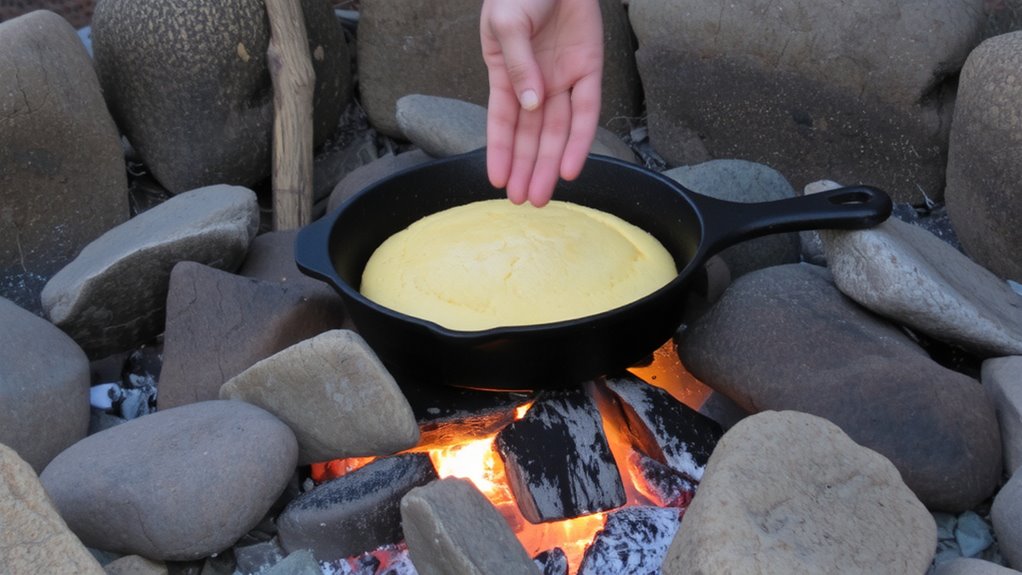
How hot should the coals be before you set the skillet down? You’ll want to test the heat using hand distance-a classic, reliable method. Hold your palm about five inches above the coals and count how many seconds you can keep it there. If you last 5–7 seconds, the heat is low; 3–4 seconds means medium, ideal for cornbean. Less than 3? It’s too hot. The coal color also tells a story: glowing orange-red embers with a light ash coating indicate perfect, even heat. Darker, blackish coals are too cool; bright yellow or white spots signal scorching zones. Using hand distance and observing coal color together gives you precision control without tools. This dual assessment guarantees your Lodge skillet heats evenly, preventing burnt bottoms or gummy centers. Trusting these cues beats guesswork every time. A well-chosen campfire grill can enhance heat distribution and make skillet cooking even more consistent.
Place the Cast Iron Skillet in the Fire Bed
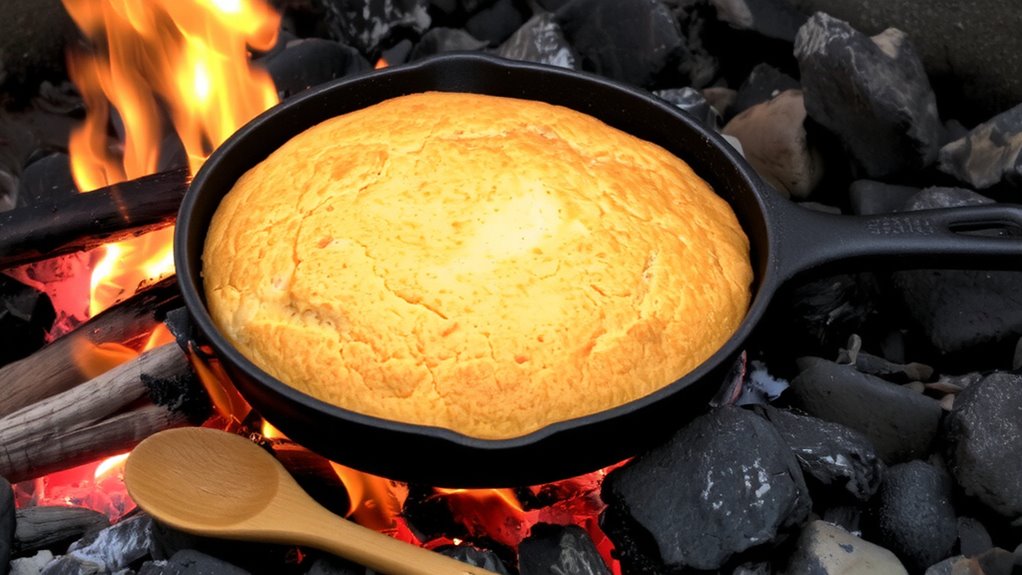
A well-preheated cast iron skillet should go directly into the fire bed once the coals have reached that ideal medium heat-around 350°F to 375°F-where embers glow a consistent orange-red and a light layer of ash has formed. Your fire bed placement matters: center the skillet where heat is most even, avoiding direct flame bursts that can scorch the cornbread. Nestling it slightly into the coals helps stabilize temperature and promotes uniform baking. A properly seasoned skillet won’t just survive this treatment-it’ll thrive, thanks to intact cast iron seasoning that protects against moisture and sticks. That polymerized layer handles high heat beautifully, enhancing non-stick performance over time. You’re not just cooking; you’re reinforcing the pan’s durability with each use. Proper fire bed placement and maintained seasoning mean better heat retention and fewer hot spots, setting you up for success before the first turn of the spatula. For reliable performance in this environment, consider using one of the best cast iron cookware options designed to excel under high, uneven heat.
Rotate the Skillet to Avoid Hot Spots
Though fire beds provide steady heat, they rarely distribute it evenly, which is why rotating the skillet every 10 to 15 minutes makes a real difference in achieving consistent browning and even baking. You’ll notice certain edges darken faster, a sign that hot spots are at work. By turning the skillet a quarter or half-turn each interval, you promote even heating across the entire surface. This simple move compensates for irregular coal placement and airflow variances. Good skillet balance is essential-it guarantees stability during rotation and prevents batter spillage. A well-balanced Lodge cast iron skillet, with its sturdy handle and uniform weight distribution, excels here. You’re not just stirring heat; you’re guiding it strategically. Over time, this practice results in a uniformly golden crust instead of patchy, overdone sections. It’s a low-effort technique with high payoff, reflecting how thoughtful attention to setup enhances outdoor cooking outcomes. Rotation isn’t just maintenance-it’s precision.
Cover With Foil to Control Top Browning
Why does the top of your cornbread sometimes turn dark before the inside is fully cooked? Uneven heat distribution from campfire coals can cause excessive browning. That’s where foil shielding comes in. Loosely covering the skillet with aluminum foil slows surface browning by improving heat diffusion, giving the interior more time to bake evenly. It’s a simple fix that boosts control when cooking over unpredictable flames.
| Condition | With Foil Shielding | Without Foil |
|---|---|---|
| Top Browning | Even, golden | Dark, rapid |
| Interior Doneness | Consistent | Undercooked |
| Heat Diffusion | Improved | Uneven |
Using foil shielding doesn’t stop cooking-it just balances it. This method is especially helpful with cast iron, which retains intense heat. You’ll get better results without sacrificing texture. For even greater heat management, consider using a camping griddle with adjustable height settings to fine-tune your cooking surface temperature.
Bake Cornbread Until Golden and Cooked Through
Once the batter is in the skillet and the heat is set, you’ll want to let the cornbread bake until it turns a rich golden color on top and feels firm to the touch, signaling that the exterior has properly set. Baking time typically ranges from 25 to 35 minutes, depending on coal temperature and skillet placement. Cast iron performs exceptionally well as a reliable oven alternative, evenly distributing heat and retaining it longer than most portable solutions. You can test doneness by inserting a thin knife or skewer into the center-if it comes out clean, the bread’s cooked through. Avoid underbaking, as campfire conditions vary, and moisture can linger in the crumb. Unlike conventional ovens, open fires require more attentive monitoring, but the skillet’s responsiveness to heat adjustments makes it a practical choice. With experience, timing becomes intuitive, making cast iron a trusted option for outdoor baking.
Fix Burnt or Gummy Campfire Cornbread
If your cornbread comes out with a charred crust or a damp, gummy interior, don’t worry-common campfire pitfalls like uneven heat or misjudged timing can usually be corrected with a few smart adjustments. A burnt exterior often means the coals were too close or too hot; next time, lift the skillet slightly or use fewer hot coals underneath. For gummy cornbread, the issue usually lies in batter consistency-too much liquid or too little cooking time. Make sure your batter is thick but pourable, not runny, to support even baking. Also, check that your cornmeal texture isn’t too fine, which can trap moisture; a medium or stone-ground variety gives better structure and absorbs heat more evenly. Rotate the skillet occasionally for uniform cooking. Finally, use a tester-if it comes out clean, it’s done. These tweaks guarantee reliable results no matter the outdoor conditions.
On a final note
You’ve learned how coals regulate heat when baking cornbread in a Lodge cast iron skillet. Proper coal selection and hand-testing guarantee even cooking, while rotating prevents hot spots. Foil helps manage browning, and thorough doneness avoids gumminess. Cast iron’s heat retention excels outdoors, though temperature control demands attention. This method proves reliable with practice, blending tradition and function. For campfire baking, technique outweighs convenience, yielding results no oven quite replicates.