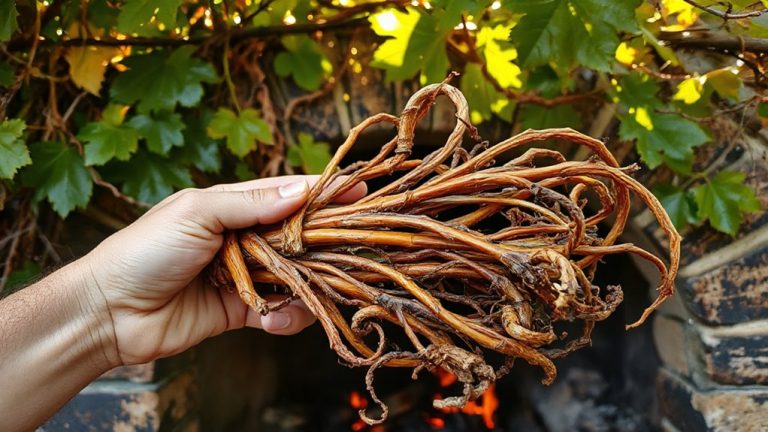
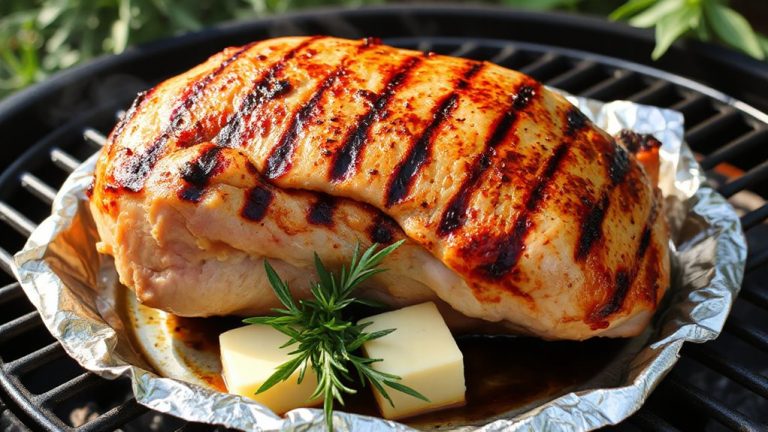
Emergency Campfire Cooking: Preparing Meals When Gear Is Lost or Damaged
You can still cook safely if your gear fails-start by positively identifying edible wild plants like cattails or dandelions, avoiding toxic look-alikes. Use green wood to carve spits or tripods, and heat-resistant stones as stable griddles over coals. Build a Dakota fire to concentrate heat efficiently, then wrap food in leaves or skewer on sticks to cook evenly without pots. Keep meals safe by storing them cool and elevated, and reheat thoroughly. You’ll find smarter ways to turn scarcity into sustenance.
Notable Insights
- Identify edible wild plants with certainty using field guides and observable traits to avoid toxic look-alikes.
- Construct cooking tools from green wood, flat stones, or clay to replace lost gear safely and effectively.
- Build efficient fires like Dakota holes to concentrate heat for cooking with minimal fuel waste.
- Use leaves or green sticks to wrap or skewer food, enabling safe cooking over coals without metal utensils.
- Store perishable food in shaded, elevated, or water-cooled locations and reheat thoroughly before consuming.
Find and Prep Safe Wild Foods
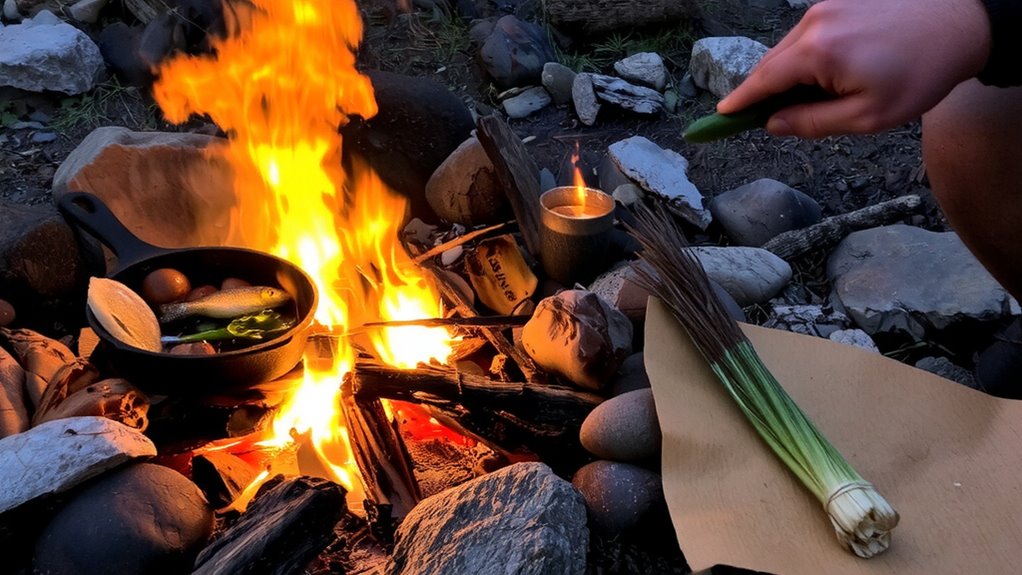
While foraging can add variety to your emergency meals, you’ll want to be certain about what you pick-mistaking toxic plants for edible ones could turn a survival situation into something far worse. Mastering foraging basics isn’t optional; it’s a necessity when conventional food sources vanish. You must rely on accurate plant identification, using observable markers like leaf shape, stem structure, and growth pattern to distinguish safe species from dangerous look-alikes. Never consume anything you can’t positively confirm. Resources like field guides or survival apps help, but real competence comes from prior study and practice. Some edible plants, like cattails or dandelions, are both common and nutritious, yet their toxic twins exist. Cooking can neutralize some toxins, but not all-so proper ID is non-negotiable. Foraging done right supplements your campfire meals safely, but poor judgment risks poisoning. Stick to what you know, and always prioritize caution over curiosity.
Turn Sticks and Stones Into Cooking Gear
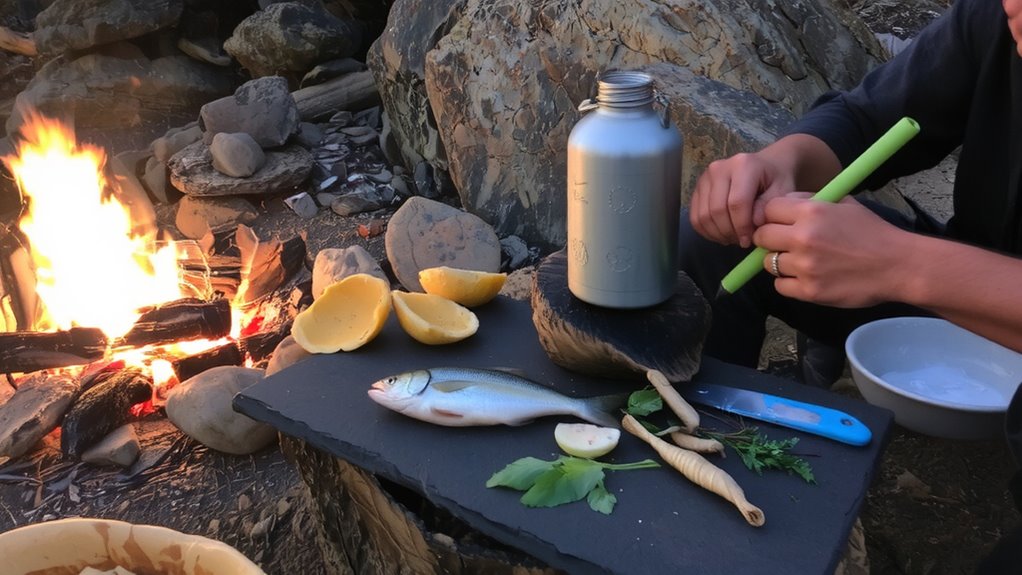
If you’re stuck without proper cookware, nature’s junk pile-sticks, stones, and clay-can become your kitchen arsenal, and you’d be surprised how well it works. Use green wood to carve a spit or tripod, securing it with cordage or notched joints common in shelter building methods. Flat, heat-resistant stones make excellent griddles when propped near coals-just avoid wet ones that might explode. You can line a small pit with stones to create a stable base for simmering; this setup pairs well with reflected heat fire starting techniques, ensuring even cooking. Clay, if available, can be shaped into a rudimentary pot, though it demands slow curing to prevent cracking. While primitive, these methods test your adaptability. They lack convenience but offer real solutions when gear fails. Performance varies, so monitor closely. With practice, these tools become reliable extensions of survival skill-modest, but effective when nothing else is.
Build a Fire That Can Actually Cook
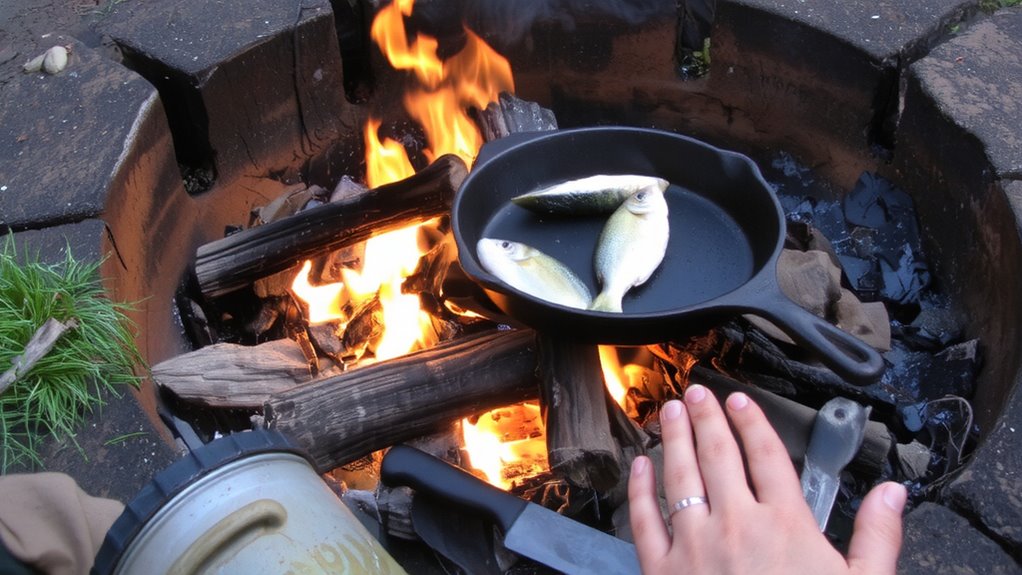
You’ve got your makeshift cookware from sticks, stones, or clay-now it’s time to build a fire that delivers consistent heat for actual cooking, not just flames for warmth. For reliable results, choose fire types like the Dakota hole or the reflected lean-to, which concentrate heat efficiently. These designs outperform simple campfires by directing energy where you need it. Heat control is essential: let your fire burn down to hot coals-this gives steady, even temperatures ideal for searing, simmering, or baking. Avoid roaring flames; they char food and waste fuel. Tend your fire actively, adjusting airflow and fuel size to maintain output. A well-managed fire using proper fire types guarantees food cooks through without burning. With practice, you’ll balance intensity and duration, turning raw ingredients into safe, palatable meals using nothing but skill and available materials. Effective heat control separates survival from success.
Cook Hot Meals Without Pots or Pans
A solid foundation has already been laid with a controlled fire and makeshift cookware, so now it’s time to get creative with direct cooking methods that don’t rely on commercial pots or pans. You can effectively cook hot meals by using leaves like banana or cabbage to wrap food, sealing in moisture and protecting items from direct flames. Wrapping food also minimizes cleanup and helps retain nutrients during cooking. Skewering meats or vegetables on green sticks works well for grilling over coals, though charring requires constant attention. Baking in hot ashes-such as burying wrapped potatoes-delivers even heat and consistent results. These methods lack the precision of traditional cookware, but they’re reliable when resources are limited. Using leaves adds subtle flavor and prevents sticking, an unexpected benefit. While slower than metal cookware, these techniques are surprisingly efficient. With practice, wrapping food becomes second nature, turning simple materials into effective kitchen tools when your gear fails.
Keep Food Safe Until Your Next Meal
Keeping your food safe between meals is just as critical as cooking it well, especially when you’re working with limited resources and no refrigeration. Without proper temperature control, bacteria multiply rapidly in perishable items, especially between 40°F and 140°F-the danger zone. You’ll need effective food preservation strategies to reduce spoilage. Elevate your food in a sealed container to protect it from animals, and keep it shaded from direct sunlight to help maintain lower temperatures. If near a stream or in colder climates, submerge food in a mesh bag in flowing water-nature’s cooler. Avoid leaving cooked meals out for more than two hours (or one if it’s over 90°F). Reheat leftovers thoroughly, ensuring internal temperatures exceed 165°F. Smart storage is part of outdoor safety-your ability to maintain temperature control directly impacts your health and performance.
On a final note
You’ve seen how basic tools and natural resources combine to keep you fed in the wild. Using sticks, stones, and careful fire control, you can cook safely and effectively. These methods aren’t just backups-they’re proven, practical skills. Mastering them means reliability when gear fails. Emergency outdoor cooking demands knowledge, patience, and respect for fundamentals, turning survival into sustainable nourishment with minimal tools and maximum insight.