The Science Behind Building Flavor Layers With Rubs, Marinades, and Sauces for Ultimate BBQ Success
You start with a rub to draw out moisture and build a flavorful crust through the Maillard reaction, especially on dense meats like brisket. A well-chosen rub balances sugar and spices to form bark without burning. If you’re using a marinade, it tenderizes tougher cuts and adds internal flavor, but don’t leave it too long or the texture suffers. Sauces stick best when applied late, caramelizing into a glossy glaze that seals in juices. Layering these elements-rub, marinade, then sauce-creates depth without clash, letting each stage enhance the next. You’ll see how small timing and texture choices make a big difference in the final bite.
Notable Insights
- Rubs trigger the Maillard reaction, forming a flavorful bark when proteins and sugars react under heat.
- Sugar in rubs enhances crust development but must be balanced to prevent burning during low-and-slow smoking.
- Marinades tenderize meat and add internal flavor, though penetration is limited to a few millimeters.
- Apply BBQ sauce late in cooking to caramelize sugars, ensuring adhesion without burning.
- Layer flavors strategically: marinade first, then rub for crust, and sauce last for gloss and balance.
How Rubs Create Crispy BBQ Bark
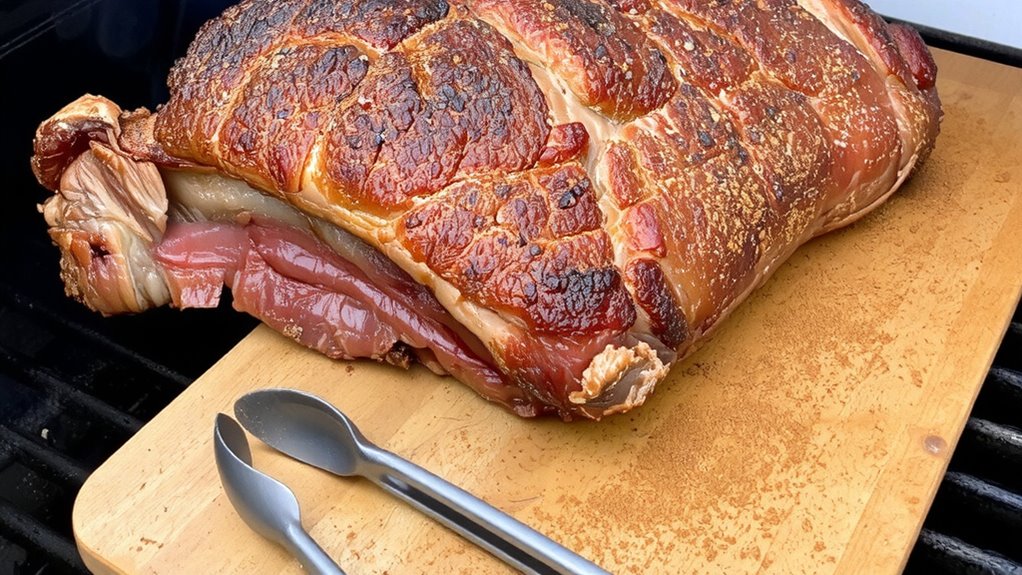
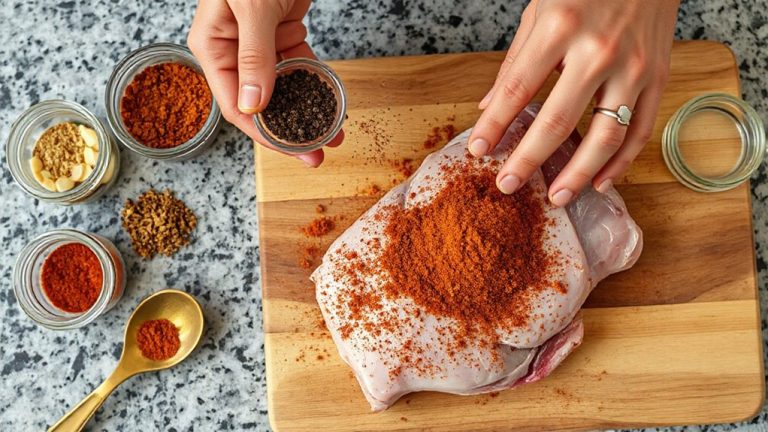
That crisp, deeply flavorful crust you find on great BBQ-known as bark-starts with a well-applied rub. You’re not just adding flavor; you’re kickstarting the Maillard reaction, the chemical process responsible for browning and complex taste. When heat hits the seasoned surface of the meat, amino acids and sugars react, creating that rich, savory depth. Your rub acts as a catalyst, drawing out surface moisture and promoting crust development over charring. Sugar in the mix helps, but too much burns-balance matters. A good bark forms slowly, especially during low-and-slow smoking, letting flavors meld and textures transform. It’s not merely cosmetic; this crust seals in juices while offering a satisfying crunch. Achieving it demands patience and temperature control. Skip the shortcuts, and you’ll taste the difference-real bark isn’t gritty or powdery, but cohesive, aromatic, and deeply layered, proof of solid technique and respect for the craft. Choosing the right blend can make all the difference, and top-rated BBQ rubs deliver consistent results across various meats and cooking methods.
Pick The Right Rub For Your Meat
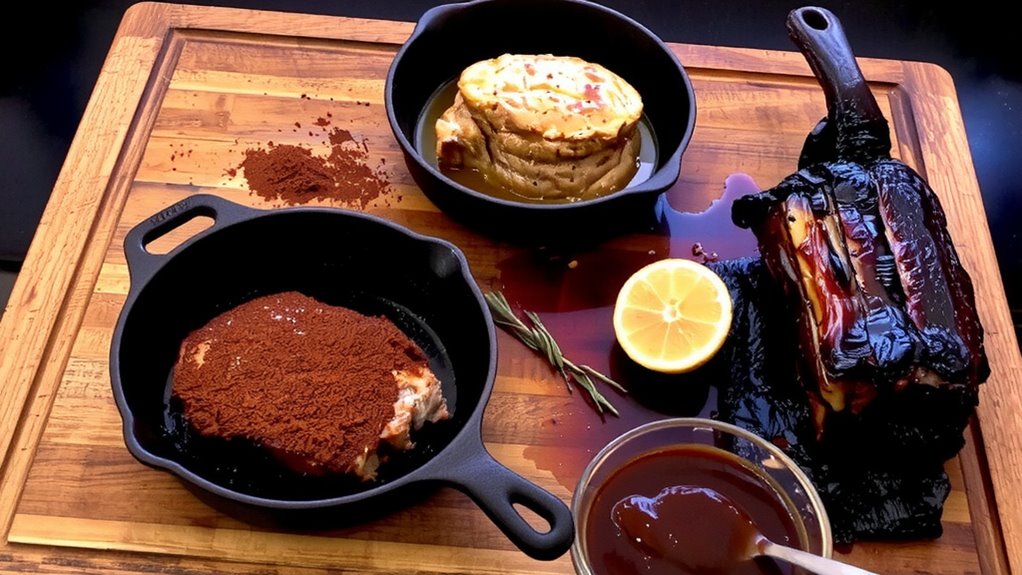
You’ve seen how a well-applied rub builds that prized bark through moisture control and the Maillard reaction, but not every rub works the same across different meats-your choice matters just as much as the technique. Matching the rub to the meat texture guarantees balanced flavor penetration; a coarse blend grips well on dense cuts like brisket, while finer rubs adhere evenly to more delicate proteins like pork tenderloin. If you’re grilling chicken, a lighter mix with herbs and citrus complements its tenderness without overpowering. Your spice tolerance also plays a role-bold, chili-heavy rubs shine on robust meats like ribs or beef, but may overwhelm more subtle fare. Smoked paprika and garlic work universally, but adjust heat levels based on both the meat’s richness and your palate. Choosing wisely enhances both crust development and depth, making your BBQ not just flavorful, but perfectly suited to the cut. For more tailored suggestions, check out our Top Meat Rubs guide to find blends that match your preferred flavors and proteins.
Why Marinades Work (And When To Use Them)
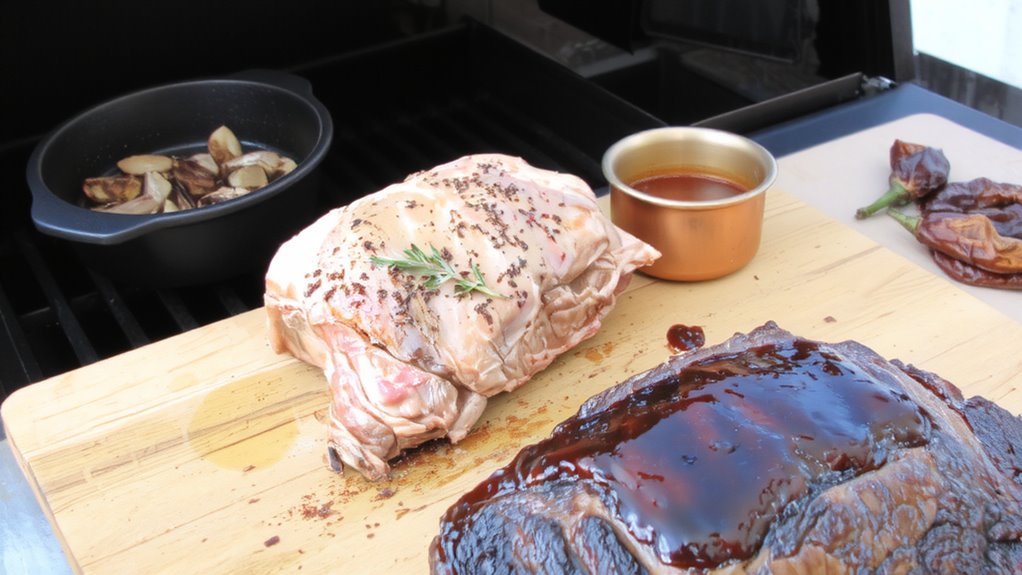
While dry rubs build bark and deepen searing flavors, marinades bring a different set of advantages by altering the meat’s surface and interior through moisture and acid interaction. You’ll find marinades especially effective on thinner cuts or tougher proteins like skirt steak or chicken thighs, where acid penetration helps break down muscle fibers and tenderize. The liquid environment allows for consistent flavor infusion, carrying herbs, spices, and aromatics deeper than surface seasoning alone. However, don’t expect dramatic changes in very dense meats-acid penetration only goes so far, usually just a few millimeters. For best results, marinate for at least 30 minutes, but avoid going beyond 24 hours, which can turn texture mealy. Use marinades when you want both subtle internal seasoning and improved tenderness. They shine when you’re after complexity without heavy smoke dominance.
Make Your Sauce Stick With Caramelization
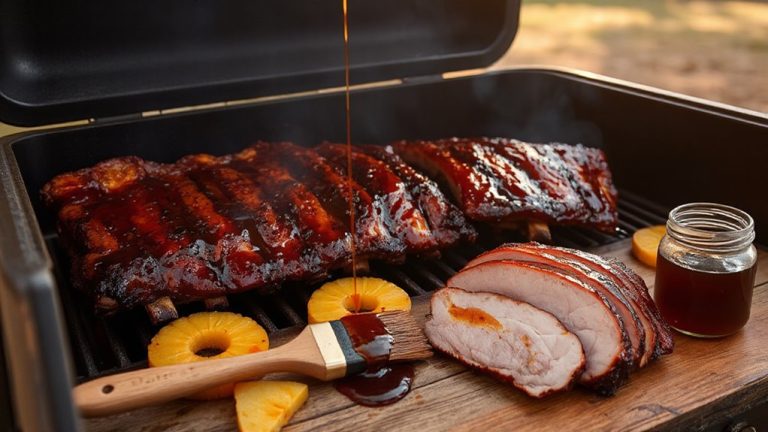
Because caramelization transforms sugars and surface proteins into a rich, sticky foundation, your BBQ sauce won’t just sit on the meat-it’ll bond with it. You’re not just adding flavor; you’re activating caramelization chemistry that creates a deep, flavorful crust. When your sauce hits the hot grill, those natural sugars begin to break down and re-form into complex compounds, giving you that glossy, sticky glazing everyone craves. It’s not magic-it’s science. For best results, apply sauce in the final 10–15 minutes of cooking; too early, and the sugars burn. Thick, sugar-based sauces caramelize better than thin, vinegary mops. A properly caramelized layer enhances mouthfeel and seals in juices without masking the meat’s character. Mastering this step elevates your BBQ from good to exceptional, delivering both visual appeal and rich, layered taste through controlled heat and timing.
Avoid Overpowering: Balancing Flavors
A well-balanced BBQ dish doesn’t shout with one dominant flavor-it sings in harmony, where smoke, salt, acid, and sweetness hold their proper places. You risk ruining even the most精心-prepped meat if one element overwhelms the rest. Flavor harmony means each taste has room to shine without crowding others out. Think of your rub, marinade, and sauce not as soloists but as parts of an ensemble. Ingredient synergy happens when spices complement rather than compete-like brown sugar balancing cayenne, or apple cider vinegar cutting through fat. Too much salt masks subtle notes; excess sweetness turns savory into dessert. You want depth, not dominance. Taste as you go, adjust in small increments, and remember: restraint often delivers greater impact. The best BBQ impresses not through intensity but through balance-where every bite feels complete, layered, and intentional. Top-rated BBQ rubs deliver this balance through carefully calibrated blends of sweet, spicy, and savory elements.
Layer Rubs, Marinades, And Sauces Like A Pro
When you’re building flavor in barbecue, timing and sequence matter just as much as the ingredients themselves, so layering rubs, marinades, and sauces isn’t just helpful-it’s essential for depth. Start with a dry rub to form a flavorful crust, then let a marinade tenderize and infuse early on-this creates ingredient synergy. Finish with a sauce that complements rather than overwhelms, ensuring smart flavor pairing.
| Stage | Purpose |
|---|---|
| Rub | Builds foundational seasoning and texture |
| Marinade | Enhances moisture and internal flavor |
| Sauce | Adds glossy finish and balanced tang or heat |
You’re not just adding taste-you’re constructing it. Applying layers mindfully elevates your meat from simple grilled fare to complex, restaurant-quality BBQ. Each stage should support the next, never clash. Done right, the result isn’t just delicious-it’s inevitable.
On a final note
You’ve learned how rubs build bark, how marinades tenderize, and how caramelization helps sauces cling. Layering these elements properly elevates your BBQ from good to exceptional. Choose ingredients deliberately, balance salt, acid, and sweetness, and apply each stage at the right time. Mastering this sequence doesn’t just add flavor-it creates texture, depth, and consistency you can taste in every bite, making your outdoor cooking results both reliable and restaurant-quality.