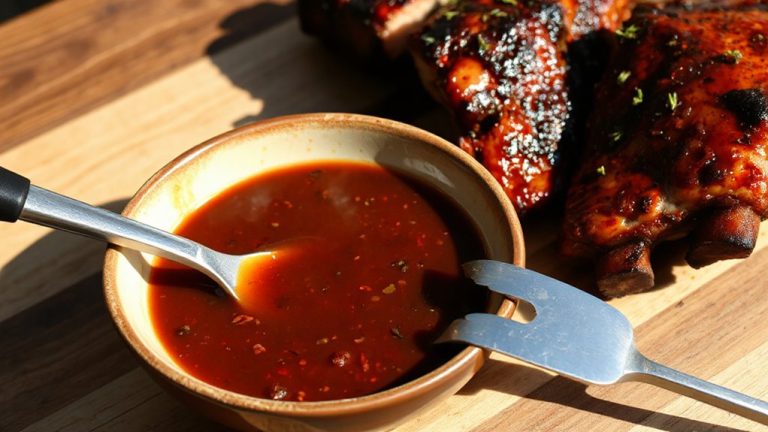
Mastering the Art of Creating Savory, Herb-Infused BBQ Sauces That Will Wow Your Guests
You’ll want to start with a base of quality tomato paste and vinegar in a 3:1 ratio-it gives structure and brightness without watering down flavor. Pair rosemary or thyme with beef, sage or tarragon with poultry, and parsley with pork for ideal herb-protein harmony. Use brown sugar sparingly and balance with apple cider vinegar and a touch of cayenne. Add delicate herbs at the end, but let hardy ones simmer to infuse fully. Taste warm, adjust for balance, and you’ll find how small tweaks lead to big results-especially once you see how layering ingredients transforms the final glaze.
Notable Insights
- Start with a homemade base using quality tomato paste and vinegar for optimal flavor control and richness.
- Pair robust herbs like rosemary and thyme with beef, and delicate herbs like tarragon with poultry.
- Balance sweetness, tang, and heat to enhance, not overpower, the herbal complexity.
- Add hardy herbs early in cooking and delicate herbs in the final 5–10 minutes.
- Taste frequently and adjust seasoning, acidity, and consistency for perfect harmony.
Start With the Right BBQ Sauce Base
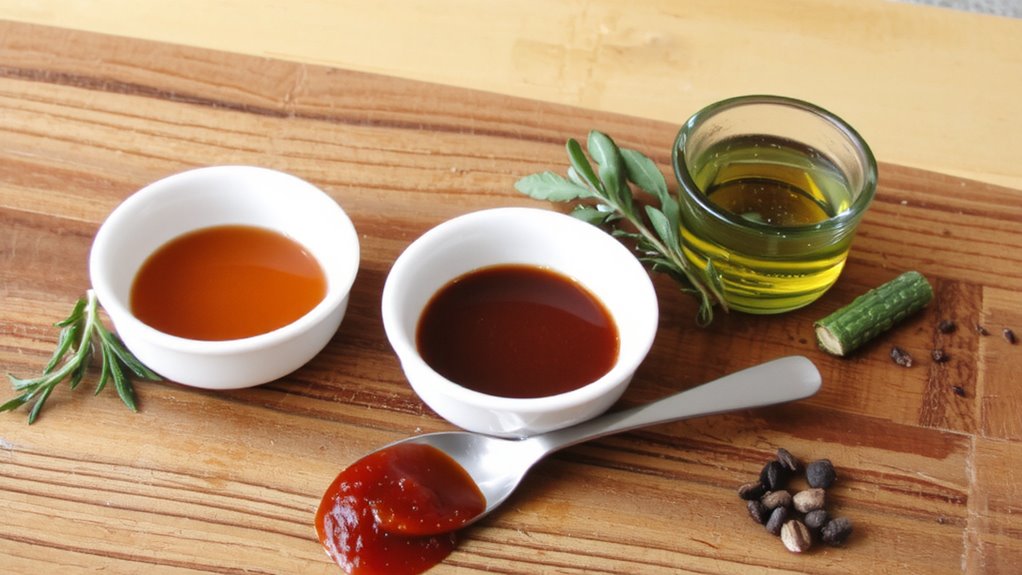
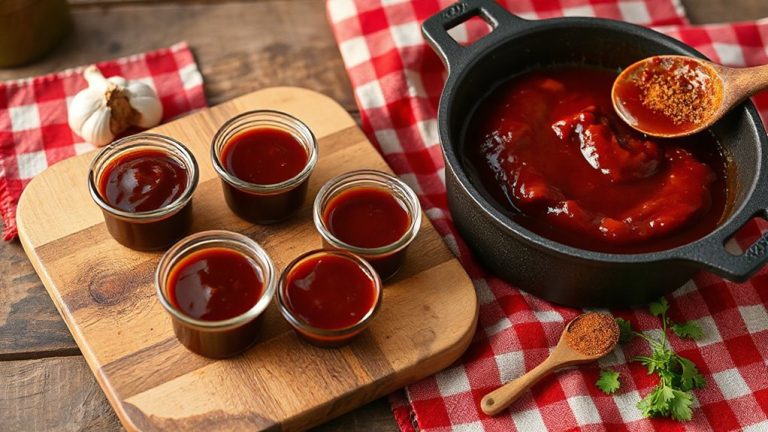
A solid foundation makes all the difference-so choose your BBQ sauce base wisely. You’re aiming for depth and balance, and that starts with quality tomato paste. It’s thick, rich, and concentrates flavor without excess water, giving your sauce body and color. But don’t overlook the vinegar blend-apple cider, white, and distilled vinegars each bring acidity that cuts through fat and brightens heavy meats. Together, they create a tangy-sweet framework that holds herbs and spices without muddying them. A 3:1 ratio of tomato paste to vinegar blend often works best, offering structure while remaining adjustable. This base performs reliably over indirect heat, resisting burning during long cooks. Whether you’re smoking ribs or grilling chicken, a balanced base guarantees your sauce clings cleanly and develops complexity. Skip pre-made bases; crafting your own means control over sugar, salt, and acidity-key to a sauce that tastes intentional, not generic. For those short on time, consider starting with a high-quality store-bought sauce that complements chicken.
Choose Herbs That Match Your Protein and Heat
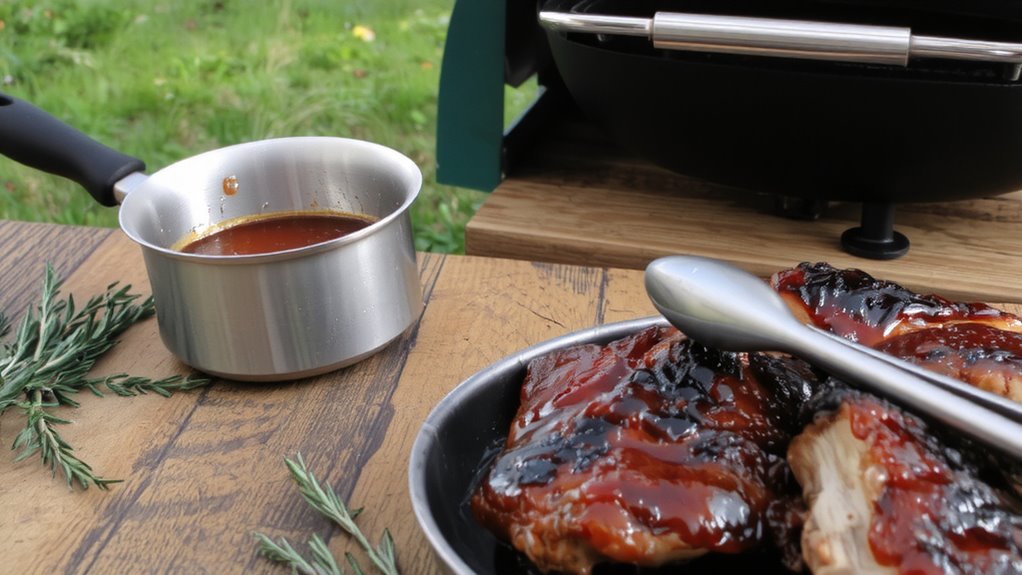
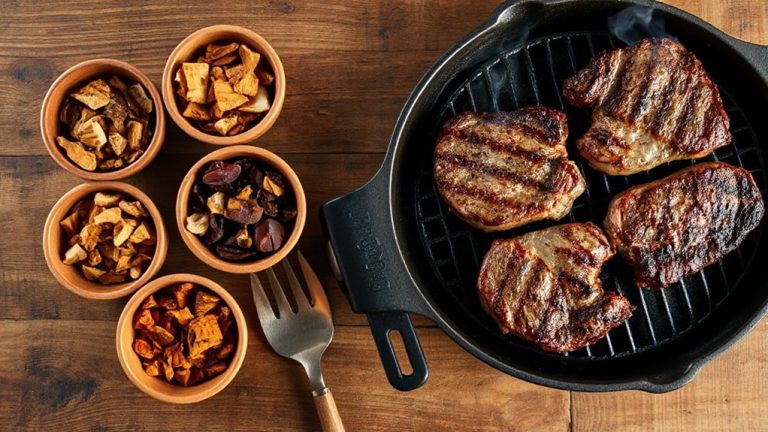
Now that you’ve built a balanced base with quality tomato paste and a sharp vinegar blend, it’s time to think about which herbs will elevate your sauce in sync with the protein and cooking method. Herb pairing isn’t just about flavor-it’s about creating protein synergy that enhances texture and aroma during grilling or smoking. For beef, robust herbs like rosemary and thyme stand up to high heat and rich fat, deepening the umami profile. Poultry works well with tarragon or sage, which cut through oil without overwhelming. Pork pairs beautifully with parsley and a hint of mint, adding brightness. If you’re using low-and-slow heat, heartier herbs hold their flavor, while quick searing benefits from more delicate, aromatic varieties. Matching herb intensity to both protein type and cooking temperature guarantees a cohesive, flavorful finish.
Balance Sweet, Tangy, and Spicy Elements
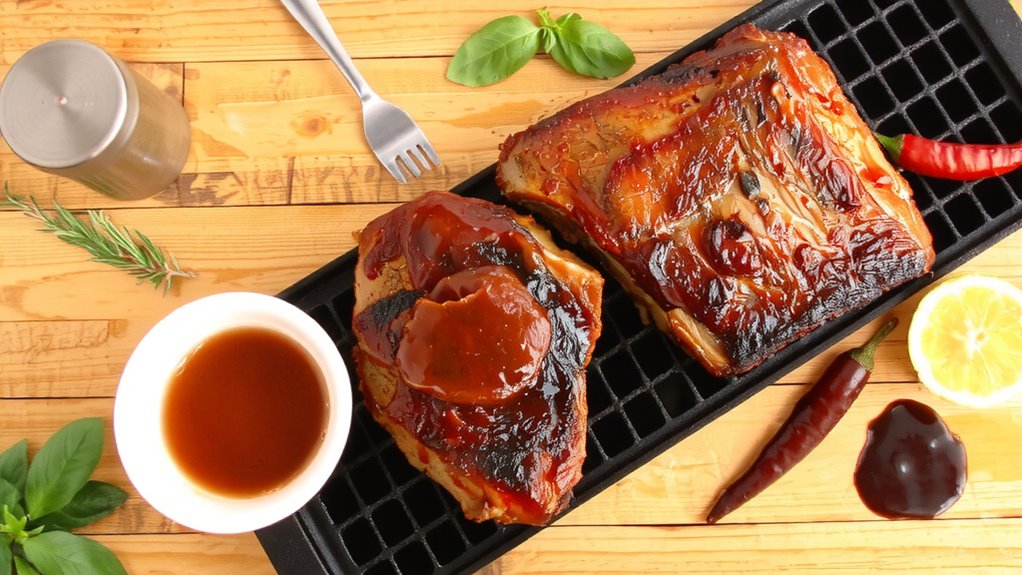
Flavor balance is the backbone of any great herb-infused BBQ sauce, and getting it right means playing sweet, tangy, and spicy elements against one another without letting one steal the show. You’ll want to use brown sugar or honey for sweetness, but go easy-too much dulls the herb notes and overwhelms. For tang, apple cider vinegar or a splash of lemon juice lifts the profile and enhances flavor depth. Spice from cayenne or smoked paprika should warm, not burn, so adjust gradually. The goal is ingredient harmony, where each component supports the others. A well-balanced sauce doesn’t shout one note; it layers them. When you taste as you go, you’ll notice how the sweetness rounds sharp edges, the tang keeps it bright, and the heat adds intrigue-without masking the herbs you carefully selected. For an extra dimension of heat, consider incorporating one of the best spicy sauces to elevate your blend.
Time Your Herb Infusion for Maximum Flavor
Getting the blend of sweet, tangy, and spicy right sets the stage, but timing your herb infusion is what locks in depth and character. You’ll want to add delicate herbs like basil or cilantro near the end-typically in the last 5 to 10 minutes-so their volatile oils stay intact, preserving herb freshness. Hardier varieties such as rosemary, thyme, or sage can go in earlier, allowing their flavors to meld without turning bitter. Infusion timing isn’t just about duration; it’s about balance and heat control. Simmer too long with tender herbs, and you’ll dull their brightness. Pull off the heat just as the aroma peaks to capture the full essence. Fresh herbs always outperform dried when you’re aiming for layered complexity. Mastering this step means your sauce isn’t just flavored-it’s thoughtfully built, with each note present and purposeful.
Taste, Adjust, and Perfect Your BBQ Sauce
Why does one sauce sing while another falls flat, even with similar ingredients? Because you taste, adjust, and refine-turning good into exceptional. Every batch needs your attention: start with a clean spoon and sample while warm, since temperature affects perception. Look for balance-sweetness, acidity, heat, and savoriness should support, not overpower. Consider flavor pairing; rosemary and garlic deepen richness, while thyme lifts tomato’s brightness. If it’s too thick, add broth or vinegar for consistency control. Too thin? Simmer longer to concentrate flavor and texture. Salt late in the game-it magnifies over time. Trust your palate, but also understand how each tweak alters the whole. Outdoor cooking rewards nuance; a sauce tailored to your grill’s char and smoke stands out. Perfection isn’t fixed-it’s adjusted, batch by batch, bite by bite.
On a final note
You’ve now mastered crafting herb-infused BBQ sauces that elevate your outdoor cooking. By choosing the right base, matching herbs to protein, and balancing sweet, tangy, and spicy notes, your sauce delivers depth and complexity. Proper infusion timing guarantees bold flavor without bitterness. Thoughtful tasting and adjustment refine the final product. These techniques, grounded in practical performance, consistently produce restaurant-quality results, proving that precision and ingredient awareness transform backyard grilling into an art worth perfecting.