Cleaning Carbon Build-Up From Exterior Walls of Frequently Used Dutch Ovens
Your Dutch oven’s exterior builds up carbon from wood or charcoal smoke, especially with damp fuel or poor airflow. A thin, even layer protects against rust and improves heat retention-leave it be. If it’s thick, flaky, or trapping moisture, clean it with a baking soda paste or oxygen-based solution. Use a nylon brush or fine steel wool to avoid damage. This maintenance keeps your oven performing well and looking great over time, especially with regular outdoor use. There’s more to optimizing your care routine based on material and cooking habits.
Notable Insights
- Assess carbon buildup regularly; remove only if thick, flaky, or trapping moisture to preserve protective seasoning.
- Use simmering water inside the oven to loosen exterior soot before gentle scrubbing with a nylon brush.
- Apply baking soda paste or coarse salt to clean stubborn residue without damaging the metal surface.
- Avoid wire brushes and harsh chemicals that can strip seasoning or harm cast iron integrity.
- Re-season bare cast iron after cleaning to maintain rust protection and non-stick performance.
Why Does Soot Build Up on My Dutch Oven?
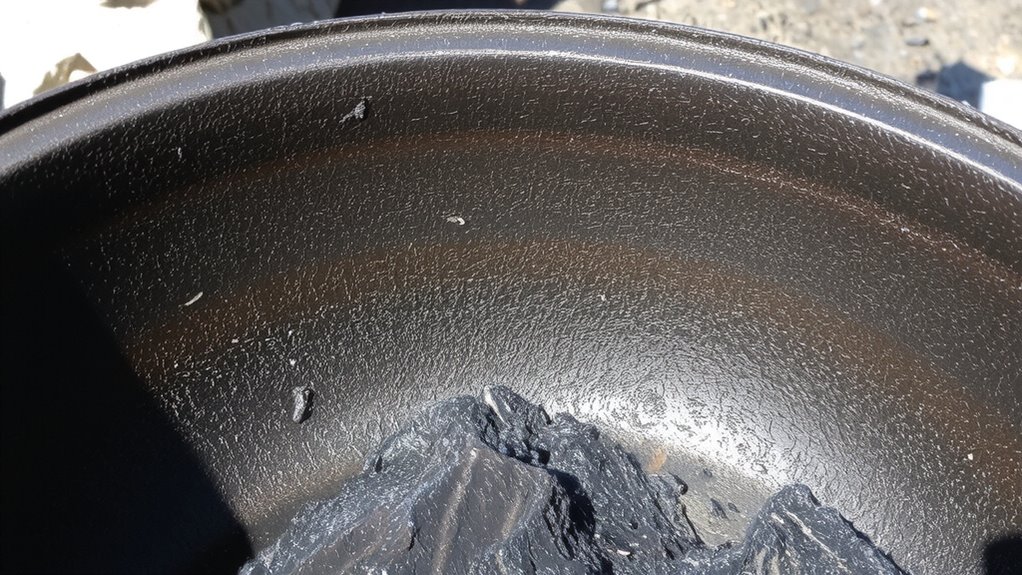
How does that stubborn black film end up coating the outside of your Dutch oven, especially when you’re trying to cook evenly over live fire? The answer lies in your fuel type effects and typical Dutch oven usage. When burning wood or charcoal, incomplete combustion releases soot-especially if airflow is restricted or the fuel is damp. That residue clings to the cooler exterior walls, building up over time. You’ll notice heavier accumulation when using softwoods or unseasoned logs, which produce more smoke than hardwoods. Even with proper coals, flare-ups or uneven heat distribution can deposit carbon unevenly. Frequent outdoor use means repeated exposure, accelerating soot layers. While some buildup is inevitable, managing fuel quality and airflow reduces excess. Understanding how fuel type effects combustion helps you minimize unwanted residue without sacrificing performance. Routine attention during Dutch oven usage keeps cooking conditions consistent and cleanup manageable.
Is Carbon Build-Up Harmful or Helpful?
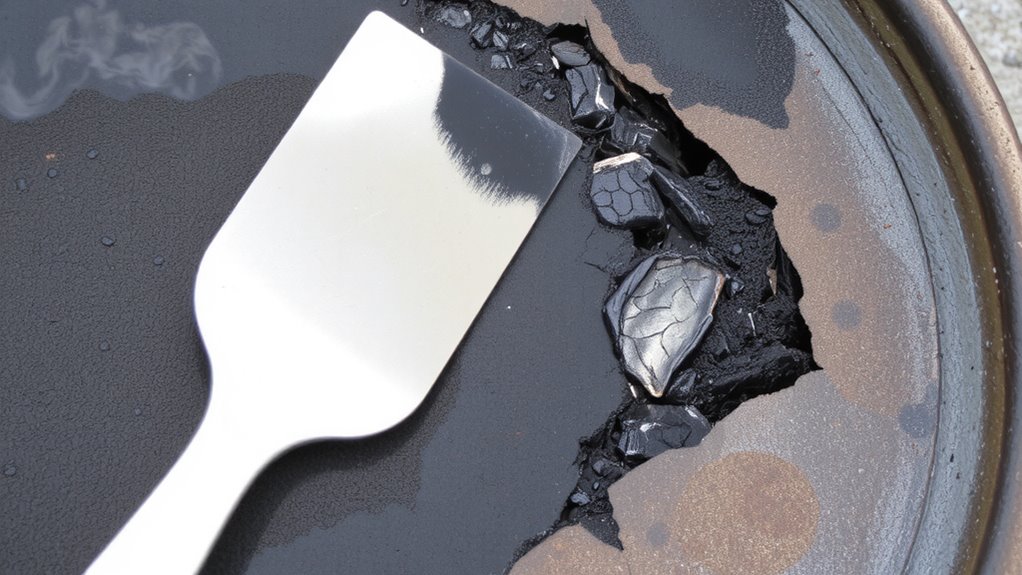
That black residue on your Dutch oven isn’t just a sign of frequent fires-it’s part of a bigger story about how carbon interacts with seasoned cast iron. You might worry about carbon toxicity, but rest easy-this buildup isn’t dangerous. The carbon forms when fats and oils pyrolyze during high-heat cooking, bonding to the metal and contributing to a stable seasoning layer. Contrary to common seasoning myths, not all black gunk is harmful; only flaking or sticky residue suggests problems. A well-maintained carbon coat actually protects the oven from rust and improves heat retention. Think of it as a functional patina, not grime. Outdoor cooking, especially over wood or charcoal, naturally encourages this process. Instead of fearing the darkened exterior, recognize its role in performance and durability. Cleaning it won’t boost safety, so focus on maintaining proper seasoning inside the pot, where it truly matters.
When to Clean It (And When to Leave It)
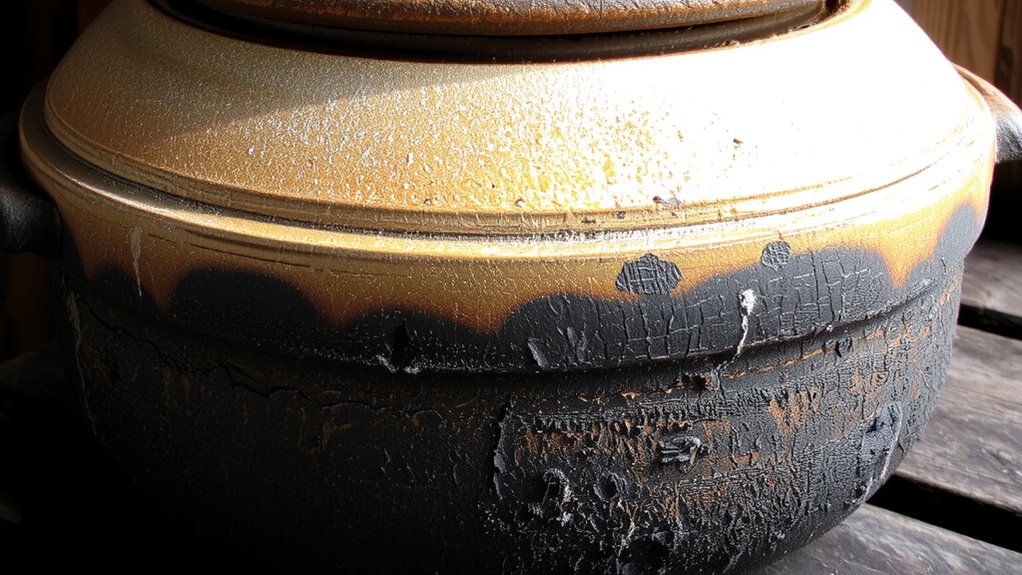
Why does some carbon stay while other buildup has to go? It comes down to cleaning frequency and surface texture. A light, even layer of carbon on your Dutch oven’s exterior isn’t just normal-it’s beneficial, acting as a protective barrier against rust. You should leave it be. But when the buildup becomes thick, flaky, or uneven, it can trap moisture and compromise the metal. That’s when you intervene. If you’re using your oven weekly, inspect it monthly; frequent outdoor cooking means monitoring more closely. Smooth surfaces hide less, so gunk shows faster and may need attention sooner. Rougher textures tend to hold carbon more evenly, often needing less frequent cleaning. Ultimately, aim for balance-don’t obsess over appearance, but don’t ignore structural risks. Knowing when to clean preserves function without stripping away protection.
Safe Ways to Remove Carbon From Any Dutch Oven
Once you’ve decided it’s time to tackle heavy carbon deposits, the method you choose makes all the difference in preserving your Dutch oven’s integrity. Safe methods for carbon removal protect both the seasoning and the metal, guaranteeing longevity. Avoid harsh chemicals or wire brushes that can gouge the surface-instead, opt for gentle abrasives like baking soda paste or coarse salt. Simmering water inside the oven helps loosen grime without shocking the cast iron. For exterior buildup, a soft scrub with a nylon brush after boiling water works effectively. These safe methods maintain the structural and non-stick qualities you rely on during outdoor cooking. Carbon removal isn’t about erasing history-it’s about careful maintenance. Consistent, gentle cleaning preserves performance over time, especially with frequent use over campfires or grills. Respecting the material guarantees your Dutch oven remains a dependable tool for years of BBQ and backwoods meals.
Best Tools & Cleaners for Stubborn Residue
Persistence defines the battle against baked-on carbon, especially when residue clings despite routine care. For stubborn buildup, you’ll need tools that combine mechanical action and chemical power. Abrasive pads made of high-density nylon or fine steel wool work well-you won’t damage the base material, yet they lift tough grime efficiently. Avoid coarse scrubbers; they can gouge and accelerate future sticking. When physical effort isn’t enough, chemical solvents like oxygen-based cleaners or citric acid solutions break carbon down safely. They penetrate layers without producing toxic fumes or harming seasoning. Apply them warm, let them dwell, then scrub lightly. While solvents reduce labor, they demand ventilation and care. Pairing the right abrasive pads with targeted chemical solvents gives you control, effectiveness, and longevity. It’s not just about cleanliness-it’s about maintaining performance and protecting your investment over years of outdoor cooking. For heavy-duty cleaning between uses, consider using a BBQ grill cleaner designed to tackle greasy residue and carbon deposits on high-heat surfaces.
Deep Cleaning Enamel vs. Bare Cast Iron
Enamel and bare cast iron each demand different deep-cleaning approaches, shaped by their materials and intended use in outdoor cooking. For enamel, avoid abrasive tools that risk enamel degradation; instead, use warm water, mild detergent, and a non-scratch pad to lift carbon without damaging the finish. Enamel’s smooth surface resists buildup but can chip or craze under thermal shock, so gradual cooling is essential. With bare cast iron, you’re protecting the iron seasoning-a polymerized layer that prevents rust and improves non-stick performance. Avoid soaking or scouring; instead, use coarse salt or a chainmail scrubber to dislodge grime without stripping seasoning. If needed, re-bake a thin oil layer to restore protection. Enamel offers ease, but cast iron delivers superior heat retention and longevity when properly maintained. Your choice depends on priorities: convenience or tradition.
Habits to Prevent Soot Build-Up
Regularly managing your fire and monitoring cooking temperatures can save you a lot of cleanup time later. When flames lick the sides of your Dutch oven, they leave behind soot that hardens into stubborn carbon over time. You can minimize this by maintaining a clean, hot fire-damp, smoky burns produce more residue. Proper ventilation is key; it guarantees complete combustion and reduces soot output, especially in covered setups like smokers or fire pits with restricted airflow. Elevate your oven to avoid direct flame contact, and use a stand or rack when possible. After each use, make it a habit to do a quick, regular wiping of the exterior while it’s still warm-this removes loose soot before it bonds. A dry or slightly damp cloth works well, and it only takes a minute. These small habits go a long way in preserving your Dutch oven’s finish and performance.
On a final note
You’ll find that managing carbon build-up on your Dutch oven strikes a balance between maintenance and performance. While a seasoned layer can enhance non-stick properties, excessive soot hampers heat distribution and cleanliness. Cleaning it properly-especially when differentiating enamel from bare cast iron-preserves durability and function. Using the right tools avoids damage, while consistent habits reduce future buildup. Ultimately, smart care extends your oven’s life and improves outdoor cooking results.