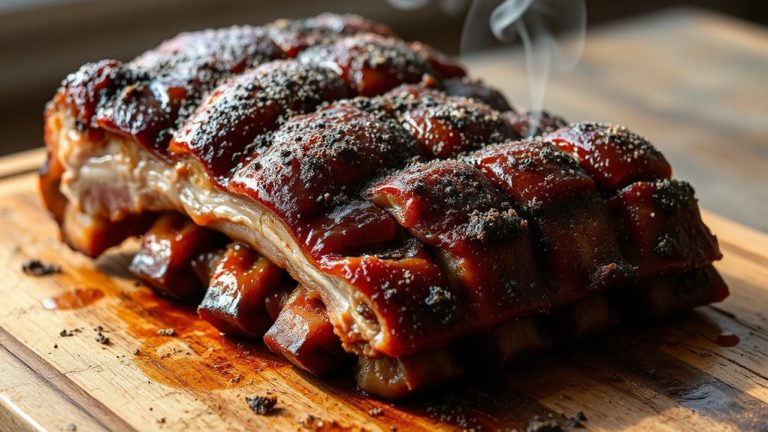
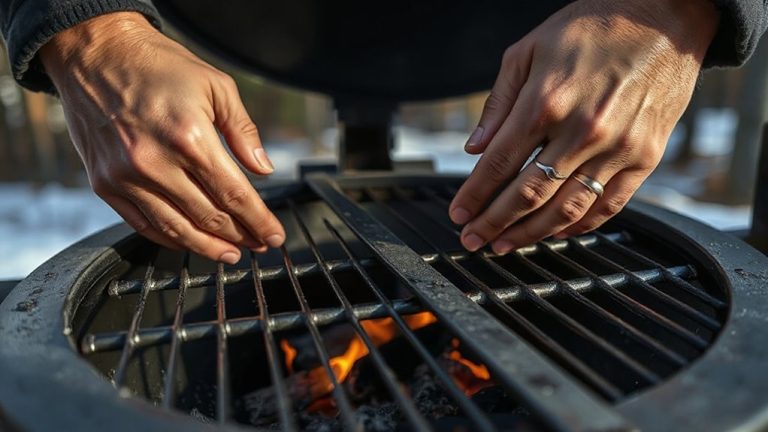
Smoking Techniques for Achieving Tender and Flavored Pulled Pork
Pick a well-marbled pork shoulder, like Boston butt, and season it heavily with a rub that includes salt, sugar, and spices pressed into the damp surface. Smoke it low and slow at 225°F using hickory or applewood for rich flavor, keeping the temperature steady to break down collagen. Use a water pan for even heat and better bark. When it hits 195–203°F and probes like butter, let it rest for at least an hour-this guarantees juicy, tender pulls. The right technique transforms tough shoulder into succulent, smoky perfection worth mastering.
Notable Insights
- Use pork shoulder with good marbling, such as Boston butt, for optimal tenderness and flavor when smoked low and slow.
- Apply a balanced dry rub to the damp meat surface and let it rest overnight for deep flavor penetration.
- Maintain a steady smoker temperature of 225°F using indirect heat and include a water pan for humidity and stable cooking.
- Choose wood like hickory, oak, apple, or cherry to enhance flavor, but avoid excess smoke to prevent bitterness.
- Cook until probe-tender at 195°F–203°F, then rest the meat for at least one hour before pulling for juicy, flavorful results.
Choose the Best Cut for Pulled Pork
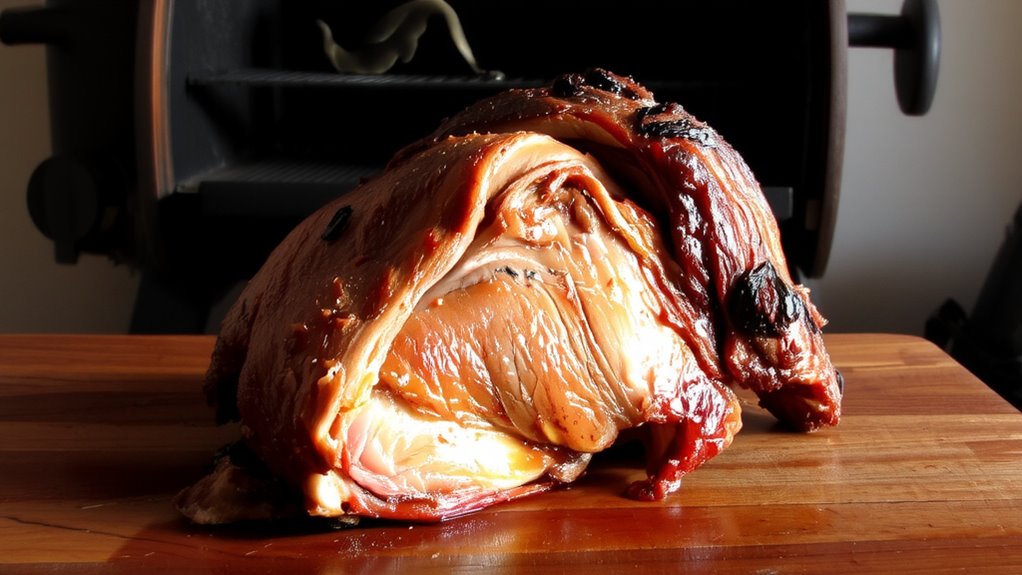
When it comes to pulled pork, the pork shoulder-specifically the Boston butt or pork butt-is your best bet, even if the name might throw you off. This cut selection offers the ideal balance of fat and connective tissue, breaking down beautifully during slow smoking to yield tender, flavorful meat. Though labeled “pork butt,” it comes from the upper shoulder, not the rear, and responds well to low-and-slow heat. For best results, consider meat grading-opt for USDA Choice or higher, as these grades indicate better marbling, which enhances juiciness and texture. While Select-grade works, it often produces drier results without careful monitoring. The right cut selection, paired with proper grading, sets the foundation for success. You’ll find that well-marbled shoulders render more flavor and maintain moisture throughout long cooks, especially in outdoor setups where temperature control can vary. This practical advantage makes grading and cut equally critical in achieving restaurant-quality pulled pork at home. Among the best cuts of meat for smoking, the pork shoulder stands out for its ability to transform under low, consistent heat into succulent pulled pork.
Season Your Pulled Pork Shoulder
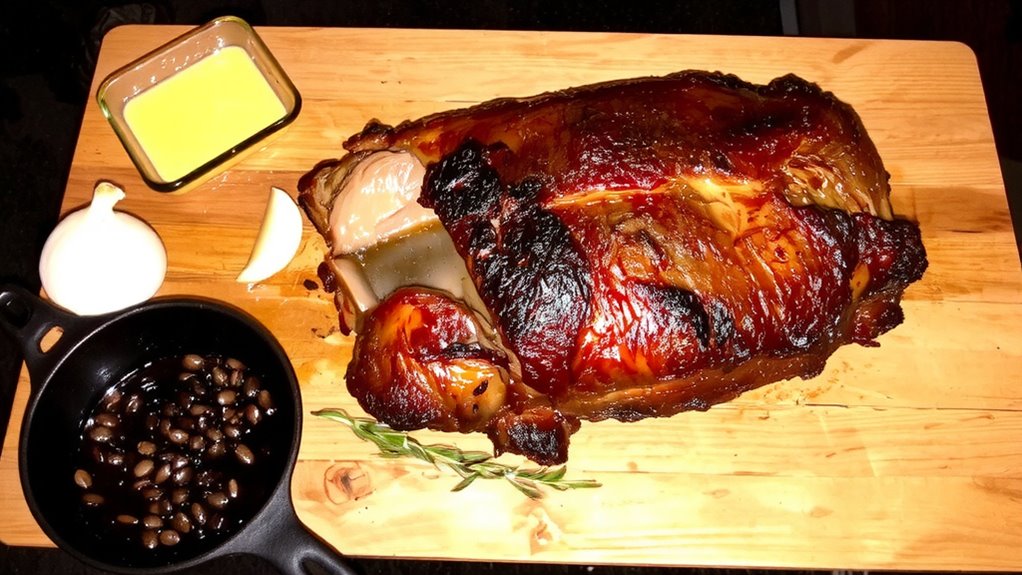
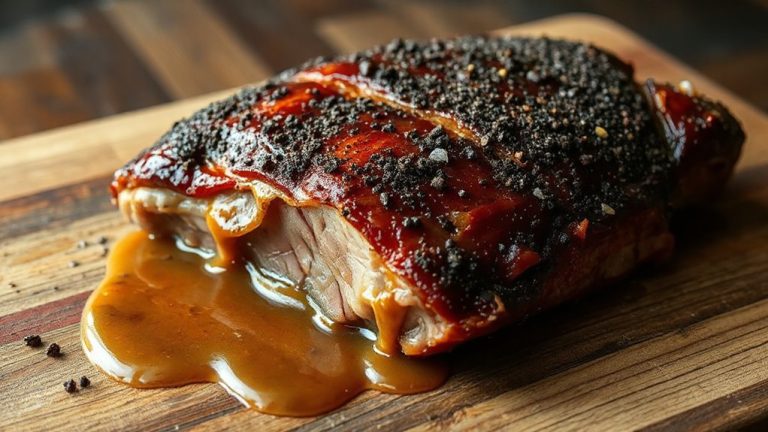
A well-chosen rub can make or break your pulled pork, so don’t treat seasoning as an afterthought. You’ll want to apply a generous layer of dry rub that adheres well to the damp surface of the pork shoulder. A solid dry rub combines salt, sugar, paprika, garlic powder, onion powder, black pepper, and maybe a touch of cayenne for heat. The key is achieving proper flavor balance-enough sweetness to caramelize, enough salt to enhance, and enough spice to add depth without overpowering. Rub it in thoroughly, pressing into crevices so every bite delivers consistent taste. Let the seasoned shoulder rest for at least an hour, or ideally overnight, to allow flavors to penetrate. This step isn’t just about surface taste; it builds the foundation for rich, layered smoke-infused meat later. Good seasoning sets the stage for great barbecue. For 2025, consider trying one of the top-rated best BBQ rubs to elevate your flavor profile.
Smoke Pulled Pork Low and Slow
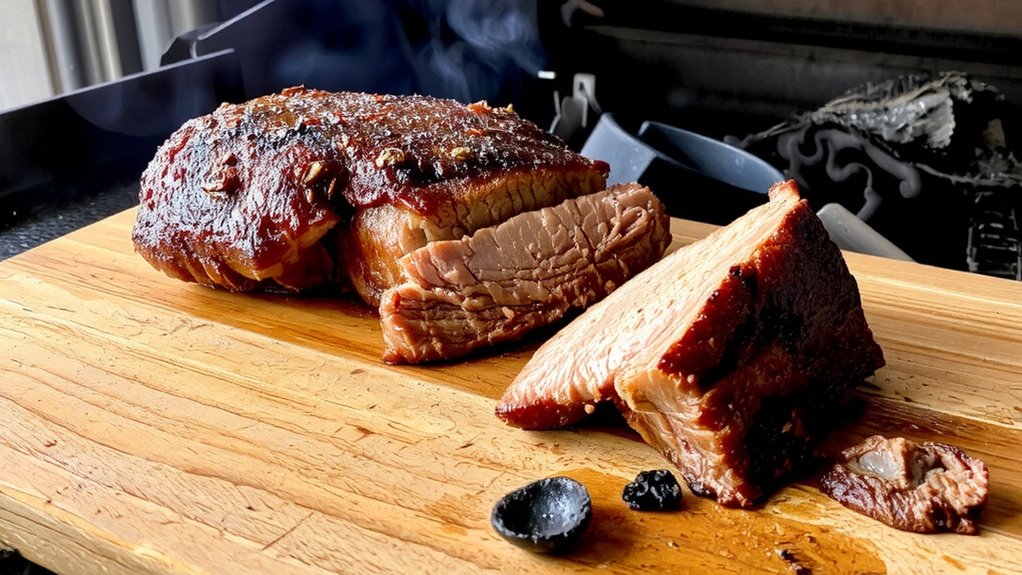
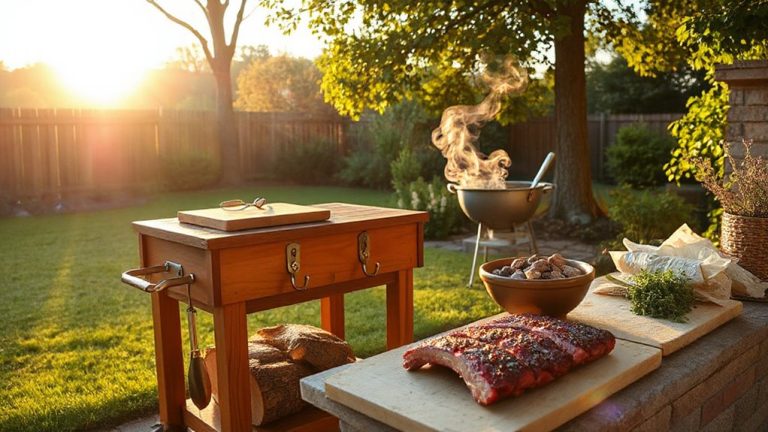
Now that your pork shoulder’s seasoned and ready, it’s time to get that smoker going. Smoking pulled pork low and slow is essential for breaking down tough connective tissues, and maintaining a steady 225°F guarantees even, thorough cooking without drying. Stick to indirect heat and monitor your smoker closely-temperature control can make or break the final texture. Fluctuations above 250°F risk toughness, while dips slow collagen conversion. For flavor, wood selection matters: hickory or oak offers bold, classic notes, while apple or cherry adds a subtle sweetness. Mix woods, but avoid overloading-too much smoke creates bitterness. A water pan helps stabilize temperature control and boosts humidity, aiding bark formation. Resist the urge to peek; keeping the lid closed maintains ideal conditions. With patience and attention to these details, you’ll achieve tender, deeply flavored pulled pork every time. A reliable beginner electric smoker ensures consistent temperatures and takes the guesswork out of low and slow smoking.
Check Pulled Pork for Doneness
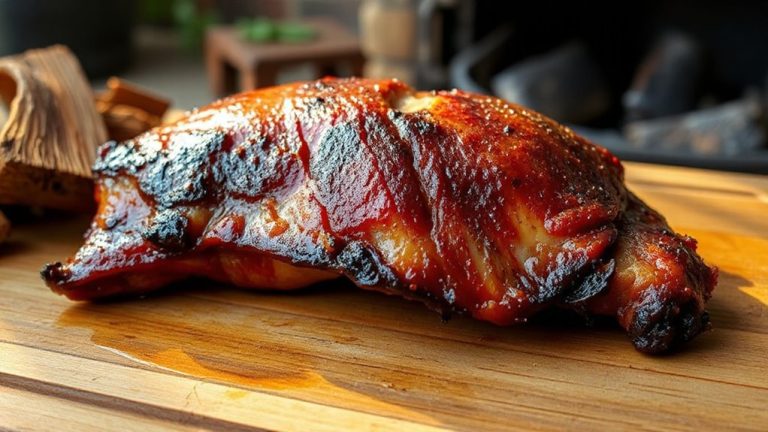
Tenderness is the true measure of perfectly smoked pulled pork, and it’s something you’ll recognize long before any thermometer gets involved. When the meat yields easily to pressure and the bone pulls free with little resistance, you’re close. Still, don’t skip checking the internal temperature-aim for 195°F to 203°F. At this range, collagen fully breaks down, ensuring moist, pullable texture. More reliable than temp alone is probe tenderness: if a thermometer or skewer slides in and out of the thickest part like butter, you’ve hit the sweet spot. This combination-correct internal temperature and probe tenderness-confirms doneness better than either method alone. Remember, every cooker behaves differently, so trust the meat’s feel over strict time estimates. Pulling too early risks toughness, while waiting too long can dry it out. Monitor closely during the final hours for best results.
Rest and Pull Your Pulled Pork
Let the meat rest for at least one hour after removing it from the smoker-this isn’t just downtime, it’s a crucial phase where juices redistribute and the internal temperature evens out, ensuring every shred stays moist. Once rested, slice carefully along the grain to assess texture and check for any stubborn connective tissue. Use tongs and forks to pull the pork apart, letting the smoked fibers separate naturally with minimal resistance. As you work, discard excess fat-especially large, uneven chunks that didn’t render fully during smoking, since they add no flavor and detract from mouthfeel. This step isn’t just cleanup; it refines the final product. Well-rested, cleanly pulled pork should be tender, aromatic, and uniformly succulent. Proper resting and prepping directly impact quality, making the difference between a good barbecue and an exceptional one. Take your time-it shows in every bite.
On a final note
You’ve picked the right cut, seasoned it well, and smoked it low and slow for maximum tenderness and flavor. Properly smoked pulled pork rewards patience with juicy, pull-apart texture and deep smoke penetration. Resting is essential-it preserves moisture. When done right, the meat slides off the bone and shreds effortlessly. This method consistently delivers superior results over faster techniques, making it a staple in serious BBQ. Mastering it elevates your outdoor cooking game for good.