A Beginner’s Guide to Backyard Barbecue Setup Optimization
You’ll get the most out of your backyard barbecue by choosing the right grill-gas for convenience, charcoal for flavor, or electric for small spaces-based on how often you cook and what you love to grill. Set up two cooking zones for better heat control, keep essential tools like a thermometer and tongs nearby, and organize a streamlined prep area. Prioritize food safety with separate utensils and chilled storage. A smart layout improves flow and efficiency-there’s more to discover for perfect cookouts.
Notable Insights
- Choose the right grill fuel type based on your cooking preferences, balancing flavor, convenience, and cleanup.
- Set up a two-zone cooking area to control heat and prevent overcooking or flare-ups.
- Invest in essential tools like a grill brush, thermometer, and heat-resistant gloves for safety and efficiency.
- Organize a nearby prep station with seasonings, oils, and cutting boards to streamline cooking flow.
- Maintain food safety by separating raw and cooked meats and keeping perishables chilled until grilling.
Choose the Right Grill for Your Backyard
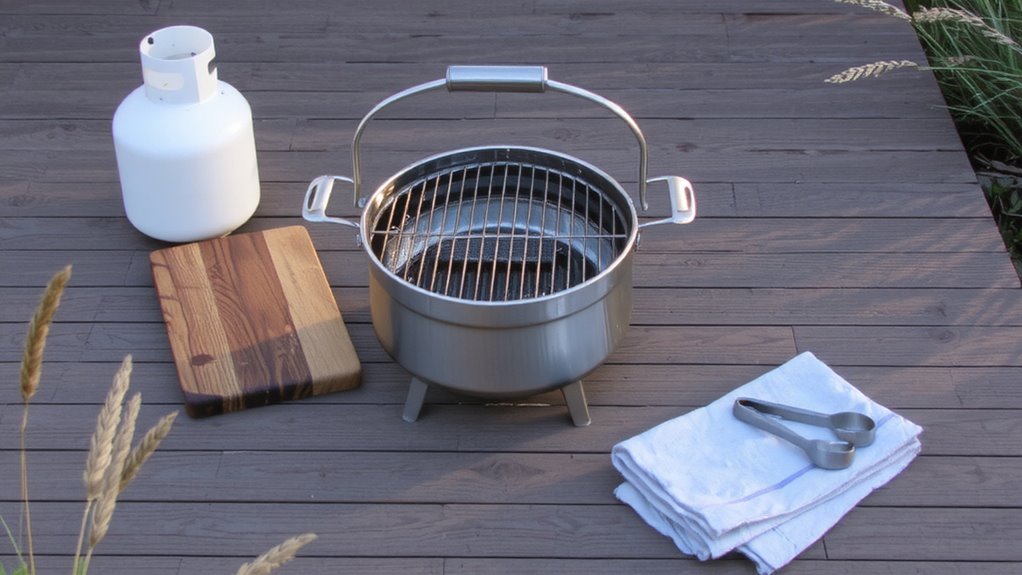
While you might think any grill will do for backyard cookouts, picking the right one actually shapes your entire outdoor cooking experience. Your choice hinges on fuel type-gas offers convenience and quick heat, charcoal delivers rich smoky flavor, and electric suits small spaces with restrictions. Each has trade-offs in flavor, cleanup, and startup time. Consider how often you’ll grill and what foods you prefer. Grill placement matters just as much; you’ll need a flat, stable surface away from structures and foot traffic to guarantee safety and efficiency. Keep it near prep areas but ventilated to manage smoke. Portability might appeal if space is limited, but permanent setups often support better heat retention. Durability, material quality, and BTU output all influence performance. Choose wisely-it affects not just meals, but maintenance and long-term enjoyment. For those prioritizing ease and consistent performance, consider exploring the best gas grills based on expert testing and user reviews.
Create Smart Cooking Zones
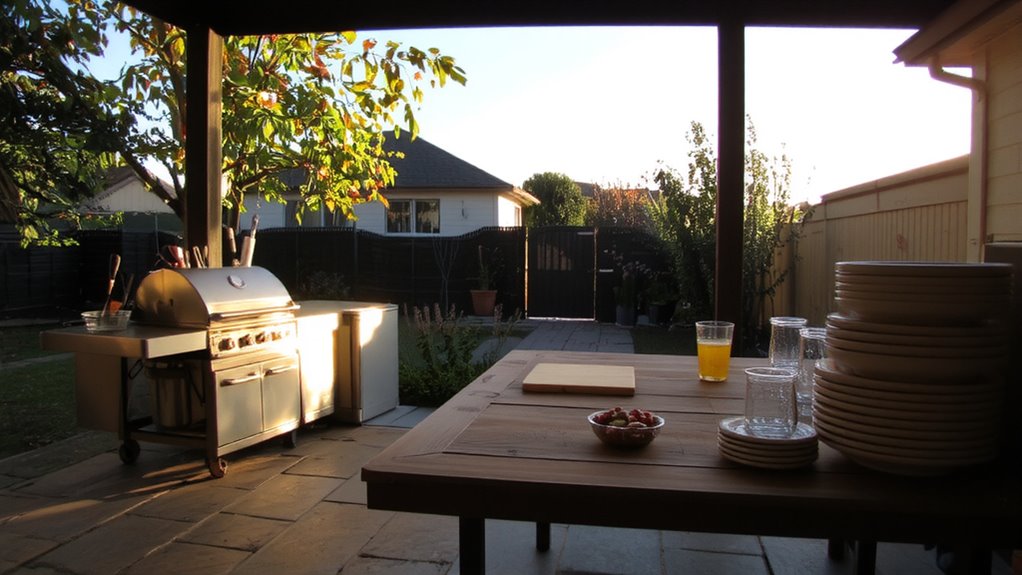
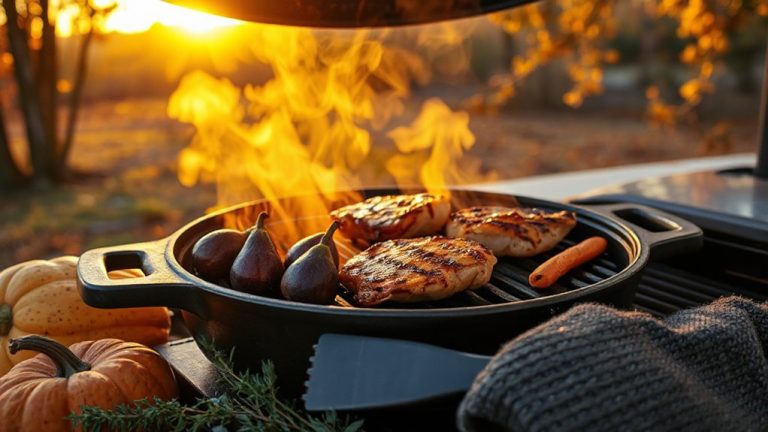
If you’ve ever struggled with unevenly cooked burgers or flare-ups that char your veggies, you know that arranging your grill isn’t just about convenience-it’s about control. Creating smart cooking zones gives you precise heat control, letting you sear meats over high heat and gently finish delicate items on cooler sides. For charcoal grills, pile coals on one side to form a two-zone setup; for gas models, simply ignite burners on one side. This setup improves space management, preventing overcrowding and allowing food to rest without overcooking. You’ll reduce flare-ups and gain more consistent results across proteins and vegetables. Effective zone cooking also extends grill life by minimizing constant lid lifting and temperature swings. Whether you’re smoking chicken or grilling asparagus, strategic heat zones make your backyard barbecue more efficient, predictable, and ultimately, more successful. It’s not just layout-it’s smart cooking science.
Grab the 6 Must-Have Grilling Tools
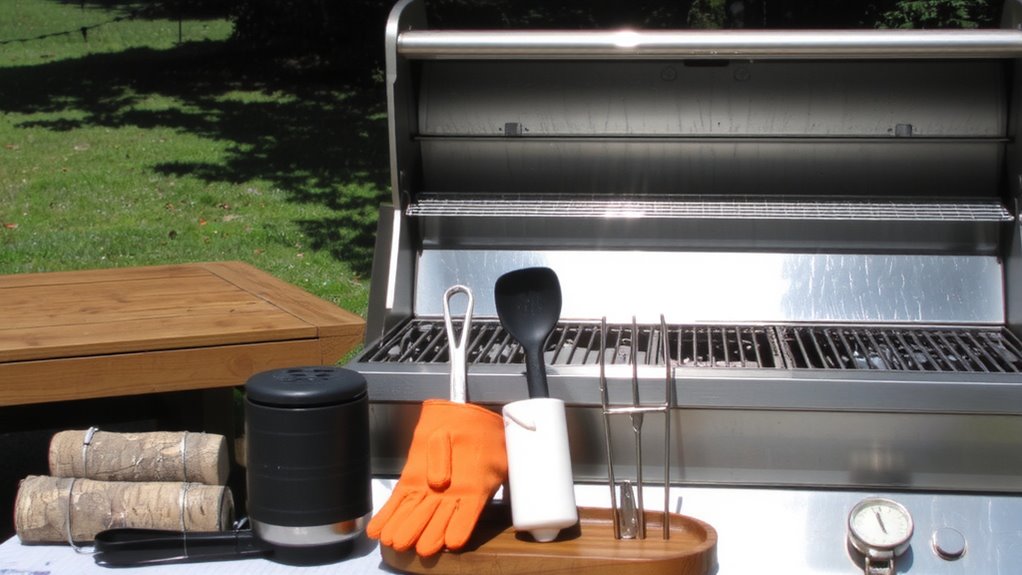
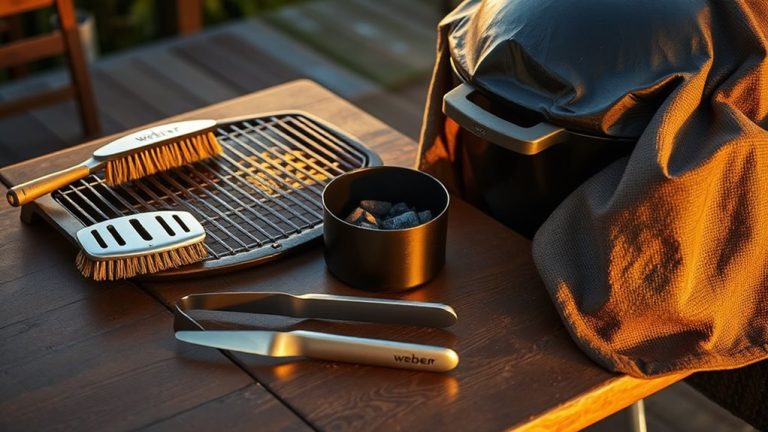
Every serious backyard griller knows that success hinges on more than just heat and timing-it starts with the right tools in hand. You’ll want a sturdy grill brush for effective grill cleaning, a reliable spatula with a thin edge for flipping delicate fish, and locking tongs that offer precision without crushing meat. A meat thermometer guarantees accuracy, eliminating guesswork. Invest in a heat-resistant glove-versus flimsy mitts-for safety and dexterity. Grill baskets expand your options, especially for veggies or shrimp. Don’t overlook tool maintenance: regularly clean handles, check bristles for wear, and store tools dry to prevent rust. These six essentials strike the ideal balance between function, durability, and practicality. They’re not overengineered, yet they perform consistently under high heat and repeated use. Proper care extends their life, making them worthwhile long-term partners in outdoor cooking. For more detailed recommendations, check out the best BBQ tools for grilling success.
Build a One-Stop Prep & Serving Zone
You’ve got the right tools in hand-clean, ready, and built to last-so now it’s time to think about where the real momentum of grilling comes together: your prep and serving space. A well-thought-out prep station design keeps ingredients, utensil, and plates within arm’s reach, minimizing wasted motion and maximizing efficiency. Position your cutting boards, oils, and seasonings on a durable countertop near the grill, ideally made of stainless steel or stone for easy cleaning. This central hub should flow naturally into your serving area, creating a smooth serving area workflow. Place warmed plates, serving trays, and condiments just beyond the grill zone so you can transfer cooked food seamlessly. Avoid backtracking or crisscrossing-effective layouts reduce fumbling and keep the cook’s rhythm steady. Smart placement doesn’t just save time; it enhances control, safety, and guest experience every time you fire up. For lasting performance and ease of maintenance, consider investing in one of the best outdoor cooking tables outdoor cooking tables designed to withstand the elements while providing ample workspace.
Keep Food Safe Without Slowing Down
While maintaining a fast-paced grilling workflow, keeping food safe shouldn’t mean sacrificing speed or convenience. You can prevent cross contamination by using separate cutting boards and tongs for raw and cooked meats-simple, but effective. Keep raw proteins chilled until they’re ready to grill; a cooler with ice packs works better than leaving them on the prep counter. Once food hits the grill, monitor food temperature with a quick-read thermometer to guarantee everything reaches a safe internal level without overcooking. Pre-marinated meats or prepped veggies? Store them in sealed containers, not open trays, to minimize risk. Tightly covered serving dishes also maintain safe food temperature longer during turnover. These small adjustments streamline safety without bogging down your rhythm. Smart habits like these balance efficiency and caution, letting you serve great-tasting, safe food every time-no guesswork, no delays.
Design a Backyard Layout That Works for Guests and Grill Master
A well-organized backyard layout keeps the grill master in command without turning your guests into obstacles. Position the grill in a central but designated zone, ideally near prep and serving areas, so you’re not constantly crossing footpaths. Your seating arrangement should encourage conversation while staying clear of the cooking perimeter-place chairs and tables at least six feet from the grill for safety and comfort. Think about traffic flow: create distinct pathways from the house to the grill, and from the grill to the dining space, minimizing bottlenecks during peak serving times. Circular or U-shaped layouts often work better than linear ones, allowing guests to move freely without interrupting cooking. Avoid clustering furniture too tightly-open space improves accessibility and reduces accidents. A thoughtful layout isn’t just about looks; it boosts functionality, safety, and enjoyment for everyone outside.
On a final note
You’ve set up your grill, defined cooking zones, and gathered essential tools-now it all works together efficiently. A well-organized layout improves safety, speeds up service, and enhances flavor control. With proper food handling and a dedicated prep area, you’ll maintain consistency and avoid cross-contamination. Optimizing your backyard barbecue isn’t just about gear; it’s about smart design and workflow that elevates every cookout. This system delivers reliable results season after season.