Mastering the Art of Cooking With Propane Grills for Outdoor Delights
You start by securely attaching the propane tank and igniting the grill with the lid open to prevent gas buildup, then preheat it for 10–15 minutes to stabilize temperature. Set up two zones-one for direct heat to sear burgers or vegetables, and one indirect for roasting meats-to gain precise control. Sear thick steaks over clean, oiled grates to trigger the Maillard reaction, locking in flavor. Since propane burns clean, add smoky depth using soaked wood chips in foil over the burner. Clean grates while warm after each use, scrubbing gently with a brass-bristled brush, and clear grease from the drip tray to extend your grill’s life and keep performance consistent. You’ll find even more ways to refine your technique with a few clever adjustments.
Notable Insights
- Ensure secure propane connections and preheat the grill 10–15 minutes with the lid open for safe, even heating.
- Set up two-zone cooking with direct and indirect heat to handle diverse foods efficiently and prevent flare-ups.
- Achieve a perfect sear by preheating on high, cleaning oiled grates, and using thick cuts like steaks for better browning.
- Add smoky flavor using soaked wood chip packets or a smoker box with hickory, mesquite, or fruitwoods.
- Clean grates with a brush after each use, clear grease buildup, and inspect burners to maintain peak performance.
How to Start and Preheat Your Propane Grill
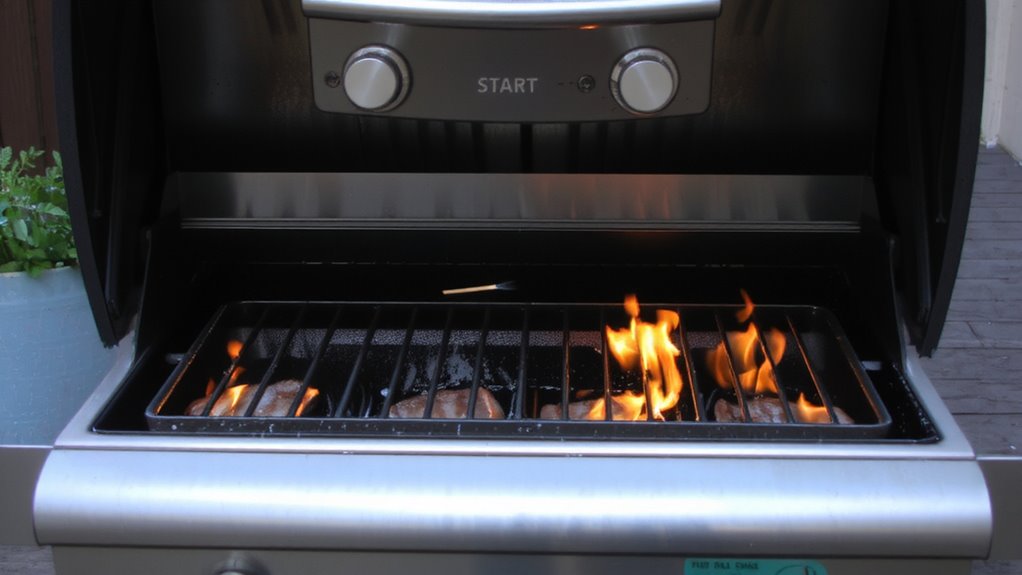
While it might seem straightforward, starting and preheating your propane grill the right way can make a noticeable difference in both cooking performance and flavor development. You should always check for secure connections and guarantee the propane tank is properly attached before ignition. Ignition safety is critical-use the starter knob as designed, and never attempt to light the grill manually without turning off the gas first. Keep the lid open when igniting to prevent gas buildup. Proper propane storage extends tank life and reduces risks; store it upright in a well-ventilated area, away from direct sunlight or heat sources. Preheat the grill for 10–15 minutes to stabilize temperature and burn off residue. This routine guarantees consistent heat distribution, improves searing, and helps prevent food from sticking-small steps, but they make your outdoor cooking noticeably more reliable and safe.
Use Direct and Indirect Heat for Better Results
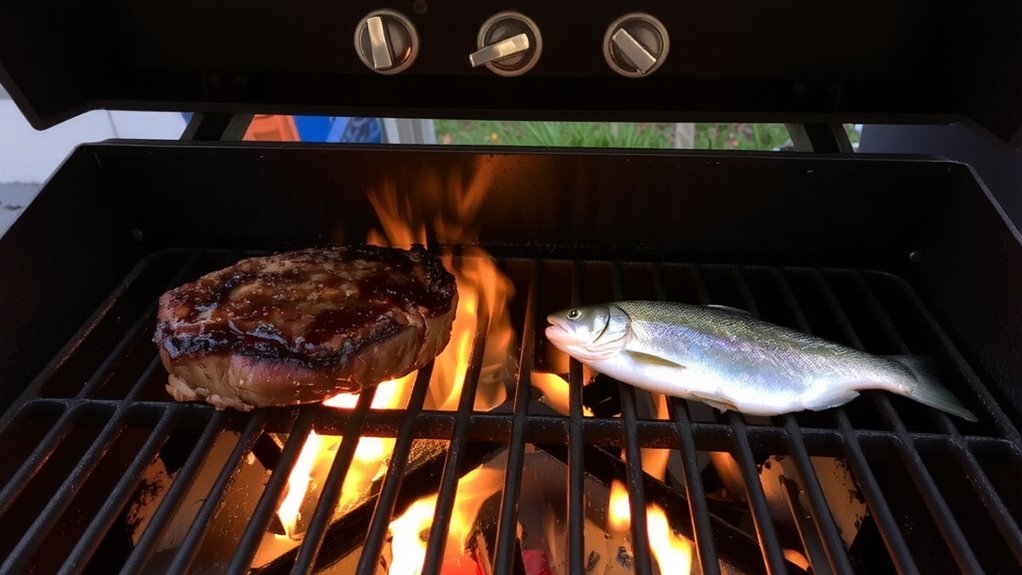
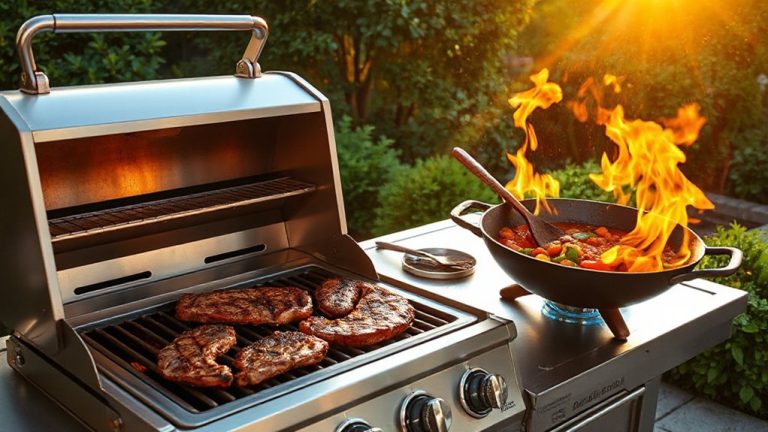
Once you’ve mastered preheating, you’ll find that using both direct and indirect heat on your propane grill gives you far more control over cooking results. By adjusting flame control, you create distinct heat zones-searing hot for quick cooking and cooler for slower, even results. Turn one side fully up for direct heat, perfect for burgers or veggies, while leaving the other side low or off for indirect heat, ideal for larger cuts like roasts or whole chickens. This two-zone setup prevents burning while ensuring food cooks through. You’ll get juicier meats, better texture, and consistent doneness. Effective flame control also improves fuel efficiency and reduces flare-ups. Mastering heat zones isn’t just about temperature-it’s about strategy. You’re not just grilling; you’re managing a cooking environment. With practice, you’ll adjust zones on the fly, adapting to each meal’s demands with precision and confidence, just like seasoned grillers do.
Get Restaurant-Quality Sear on a Propane Grill
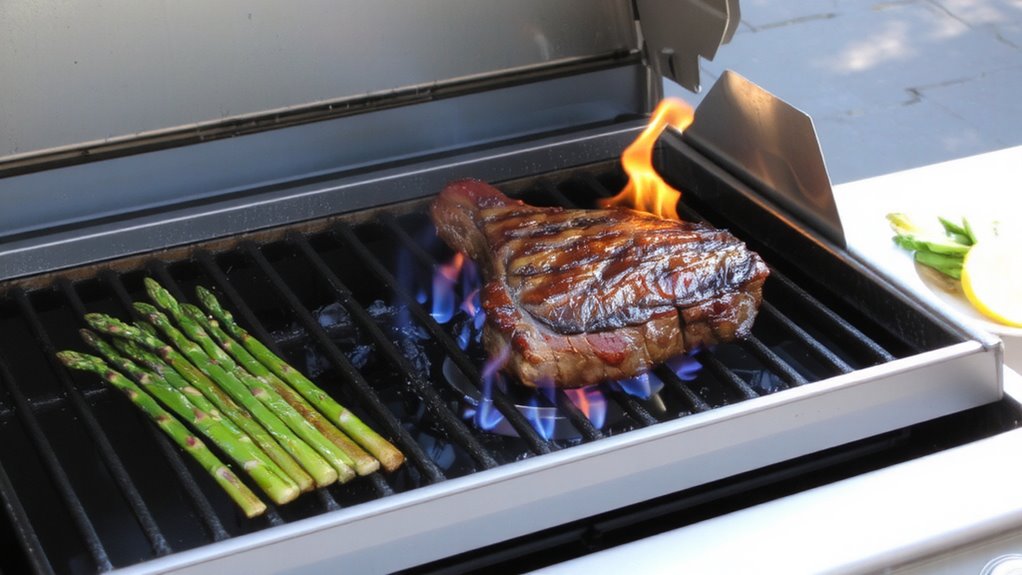
A restaurant-quality sear on a propane grill isn’t out of reach if you understand heat management and surface contact. You’ll need to preheat your grill for at least 10–15 minutes on high to guarantee the grates are hot enough for proper sear marks. Make sure the cooking surface is clean and lightly oiled to prevent sticking and promote even crust formation. Pressing down with a grill press or spatula helps maximize contact, but don’t overdo it-you want caramelization, not crushed meat. Thick cuts like steaks respond best, developing a flavorful crust while retaining juiciness inside. Sear marks aren’t just for show; they signal Maillard reaction success, where high heat transforms proteins and sugars. With consistent practice and attention to grill temperature, you can achieve professional-level results right in your backyard.
Can You Add Smoky Flavor With Propane?
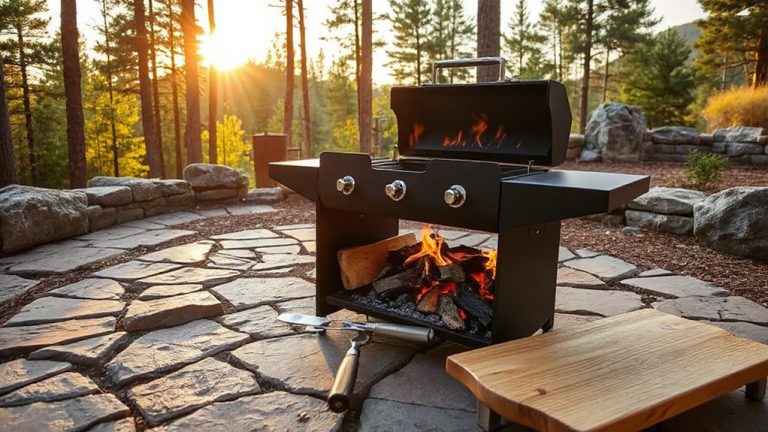
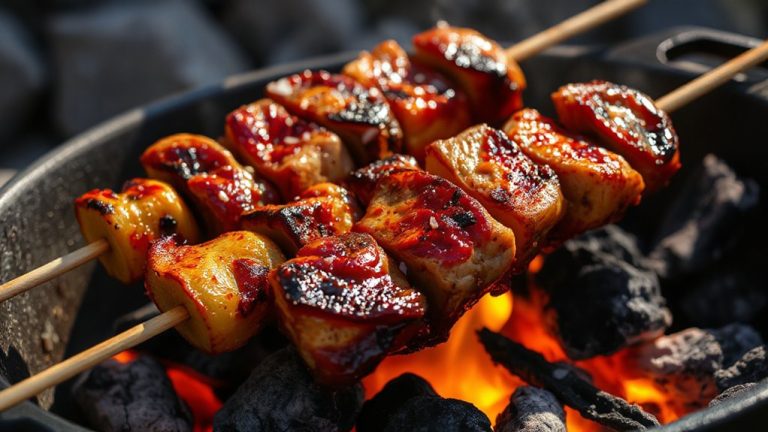
You’ve got the sear down-hot grates, clean surface, perfect Maillard browning-but now you might be wondering where the smoke is. Propane burns clean, so it doesn’t naturally deliver the smoky depth of charcoal or wood-fired grills. But don’t worry-flavor infusion is still possible. You can use smoke packets made from soaked wood chips wrapped in foil, poking holes to let smoke escape. Place them directly over the burners for steady release. Hickory, mesquite, or applewood each lend distinct profiles, enhancing ribs, brisket, or vegetables. Some grills include built-in smoker boxes, which improve heat retention and make the process easier. While the smoke won’t match a traditional smoker, these methods provide a meaningful upgrade in aroma and taste. Used strategically, smoke packets turn your propane grill into a versatile tool for layered flavor. It’s not magic-just smart technique. For even better results, consider using a dedicated smoker box compatible with propane grills to maximize smoke production and flavor control.
Clean and Maintain Your Grill After Every Use
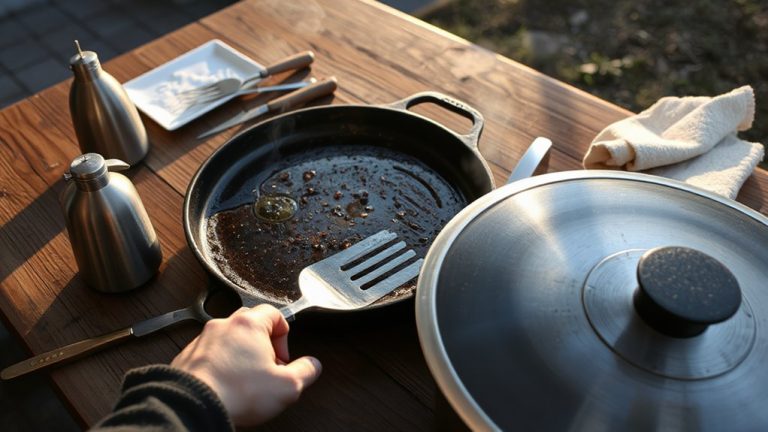
Always cleaning your propane grill after each use keeps it running efficiently and extends its lifespan. You’ll prevent grease buildup, which can cause flare-ups and uneven heating. Use proper grill brush techniques while the grates are still warm-this loosens stuck-on debris without damaging the surface. Opt for a brass-bristle brush if possible; it’s effective yet gentle compared to harsh steel. Grease management is just as critical: always empty the drip tray and inspect the grease channel to avoid clogs and fire hazards. Check burners regularly for blockages and clean them to maintain consistent flame output. A quick wipe-down of the exterior prevents grime from setting in. Performing these steps after every cook guarantees reliability and peak performance, reducing long-term repair needs. Proper maintenance isn’t just about cleanliness-it’s about preserving function, safety, and the quality of every meal you grill. For optimal results, consider using one of the best grill brushes for a spotless clean.
On a final note
You’ve got the tools to master propane grilling: proper preheating, heat zone control, and searing techniques deliver reliable results. While propane lacks natural smoke, wood chips boost flavor effectively. Regular cleaning preserves performance and extends your grill’s lifespan. For consistent, high-heat cooking and convenience, propane outperforms charcoal in efficiency, making it ideal for weeknight dinners and weekend BBQs alike. It’s practical, controllable, and perfect for outdoor cooking success.