Calibrating Charcoal Arrangement Based on Wind Direction Around Dutch Oven
You’re cooking outdoors, and wind’s messing with your Dutch oven’s heat. Place extra coals on the windward side to fight uneven cooling-it works. Cut leeward coals by 30–40% in strong gusts to avoid cold spots. Rotate the oven when wind shifts, keeping the vent downwind for steady airflow. Test heat with a water pan to see hot zones. Smart coal placement beats guesswork. Master these moves, and you’ll cook evenly no matter the breeze.
Notable Insights
- Place extra coals on the windward side to counteract cooling and maintain even heat distribution.
- Reduce leeward coals by 30–40% in winds over 15 mph to prevent cold spots and imbalance.
- Rotate the Dutch oven to keep the lid vent downwind and preserve combustion stability during wind shifts.
- Use wind direction to your advantage by aligning coal placement with natural airflow for consistent burn efficiency.
- Test heat evenness with a water pan to identify hot and cold zones influenced by wind exposure.
Why Wind Direction Ruins Dutch Oven Heat
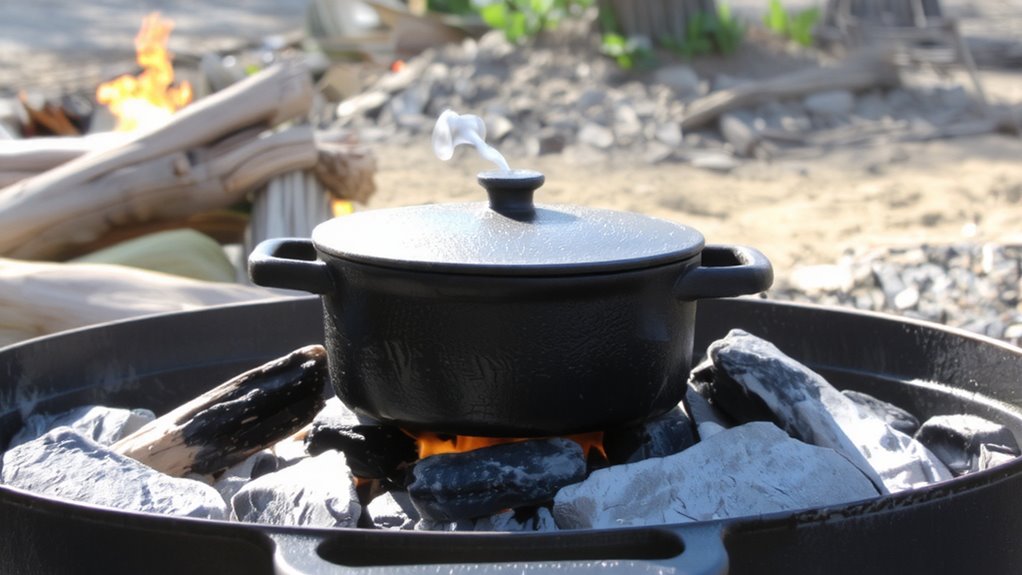
While you might think the biggest challenge in Dutch oven cooking is nailing the recipe, the reality is that wind direction often sabotages heat control more than any ingredient mishap. Wind pulls heat from the coals unevenly, creating unpredictable cooking zones around your oven. You’re not just battling flame intensity-you’re fighting wind chill, which increases heat loss along the leeward side. This cooling effect destabilizes internal temperature, leading to undercooked spots or burnt edges. Even a moderate breeze can drop the ambient heat around the oven by several degrees, skewing results. Because Dutch ovens rely on radiant heat from surrounding coals, any airflow disrupting that balance compromises performance. You can’t control the wind, but recognizing its influence helps you anticipate shifts in heat. Ignoring wind direction means ignoring a core variable in outdoor thermal management. Proper setup starts with awareness, not just fuel quantity.
Balance Heat by Adding Coals on the Windward Side
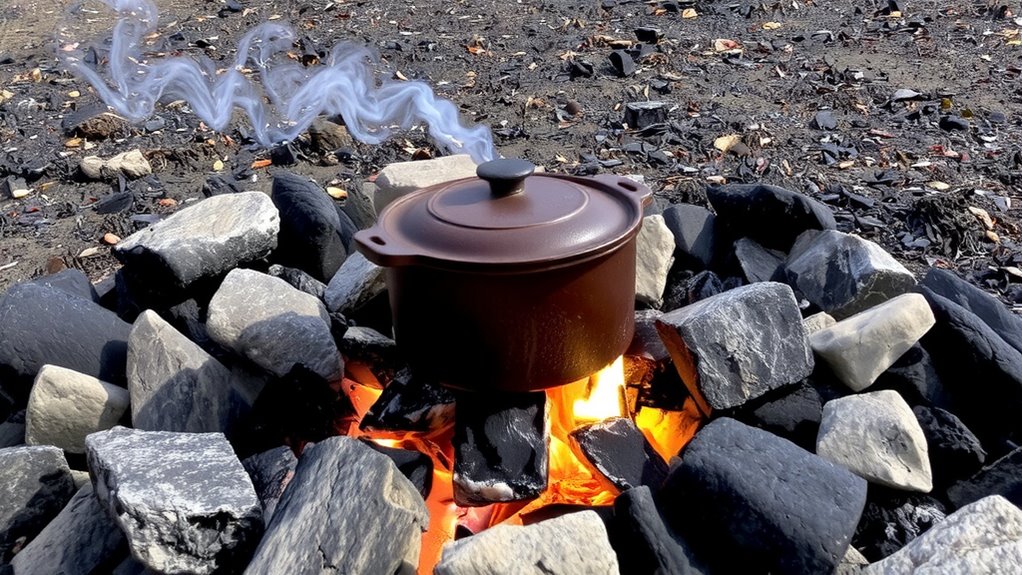
You can’t stop the wind, but you can work with it to stabilize your Dutch oven’s temperature by adjusting where you place your coals. When wind intensity increases, it cools one side of the oven faster, creating uneven cooking. Placing extra coals on the windward side counters that cooling effect, balancing internal heat. This isn’t just about temperature control-it boosts fuel efficiency, too. By positioning coals where airflow helps them burn more consistently, you reduce the need to constantly add fuel. Observations show ovens managed this way maintain steady temps longer, especially in moderate winds. It’s a small shift that aligns physics with practicality, using the wind’s force rather than fighting it. Seasoned cooks confirm this method leads to more predictable results and fewer adjustments over time. In real use, this technique proves reliable across various fuels and oven sizes. Smart coal placement isn’t just reactive-it’s strategic, improving control and conserving resources.
Reduce Coals on the Leeward Side in Strong Wind
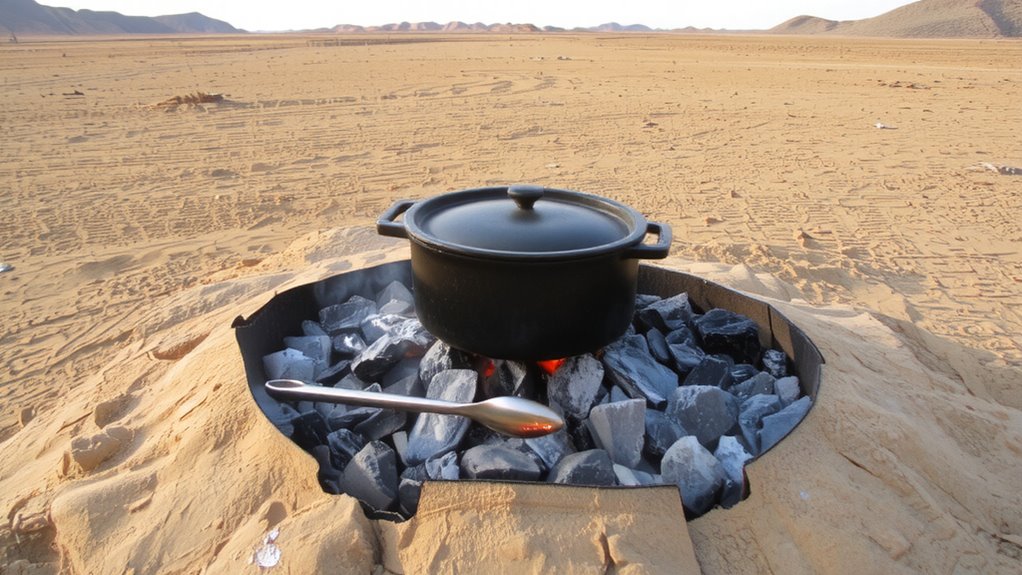
When wind gusts exceed 15 mph, pulling heat from the leeward side of your Dutch oven, cutting back on coals in that area isn’t just logical-it’s essential for thermal balance. Strong winds accelerate leeward cooling, creating cold spots that disrupt even cooking. You’ll notice food browning too slowly or unevenly on the downwind edge, a clear sign of excessive heat loss. To counter this, reduce coal quantity on the leeward side by about 30–40%. This adjustment prevents overcompensation from wind-chilled cast iron. Strategic coal shielding helps maintain consistent ambient heat, allowing the windward coals to dominate and drive temperature. Think of it as redirecting energy flow-you’re not eliminating heat, just optimizing it. Proper coal placement minimizes turbulence effects and stabilizes internal oven temps. Ignoring leeward cooling risks undercooked zones, while smart coal shielding guarantees reliability, especially in exposed or gusty environments. It’s a subtle fix with significant payoff.
Rotate Your Oven When the Wind Shifts
A steady wind doesn’t always hold its direction, and once it veers, the careful coal balance you’ve set starts working against you. When that happens, fire placement shifts unexpectedly, creating hot spots and uneven cooking. Instead of rearranging coals every time, try oven rotation-it’s faster and maintains your setup. Simply turn the Dutch oven so the lid’s vent stays downwind, realigning airflow with the original windward-leeward orientation. This small adjustment keeps heat circulating properly and prevents one side from scorching. Experienced pitmasters often prefer rotation over repositioning coals, since it preserves consistent combustion. Oven rotation also reduces the risk of disrupting delicate dishes mid-cook. In fluctuating conditions, this method proves efficient and reliable. While not always needed, timely oven rotation can be the difference between even cooking and a ruined meal, especially during long sessions where wind shifts are common.
Test for Even Heat With a Water Pan
How evenly is your Dutch oven distributing heat across the cooking surface? You can find out by using a water pan test. Place a shallow pan of water on the oven’s floor before lighting your coals. After 30 minutes, examine the water distribution and steam consistency. Uneven evaporation reveals hot spots, indicating poor heat balance.
| Area | Water Level | Steam Observed |
|---|---|---|
| Front Left | High | Low |
| Front Right | Low | High |
| Back Left | Medium | Medium |
| Back Right | Low | High |
This method gives you visual feedback so you can adjust your setup. Good steam consistency means stable, even airflow and proper coal arrangement. Watch for patterns in water distribution-it tells you more than guesswork ever could. Accurate testing leads to better performance and more reliable outdoor cooking results.
Adjust Coal Count for Temperature and Wind
Though heat distribution plays a critical role in Dutch oven cooking, you’ll find that fine-tuning the coal count is just as essential-especially when dealing with fluctuating temperatures or windy conditions. You’ll need to adjust the number of coals on top and underneath to maintain consistent heat retention. In wind, exposed coals burn hotter and faster, so you’ll reduce the count slightly to prevent overheating. When it’s cold or damp, adding a few extra coals helps sustain temperature. Remember, ideal coal distribution typically follows the ⅔-on-top, ⅓-on-bottom rule, but that ratio shifts with conditions. Wind pushing from one side may require tighter clustering to prevent uneven cooking. Overcorrecting is common, so start small. You’ve got better control when you tweak counts gradually while monitoring results. Effective heat retention isn’t just about volume-it’s about smart, responsive adjustments.
Cook Perfectly in Any Wind Condition
You’ve already seen how adjusting coal count helps manage heat when the weather turns tricky, but wind doesn’t just alter your fuel burn rate-it reshapes the entire cooking environment inside your Dutch oven. When wind hits one side, it cools that quadrant, creating hot and cold spots that skew cooking time and compromise fuel efficiency. To counter this, shift more coals to the windward side to balance heat distribution. You’ll maintain consistent temps and avoid undercooked edges or scorched centers. For best results, use a 3-1 coal top-to-bottom ratio and rotate the oven lid a quarter-turn every 15 minutes. This evens out airflow and radiant heat. Experienced pitmasters swear by this tweak-it’s proven in field tests across varying wind speeds. You’re not just reacting to weather; you’re mastering it. Proper coal placement means predictable cooking time and smarter fuel efficiency, even in blustery conditions.
On a final note
You’ll cook more evenly by adjusting your charcoal layout to the wind. Place extra coals windward to counteract cooling from airflow, and reduce them on the leeward side to prevent hot spots. When winds shift, rotate the oven to maintain balance. A water pan helps test heat distribution. These adjustments improve temperature control, especially in gusty conditions. With practice, you’ll maintain consistent results regardless of wind, making your outdoor cooking far more reliable and efficient.