Why Dry-Aged Post Oak Chunks Outperform Green Wood in Pit Smoking
You get better results with dry-aged post oak because its low moisture content guarantees a hotter, cleaner burn compared to green wood. Wet wood steams, sputters, and produces thick, acrid smoke that leaves meat tasting bitter. Dry-aged chunks ignite easier, burn longer, and deliver the thin, blue smoke ideal for balanced flavor. With less soot and stable heat, you gain precise control-essential for restaurant-quality BBQ. See how proper wood selection transforms your cook.
Notable Insights
- Dry-aged post oak ignites easily and burns hotter due to significantly lower moisture content than green wood.
- It produces consistent, thin blue smoke, ensuring even flavor without the bitterness of thick, acrid smoke.
- Reduced moisture in dry-aged wood enables cleaner combustion, minimizing soot and flare-ups during pit smoking.
- Seasoned chunks burn longer and more evenly, providing stable heat and predictable smoke output.
- Properly aged post oak enhances meat with earthy, slightly sweet notes, avoiding the harsh flavors of green wood.
Why Dry-Aged Post Oak Beats Green Wood for Smoking
While green wood might seem like a convenient option, dry-aged post oak chunks deliver far better results when smoking meat. You’ll notice the difference right away-dry-aged wood ignites easier and burns hotter due to its reduced moisture content. This directly improves smoke consistency, giving you that steady, clean vapor essential for balanced flavor. Green wood, by contrast, sputters and produces erratic smoke, often leaving meat with a bitter, acrid taste. The wood density of properly aged post oak also plays a key role; denser, seasoned chunks burn longer and more evenly, making heat management easier. That means less babysitting your smoker and more predictable cooking outcomes. Whether you’re smoking brisket or ribs, dry-aged post oak maintains a stable thermal profile, supporting even penetration of flavor. It’s not just tradition-it’s performance. When consistency and control matter, dry-aged wins hands down. For best results, choose best smoking wood that’s been properly seasoned for optimal flavor and burn efficiency.
How Moisture Ruins Smoke (And Why Dry-Aged Wins)
When you light wood with high moisture content, you’re not just fighting to get it burning-you’re setting up conditions that sabotage flavor from the start. The excess water turns to steam, cooling the fire and disrupting combustion efficiency. That means incomplete burns, more soot, and erratic smoke production. You end up struggling to maintain steady heat, and your smoke consistency suffers-thick white plumes one minute, barely a wisp the next. That inconsistency makes temperature control a headache and risks bitter, acrid notes on your meat. Dry-aged post oak, with its moisture reduced over months, ignites easier and burns hotter and cleaner. It promotes complete combustion, so you get smooth, thin blue smoke almost immediately-ideal for clean smoke application. The difference isn’t subtle: dry wood gives you predictable performance, better combustion efficiency, and reliable smoke consistency, every single cook.
Why Dry-Aged Post Oak Gives Cleaner, Better Flavor
Though moisture content plays a key role in combustion, it’s the purity of the smoke from dry-aged post oak that truly transforms your barbecue’s flavor. When you burn green wood, excess moisture creates thick, acrid smoke that coats meat with bitter compounds, dulling rather than enhancing. Dry-aged chunks, fully cured over months, ignite efficiently and produce a clean, steady smoke. This clarity allows the wood’s natural notes-earthy, slightly sweet, with a whisper of spice-to shine through. You’re not just adding smoke; you’re layering smoke complexity that complements the meat instead of overwhelming it. That clean burn directly improves the final flavor profile, giving you richer, more balanced results. Unlike unseasoned wood that fights for consistent combustion, dry-aged post oak delivers control and predictability. For pitmasters who value precision and depth, it’s not just a fuel choice-it’s the foundation of better barbecue.
Where to Buy and How to Pick Dry-Aged Post Oak
If you’re after the clean, robust smoke that defines top-tier barbecue, sourcing quality dry-aged post oak starts with knowing where and how to look. Your best sourcing tips include checking specialty BBQ supply shops, local mills that cure hardwood, or trusted online retailers with customer reviews and clear aging claims-typically 6 to 12 months. Avoid big-box stores selling generic “smoking wood,” as these often mislabel or sell improperly seasoned oak. Look for quality indicators like a grayish exterior, deep cracks at the ends, and a lightweight feel-signs of thorough drying. The wood should smell earthy, not damp or musty. Sound matters too: tap two chunks together-they should ring, not thud. Choosing well-aged post oak guarantees consistent burn and cleaner flavor, directly impacting your smoke’s character without overwhelming the meat. For chicken specifically, best smoke wood for chicken delivers a balanced, savory profile that enhances rather than masks the meat’s natural taste.
Why Green Wood Ruins BBQ (And How Dry-Aged Fixes It)
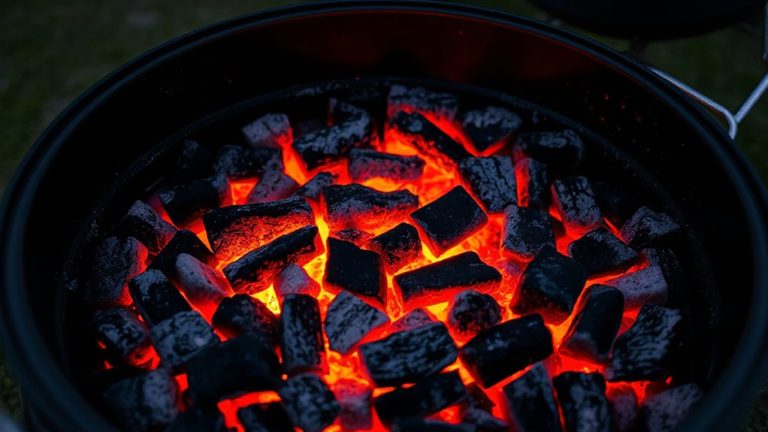
Because green wood contains high moisture levels-often exceeding 40%-it burns inconsistently and produces thick, acrid smoke that can leave your meat tasting bitter and overpowered. You’re better off avoiding it entirely. Instead, dry-aged post oak offers cleaner combustion and superior flavor control. The lower moisture enhances charcoal ignition and reduces unnecessary flare-ups. Plus, you’ll achieve ideal smoke density-thin, blue smoke that imparts richness without overwhelming the meat. Best Charcoal for Smoking can further enhance your results by ensuring consistent heat and minimal ash buildup when paired with dry-aged wood.
| Factor | Green Wood | Dry-Aged Post Oak |
|---|---|---|
| Moisture Content | >40% | <20% |
| Smoke Density | Thick, white | Thin, blue |
| Charcoal Ignition | Slows it down | Speeds it up |
| Flavor Impact | Bitter, harsh | Clean, earthy |
Dry-aged wood simply performs better across every metric. You get steady heat, consistent smoke, and restaurant-quality results-every time.
On a final note
You’ll get better results with dry-aged post oak because it burns hotter and cleaner than green wood. Moisture in green wood creates heavy smoke that imparts bitter, acrid flavors. Dry-aged chunks ignite easily, produce steady heat, and deliver a smooth, consistent smoke that enhances meat without overpowering it. For true barbecue depth-rich, woody, and clean-seasoned post oak is the practical choice every serious pitmaster relies on.