The Ultimate Guide to Using Charcoal Briquettes in Your Barbecue Grill
Light your briquettes safely using a chimney starter and crumpled newspaper-no lighter fluid needed. Pile coals on one side for direct heat, leaving the other empty for indirect cooking. Adjust heat by stacking briquettes or tweaking vents for precise control. Pick quality brands like Kingsford or Weber with clean, consistent burn. Store unused charcoal in sealed containers, and you’ll already be ahead-there’s still more to mastering your grill.
Notable Insights
- Use a chimney starter with crumpled newspaper for fast, safe ignition without lighter fluid.
- Create direct and indirect heat zones by piling coals on one side of the grill.
- Control temperature by adjusting vent openings and stacking briquettes two to three layers deep.
- Choose high-quality briquettes made with natural hardwoods and minimal fillers for clean, consistent burns.
- Store charcoal in sealed, airtight containers in a cool, dry place to prevent moisture damage.
Light Briquettes Quickly and Safely
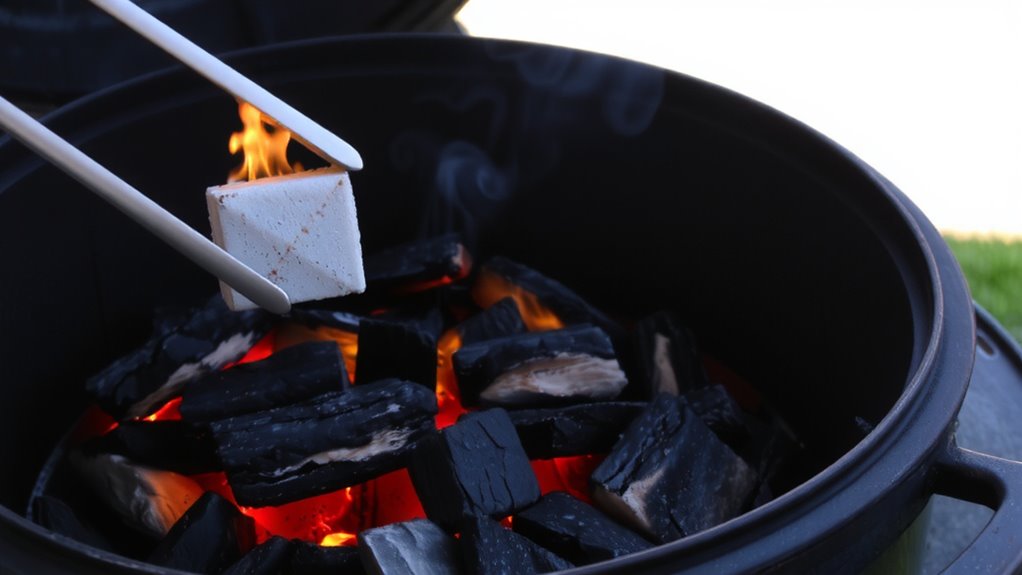
Ever wonder why some charcoal fires ignite easily while others sputter and smoke for ages? The secret often lies in how you light your briquettes. To ignite faster, use a chimney starter-it’s the most reliable method, needing no lighter fluid. Just crumple a few sheets of newspaper underneath, fill the top with briquettes, and let the flames rise. You’ll get evenly heated coals in about 15–20 minutes. Avoid dousing charcoal with accelerants; not only do they taint food with chemical flavors, but they’re also a hazard. Safety first means keeping a fire extinguisher nearby and never using gasoline. Electric starters are another clean option, though they’re slower. Proper airflow is key-don’t pack briquettes too tightly. With the right technique, you’ll achieve consistent heat and avoid frustrating delays. For best results, choose high-quality charcoal grills that promote even airflow and heat distribution.
Set Up Direct and Indirect Heat Zones
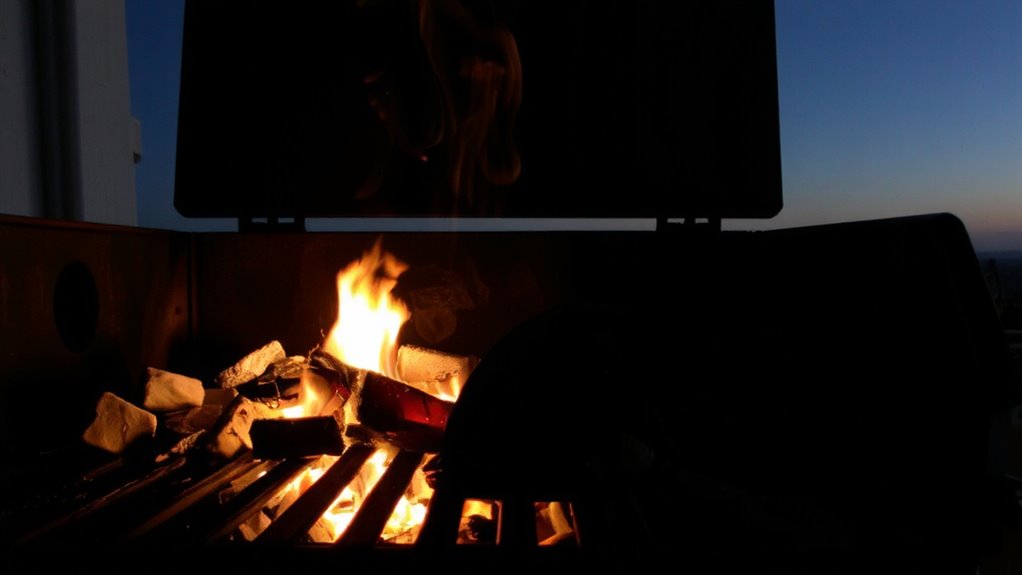
Once you’ve got your coals evenly lit and ashy, it’s time to arrange them for ideal cooking control by setting up both direct and indirect heat zones. Proper heat distribution lets you sear meats quickly over the fire while gently finishing them elsewhere. This setup also improves airflow management, maintaining consistent temperatures. For a standard kettle grill, pile coals on one side only, leaving the other empty. A well-designed charcoal grill smoker can enhance this two-zone cooking method by providing better insulation and temperature control. Here’s how it looks:
| Heat Zone | Purpose |
|---|---|
| Direct (coals) | Searing steaks, burgers |
| Indirect (no coals) | Roasting chicken, ribs |
| Front edge | Warm zone for resting food |
| Rear edge | Safety buffer from flare-ups |
| Center divider | Controls heat circulation |
This configuration maximizes control without adjusting briquette heat constantly, making multitasking easier and results more predictable.
Control Briquette Heat for Perfect Grilling
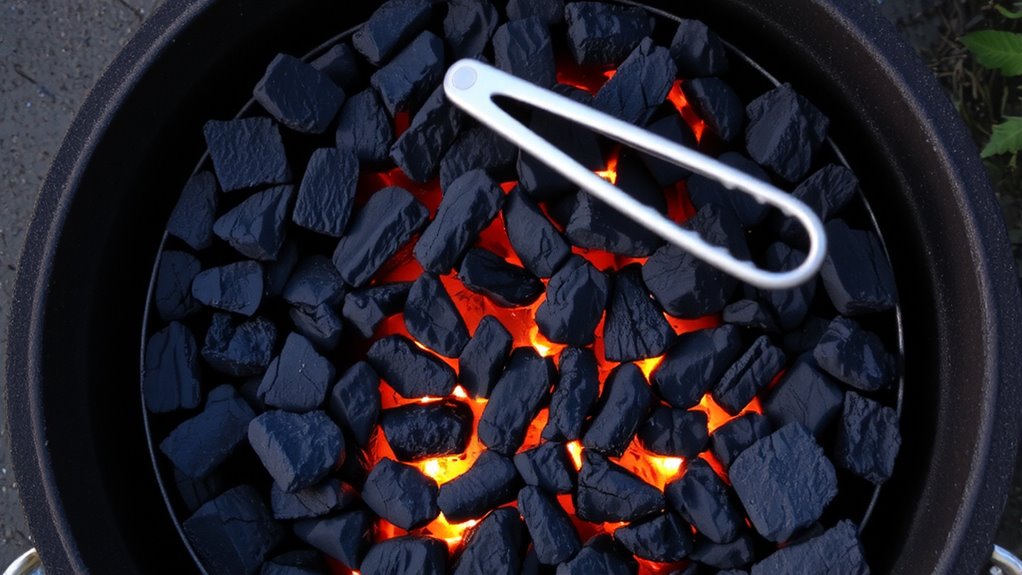
You’ve arranged your coals for balanced heat zones, giving you the foundation to manage how food cooks across the grill surface. Now, fine-tune that control with proper briquette stacking and airflow management. Stacking briquettes two to three layers deep on the hotter side sustains higher temperatures, while a single layer offers gentler heat-ideal for slower cooking. The real game-changer, though, is airflow. Opening the bottom and top vents increases oxygen flow, boosting combustion and heat. Close them partially to dial things down. Most beginners underestimate how quickly airflow changes affect temperature. You’ll need to monitor and adjust throughout grilling. Remember, even with perfect setup, heat shifts as briquettes burn. Mastering stacking and vent control gives you consistent results, whether searing steaks or finishing delicate pieces. With practice, you’ll anticipate fluctuations and respond like a pro, ensuring reliable, even grilling every time. Choosing the right fuel matters just as much-consider using high-quality best charcoal for smoking to enhance flavor and maintain steady heat.
Pick the Best Briquettes for Grilling
The best briquettes for grilling combine consistent heat output, clean burn, and minimal ash to support both high-heat searing and extended cooking sessions. You’ll want to pay close attention to briquette composition-look for blends with natural hardwoods and minimal fillers, since those light more evenly and produce less smoke residue. Some brands use limestone or starch binders, which can affect burn time and flavor. That’s where brand reputation matters; trusted names like Kingsford or Weber have spent years refining their formulas for reliability and performance. You’re not just paying for the name-you’re getting tested consistency in size, density, and ignition. Opting for a reputable brand means fewer surprises on game day. Don’t guess-go with what’s proven. Your results, from sear to simmer, depend on choosing wisely.
Avoid Common Charcoal Grilling Mistakes
While achieving great flavor on the grill often comes down to technique and ingredients, skipping key prep steps can undermine even the best-laid plans. You might not realize it, but charcoal moisture is a silent killer of consistent heat. Wet or damp briquettes burn unevenly and produce excess smoke, ruining taste and control. Always store your charcoal in a sealed container away from humidity. Another common error is airflow restriction-closing the grill’s vents too much chokes the fire. Without proper oxygen flow, your coals won’t reach ideal temperature and may go out. Keep the bottom and top vents partially open to maintain steady combustion. Overloading the fire chamber is another culprit; too many briquettes increase heat unpredictably. Light only what you need, and let the design work for you. Avoid these missteps, and you’ll enjoy more reliable sears, even cooking, and better flavor every time.
Store Used and Unused Charcoal Safely
A single misplaced bag of damp charcoal can ruin not just your cookout, but your long-term grilling efficiency. Proper charcoal storage is essential for maintaining briquette quality and ensuring consistent heat output. You should always keep unused charcoal in a sealed, airtight container, preferably made of metal or heavy-duty plastic, to support moisture prevention. Humidity weakens briquettes, leading to poor ignition and uneven burns. Store the container in a cool, dry place like a garage or shed, away from rain and temperature extremes. For used charcoal, let the ashes fully cool, then remove debris and leftover briquettes that haven’t fully burned. These can be reused if stored correctly. However, avoid mixing partially burned coals with fresh ones unless necessary. Effective charcoal storage isn’t just about space-it’s about performance, safety, and maximizing your grilling experience through smart moisture prevention.
On a final note
You’ve now mastered the essentials of charcoal grilling. Using briquettes effectively means balancing heat control, proper setup, and smart fuel choices. Direct and indirect zones give you precision, while avoiding common mistakes guarantees consistent results. High-quality briquettes burn hotter and longer, enhancing flavor and performance. Safe storage keeps fuel ready and stable. With these practices, your grill delivers reliable, flavorful cooking-perfect for everything from seared steaks to slow-roasted ribs.