How to Adapt Standard Recipes for Dutch Oven Cooking Outdoors
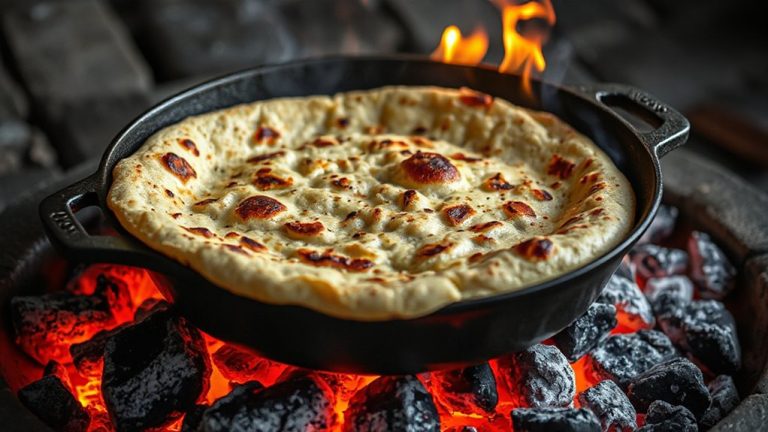
Adjust your recipe by boosting liquids slightly and browning meats first for richer flavor. Use a Dutch oven sized to your dish-10 to 12 inches works best-to avoid uneven cooking. Control heat with coal placement: 8 bottom and 12 top coals mimic a 350°F oven. Trap moisture with a tight lid and minimize openings. Heartier ingredients hold up better, and pre-seasoning proteins locks in juiciness-key for consistent outdoor results. There’s more to mastering campfire precision than meets the eye.
Notable Insights
- Adjust liquid amounts slightly downward to account for variable outdoor evaporation during long cooks.
- Brown meats first to deepen flavor and enhance browning in cast iron’s even heat.
- Use tougher cuts of meat and hearty vegetables that thrive under slow, sustained outdoor heat.
- Recalculate cooking time and coal count; 350°F ≈ 8 bottom / 12 top coals with +20–30% time.
- Choose a properly sized Dutch oven with a snug lid to ensure even heat and moisture retention.
Adapt Your Recipe for Dutch Oven Cooking
While your favorite casserole or stew might work perfectly in the oven at home, it’ll need some tweaks to perform well in a Dutch oven over coals. You’ll want to adjust ingredient ratios-especially liquids-since evaporation rates differ outdoors. Opt for layered seasoning techniques: brown meats first to build depth, then add spices early to access essential oils. Unlike indoor cooking, Dutch ovens excel at slow, even heat retention, making them ideal for deep flavor infusions from herbs, wine, or smoke. You’ll find that aromatics like garlic and onions release more complexity when simmered slowly in cast iron. Avoid delicate ingredients that might break down; heartier vegetables and tougher cuts perform better. Pre-seasoning proteins helps seal in moisture, while fats enhance browning and prevent sticking. With careful layering and attention to ingredient timing, you’ll turn standard recipes into robust, outdoorsy meals that make the most of your Dutch oven’s capabilities.
Adjust Cooking Times and Temperatures
Since heat distribution in a Dutch oven over an open fire differs considerably from your home oven, you’ll need to recalibrate both time and temperature to get consistent results. Achieving proper temperature control means relying on coal placement-top vs. bottom-and monitoring with an oven thermometer. Unlike indoor ovens, heat radiates unevenly, so timing adjustments are essential. Most dishes require longer cook times at lower, steadier heat to avoid hotspots and burning. Consider these approximate conversions when adapting recipes:
| Home Oven Temp | Dutch Oven Coals (Bottom/Top) | Estimated Cook Time Increase |
|---|---|---|
| 350°F | 8/12 | +20–30% |
| 375°F | 9/13 | +15–25% |
| 400°F | 10/14 | +10–20% |
Good temperature control and smart timing adjustments prevent undercooked centers or scorched edges, turning outdoor cooking from guesswork into a reliable practice.
Pick the Right Dutch Oven Size
You’ve nailed down temperature control and adjusted your timing for outdoor cooking, but now it’s time to make sure your Dutch oven actually fits the job. Choosing the right size isn’t just about capacity-it’s about performance. A 10- to 12-inch oven works best for most family-sized recipes, offering enough space without sacrificing heat circulation. Consider oven depth: deeper models suit stews and layered dishes, while shallower ones are ideal for cobblers or skillet-style meals. Too much empty space leads to uneven cooking, but overcrowding slows heat transfer. Also, check the lid fit-it should sit snugly to retain moisture and trap heat effectively. A warped or loose lid disrupts temperature stability, especially with coals on top. Cast iron holds and radiates heat well, but only if the size and design match your cooking needs. Match the oven to the meal, and you’ll get consistent, reliable results every time outdoors.
Manage Liquid to Prevent Evaporation
A tight-fitting lid is your first line of defense against excess evaporation when cooking outdoors, and with good reason-cast iron Dutch ovens rely on sealed moisture retention to deliver consistent results. You’ll want to maintain proper liquid retention, especially over long cooks, since even small gaps can disrupt moisture control. Dutch ovens with raised rims and snug lids trap steam effectively, reducing the need to replenish water or broth mid-cook. You’re better off starting with slightly less liquid than the recipe calls for-you can always add more, but you can’t take it out. The heavy lid weight and tight seal work together to simulate a steamy oven environment, essential for braises and stews. Unlike grilling, which demands constant airflow, Dutch oven cooking thrives on containment. This design feature gives you reliable moisture control without constant monitoring, making it ideal for remote or hands-off outdoor setups.
Stir and Layer Without Losing Heat
While keeping the lid on as much as possible helps retain heat and moisture, you’ll still need to stir and layer ingredients occasionally when building flavor in a Dutch oven over open fire. Every time you lift the lid, you risk losing heat retention and disrupting even cooking. To minimize this, plan your stirring and layering efficiently. Use long-handled utensils to quickly access ingredients without hovering with the lid off. Layer denser items like root vegetables at the bottom, where heat is most intense, and delicate items on top.
| Action | Impact on Cooking |
|---|---|
| Stir quickly | Preserves heat retention |
| Layer thoughtfully | Promotes even cooking |
| Limit lid openings | Maintains consistent temperature |
| Replace lid promptly | Reduces heat loss |
Doing so guarantees consistent results and maximizes efficiency during outdoor cooking sessions.
On a final note
You’ll find Dutch oven cooking outdoors both practical and rewarding once you adapt your recipes properly. Adjusting time, temperature, and liquid levels guarantees even results, while selecting the right size improves heat distribution. Stirring carefully and layering ingredients maintains consistent cooking without heat loss. Though it demands attention, the method delivers deeply flavorful meals, making it a dependable choice for serious outdoor cooking and BBQ enthusiasts who value control and consistency.