How to Achieve the Perfect Searing Char on Steak Using a Hibachi Grill
Pick a thick ribeye or strip steak with good marbling, dry it uncovered in the fridge overnight, then let it warm up before cooking. Get your hibachi to 450°F–550°F, clean and oil the grate, and use direct heat for a tight sear. Sear 2–3 minutes per side without moving, let rest 5–10 minutes, and slice against the grain. You’ll see how small adjustments make a major difference in crust and juiciness.
Notable Insights
- Choose a well-marbled, 1- to 1.5-inch thick steak like ribeye or strip for optimal searing and juiciness.
- Dry the steak’s surface in the fridge uncovered overnight to enhance crust formation during searing.
- Preheat the hibachi to 450°F–550°F, ensuring coals are fully ashed over for consistent, intense heat.
- Clean and oil the grate thoroughly before cooking to prevent sticking and ensure even sear marks.
- Sear steak 2–3 minutes per side without moving, then rest 5–10 minutes to lock in juices.
Pick the Best Steak for Hibachi Searing
A cut’s structure determines how it responds to high heat, and that’s key when choosing your steak for hibachi searing. You want a cut with high marbling content because those fine streaks of fat render quickly under intense flame, boosting flavor and ensuring a juicy bite. Look for ribeye or strip steak-they hold up well and deliver consistent results. Thickness consistency matters just as much; a uniformly thick steak cooks evenly, so you avoid underdone centers or burnt edges. Aim for cuts between 1 to 1.5 inches thick-anything thinner risks overcooking, while thicker steaks may struggle to balance sear and doneness. Grass-fed or dry-aged options can work, but prioritize even marbling content and steady thickness. With hibachi’s fast, direct heat, your best bet is a well-balanced cut that sears cleanly and retains moisture from edge to center. For added flavor enhancement, consider using a high-quality store-bought burger seasoning that complements the natural richness of the seared meat.
Dry, Season, and Warm Up Your Steak
Letting your steak sit uncovered in the fridge for a few hours-or even overnight-does more than just dry the surface; it sets you up for a superior sear by reducing moisture that can inhibit browning. You’ll notice better crust development, especially with cuts boasting even marbling distribution, since fat melts during searing and enhances flavor and texture. The aging duration of your steak also matters-dry-aged beef, typically aged 28–45 days, offers deeper flavor and improved tenderness, responding exceptionally well to high-heat cooking. Before seasoning, let the steak sit at room temperature for 30–45 minutes so it cooks more evenly. Generously season with coarse salt and freshly ground pepper, pressing gently to adhere. This prep enhances surface drying and promotes caramelization without overshadowing the meat’s natural taste. Proper drying, combined with smart seasoning and temperature adjustment, makes a clear difference in achieving that restaurant-quality char.
Bring Your Hibachi to Searing Heat
Once the grill is assembled and the fuel is set, you’ll want to get your hibachi screaming hot-ideally between 450°F and 550°F-because that kind of intense, direct heat is what transforms a well-prepped steak into a masterpiece of texture and flavor. Achieving proper heat consistency across the cooking surface guarantees even searing, preventing hot spots that can ruin char development. You’ll need about 15 to 20 minutes of preheating, letting the coals ignite fully and ash over. A tight-lidded hibachi retains heat more effectively, stabilizing temperatures for peak performance. Use an infrared thermometer to verify surface heat before placing the steak. Consistent heat isn’t just about temperature-it’s about control, responsiveness, and radiant energy transfer. When managed well, that stability fosters deep, flavorful char development without burning. Skip this step or rush it, and even the best-seasoned steak will underwhelm. Patience here is non-negotiable. For optimal results, consider using one of the top hibachi grills known for superior heat retention and even distribution.
Oil the Grate and Use Direct Heat
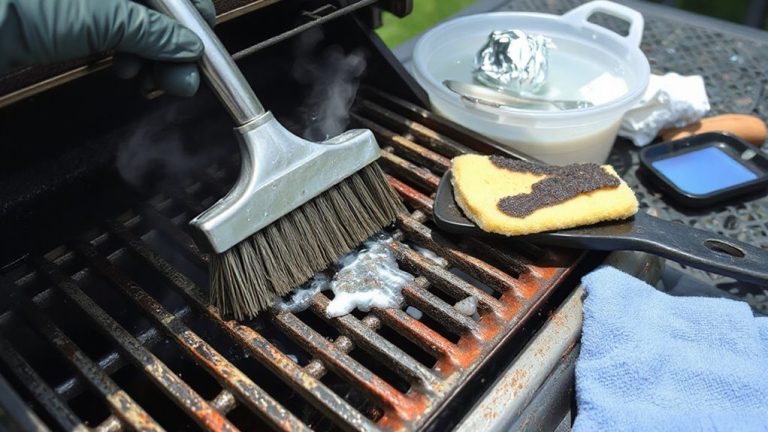
That final burst of radiant heat does most of the work, but none of it matters if you skip prepping the grate-oil it lightly with a high-smoke-point oil like grapeseed or avocado using tongs and a folded paper towel, doing so just before laying down the steak to prevent flare-ups and guarantee clean sear lines. Proper grill maintenance guarantees the grate is free of debris, which improves heat distribution and reduces uneven charring. A clean, well-oiled surface also prevents sticking, preserving the integrity of your sear. Direct heat from the hibachi’s close coal placement delivers intense, consistent contact, essential for that crisp crust. Unlike larger grills, the hibachi’s compact design concentrates heat efficiently across the cooking surface, minimizing cold spots. You’re not just searing-you’re leveraging precision. This combination of smart oil use, attention to heat distribution, and routine grill maintenance makes the hibachi a standout tool for searing with control and confidence. For added convenience and even coverage, consider using a best grill spray designed for high-heat cooking.
Sear Your Steak for a Perfect Crust
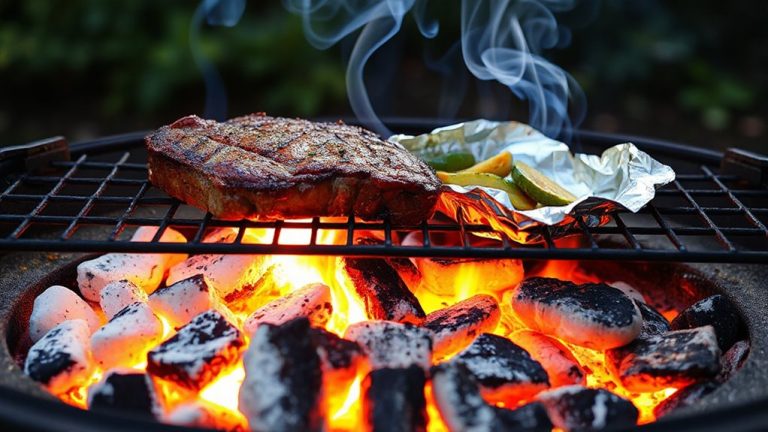
You’ve prepped the grate and set up for direct heat, so now it’s time to put the steak down with confidence. Lay it flat, pressing gently to guarantee full contact-this is where that intense hibachi char begins. If you’ve used the reverse sear method, your steak is already warmed through, making it easier to develop a crisp, even crust without overcooking. A cast iron plate on your grill delivers superior heat retention, mimicking restaurant broilers by maintaining consistent temperatures under heavy load. Avoid moving the steak too soon; let it sear for 2–3 minutes per side to build flavor through the Maillard reaction. You’ll see a deep, caramelized exterior when it’s ready to flip. While hibachi grills heat quickly, their thinner surfaces can cool faster than heavy griddles, so the cast iron addition is a game-changer. It stabilizes cooking performance, giving you reliable, restaurant-grade results.
Let It Rest, Then Slice for Maximum Juices
After pulling the steak from the heat, resist the urge to slice right away-letting it rest is just as critical as the sear. You need those hot juices, pushed toward the center during cooking, to redistribute evenly. If you cut too soon, all that work securing flavor retention goes to waste, leaking out onto the plate. Cover the steak loosely with foil and let it rest five to ten minutes, depending on thickness. This short wait improves meat texture, allowing fibers to relax and reabsorb moisture. The result? A more tender, evenly juicy bite from edge to center. You’ll notice the difference immediately-dry edges and soggy centers are avoided, and the rich, charred flavor stays locked in. Resting isn’t passive; it’s an essential step in precision grilling. On a hibachi, where high heat delivers quick searing, proper resting guarantees the inside catches up with the outside, balancing doneness and succulence without overcooking.
Fix Common Hibachi Searing Mistakes
Though hibachi grilling delivers impressive searing power, mistakes in technique can undermine even the best cuts of meat. You’re likely dealing with improper heat control if your steak smokes excessively or cooks unevenly-aim for a two-zone setup to balance searing and controlled cooking. Let the coals reach a steady, medium-hot temperature before placing the steak; rushing this step leads to scorching or undercooked centers. Equally critical is inadequate grate prep-failing to scrub and oil the grates causes sticking and disrupts the sear. Use a stiff brush while the grill’s hot, then apply a thin oil layer with tongs and a cloth. These missteps may seem minor, but they directly impact texture and appearance. Mastering heat management and grate maintenance isn’t just routine-it’s essential for achieving that crisp, caramelized crust without compromising juiciness or consistency.
On a final note
You’ve now mastered the essentials of searing steak on a hibachi, from selecting well-marbled cuts to managing direct heat. Proper drying and seasoning, along with a clean, oiled grate, guarantee a crisp crust without sticking. Letting the steak rest preserves juiciness. Hibachis offer excellent heat control and portability, making them ideal for precise searing-just monitor coal distribution closely for even results, and you’ll consistently achieve restaurant-quality performance outdoors.