Selecting Natural Coconut Shell Charcoal for Clean, Neutral-Tasting Smoke
Choose 100% natural coconut shell charcoal if you want clean, neutral-tasting smoke with minimal impurities. It burns hotter and longer than wood-based or briquette charcoals, delivering consistent heat and a dense, dark structure that snaps crisply when broken. Avoid brands with nitrates or borax-these additives create off-flavors. For the purest experience, stick to transparent brands like CocoFire or King Coco, and light them with a chimney starter. You’ll soon see why experts prefer it for hookah and delicate grilling.
Notable Insights
- Choose 100% pure coconut shell charcoal with no additives like nitrates or borax for clean, neutral smoke.
- Opt for charcoal made from mature, sustainably harvested coconuts to ensure high quality and consistency.
- Select brands with transparent production methods and natural carbonization for optimal combustion and purity.
- Use a chimney starter to light the charcoal, avoiding lighter fluid that can compromise flavor and cleanliness.
- Prioritize dense, dark coals that snap crisply, indicating low volatility and minimal ash for longer, even burns.
Why Coconut Shell Charcoal Burns Cleaner Than Other Charcoals
You’ve probably noticed how some charcoals leave behind a smoky smell or uneven heat-coconut shell charcoal isn’t like that. Its chemical composition is naturally low in volatile substances, which means fewer impurities burning off during use. That’s why you get a more consistent temperature and a cleaner flame-ideal for long smoking sessions or delicate grilling. Unlike cheaper charcoals, it produces minimal ash residue, so you’re not constantly clearing out your grill or dealing with flare-ups. The dense structure of coconut shell also means it burns longer and more evenly than wood-based or compressed briquettes. You’ll find it easier to control your cook, especially when precision matters. This isn’t just about convenience-it’s about better results. Cleaner combustion affects flavor, leaving no unwanted aftertaste. For outdoor cooks who value neutral smoke and reliable performance, the difference in quality is immediately noticeable. For those seeking premium options without overspending, checking the current Best Charcoal Deals can help you find high-quality coconut shell charcoal at competitive prices.
How to Identify 100% Pure Coconut Shell Charcoal Without Additives
A cleaner burn doesn’t guarantee purity, so knowing how to spot truly additive-free coconut shell charcoal matters just as much as recognizing its performance benefits. Look for brands that clearly disclose their coconut sourcing-charcoal made from mature, sustainably harvested coconuts typically burns more cleanly and consistently. You’ll also want full manufacturing transparency; trustworthy producers openly share details about carbonization methods and quality control. Check the ingredient list: if it says only “100% coconut shell charcoal,” you’re likely good. Avoid products with vague labeling or chemical-sounding additives like nitrates or borax. High-quality batches have a consistent dark color, a dense texture, and break with a sharp snap, not a crumble. When lit, they produce minimal smoke after ignition and no chemical odor. Choosing purity means better flavor, especially when grilling delicate foods.
Why Harder Coconut Shell Charcoal Burns Hotter and Longer
Because density directly influences burn efficiency, harder coconut shell charcoal outperforms softer alternatives by delivering both higher temperatures and extended burn times. You’ll notice this when cooking-its compact structure allows for superior heat retention, meaning the coals stay hot longer and maintain consistent thermal output. That’s due to its high energy density, which packs more usable heat into each piece compared to less dense charcoals. When you’re grilling or searing, this matters: steady, even heat means better sear marks, juicier meats, and fewer flare-ups. Softer charcoals may ignite faster, but they burn out quickly and often produce uneven temperatures. Harder coconut shell charcoal, on the other hand, sustains performance throughout long cooks, making it ideal for grilling, smoking, or wok cooking. You get reliable heat with minimal need to reload-less hassle, more control, better results overall. For those seeking top-tier performance, choosing the best charcoal for smoking ensures optimal heat and flavor in every cook.
How to Light Coconut Shell Charcoal Quickly and Evenly
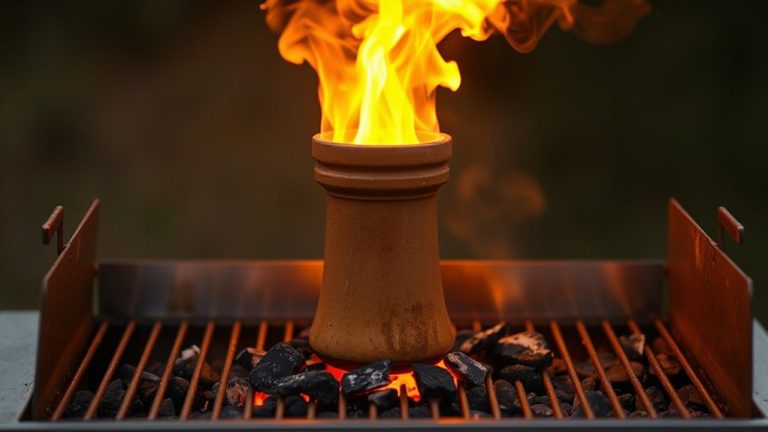
While it might seem tempting to toss coconut shell charcoal onto an open flame and hope for the best, taking a more deliberate approach guarantees it lights quickly and burns evenly from the start. For reliable charcoal ignition, use a chimney starter-this method applies concentrated heat from below and promotes consistent lighting without lighter fluid, which can taint flavor. Arrange the charcoal in a single layer at the base, then light the newspaper underneath. Maintain airflow optimization by ensuring vents underneath and on the sides aren’t blocked; proper oxygen flow accelerates burn-up and sustains steady heat. Coconut shell charcoal’s density demands patience-rushing ignition leads to uneven hotspots. You’ll know it’s ready when the coals glow red beneath a light ash coating. With airflow optimized and ignition managed carefully, you’ll achieve cleaner smoke, more stable temperatures, and better control over your cook from the very first strike. For best results, choose a high-quality chimney starter that ensures even heat distribution and durable construction.
Which Coconut Shell Charcoal Brands Offer the Most Neutral Flavor
What makes one brand of coconut shell charcoal stand out for its clean, neutral taste? It often comes down to flavor consistency and brand reputation. Top brands use pure, high-carbonization processes that avoid contaminants, giving you a smoke that won’t overpower your food. When choosing, look for brands known for minimal ash and steady heat-both signs of quality processing. Here’s how some leading options compare:
| Brand | Flavor Consistency | Brand Reputation |
|---|---|---|
| CocoFire | Excellent | High |
| King Coco | Very Good | High |
| GreenLion | Good | Medium |
| EarthCoast | Fair | Medium |
Brands like CocoFire and King Coco offer reliable performance across batches, essential for serious BBQ. If neutral flavor is your goal, their track records speak for themselves. You’ll notice the difference in subtle dishes where charcoal shouldn’t steal the spotlight.
Additives and Mistakes That Spoil Coconut Shell Charcoal’s Purity
You’ve picked a high-quality coconut shell charcoal known for clean burning and neutral flavor, but even the best brands can fall short if additives or production mistakes compromise their purity. Some manufacturers use chemical binders to hold smaller fragments together, which can release unwanted odors and affect combustion. These binders may cause uneven heat and leave behind residue, undermining your cooking experience. Worse still, certain batches include synthetic accelerants to speed up ignition-these not only produce off-flavors but can also emit harsh fumes unsafe for food. Poor carbonization practices, like inconsistent pyrolysis temperatures, further degrade quality by leaving volatile compounds intact. To preserve the charcoal’s natural advantages, avoid products listing vague ingredients or lacking transparency about processing. Reputable brands skip chemical binders and never use synthetic accelerants, opting instead for longer carbonization cycles that guarantee stability, clean burns, and true flavor neutrality essential in precise outdoor cooking. Always inspect packaging for clarity and consistency.
Best Uses for Coconut Shell Charcoal in Hookah and Tobacco Smoking
Though it’s prized in outdoor cooking for its clean burn and flavor neutrality, coconut shell charcoal really shines in hookah setups where consistent heat and minimal interference with delicate aromas are essential. You’ll find it elevates flavor enhancement and preserves the intended smoke aroma of tobaccos without introducing harsh notes. Its slow, even burn reduces the need for frequent adjustments, making sessions smoother and more enjoyable. Below is a comparison of common charcoal types in hookah use:
| Charcoal Type | Burn Time (min) | Smoke Aroma Impact |
|---|---|---|
| Coconut Shell | 60–90 | Neutral, clean |
| Quick-Light | 30–45 | Chemical aftertaste |
| Binchotan | 70–80 | Mild, smoky |
| Briquettes | 50–60 | Ashy, intrusive |
For purists who value control and clarity in taste, natural coconut charcoal offers unmatched performance. You’re not just heating tobacco-you’re optimizing the entire sensory experience.
On a final note
You’ll find coconut shell charcoal burns cleaner and hotter than traditional briquettes, thanks to its high carbon content and low moisture. It lights evenly, lasts longer, and lacks the harsh aftertaste additives can cause. For hookah or fine tobacco, that neutral flavor matters. Stick to 100% pure brands-avoid those with binders or accelerants. Proper lighting guarantees consistent heat, ideal for slow smokes or precision sessions. Overall, it’s a superior choice when flavor purity and performance are priorities.