Why Top-Down Charcoal Burns Deliver More Consistent Heat Than Traditional Lighting
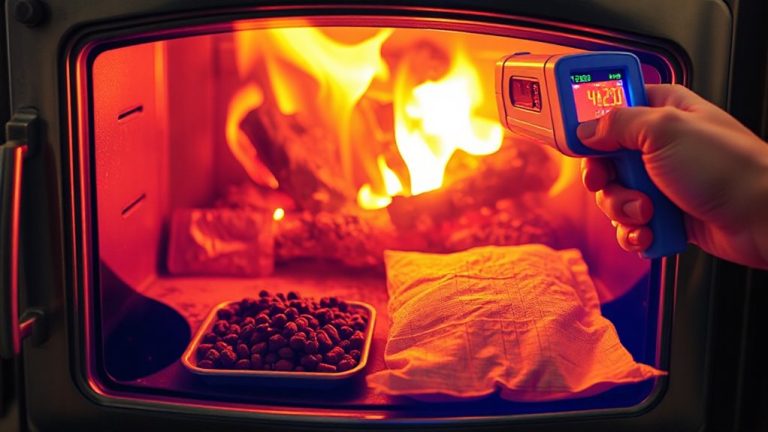
You get more even heat with a top-down charcoal burn because the fire starts at the surface and moves downward, letting coals ignite gradually and uniformly. Unlike bottom-up lighting, which creates hot spots and uneven airflow, this method guarantees balanced oxygen distribution and sustained combustion. The dense charcoal layer minimizes flare-ups and maintains stable temperatures. Plus, the insulating ash layer helps radiate consistent heat-ideal for precise outdoor cooking. You’ll find it’s especially effective in kettle grills and sheltered spaces where airflow is limited. There’s more to discover about mastering this technique for better BBQ control.
Notable Insights
- Fire ignites from the top and burns downward evenly, avoiding random hot spots.
- Consistent oxygen flow from above promotes uniform combustion across all coals.
- Dense, even charcoal layers maintain stable heat without disruptive flare-ups.
- The ash layer insulates and radiates heat evenly, enhancing temperature stability.
- No premature ignition of lower coals ensures gradual, predictable heat output.
Why Bottom-Up Grilling Causes Hot Spots
A charcoal grill’s design plays a big role in how evenly your food cooks, and with bottom-up setups-where you light the coals from beneath-the heat rises unevenly, often creating hot spots directly above the fuel source. You’re dealing with uneven airflow because the oxygen feeds only from below, so the coals ignite progressively from the bottom up, leading to inconsistent burn rates. This method forces you into careful fuel stacking just to get the top chunks lit, and even then, full ignition can take 20 minutes or more. Poor stacking worsens airflow blockage, which further destabilizes temperature control. You end up with zones that sear too fast while others barely warm. It’s a frustrating setup if you value consistent cooking surfaces. Without uniform heat, achieving a good sear or steady indirect cooking becomes guesswork. Bottom-up lighting simply struggles with balance, making it less reliable for precise outdoor cooking. Using the top-down method ensures better airflow and more even ignition, especially when paired with high-quality best charcoal for smoking.
How Top-Down Charcoal Burns Deliver Even Heat
You’ve likely wrestled with hot spots and uneven cooking when lighting coals from the bottom, where inconsistent burn patterns make temperature control a chore. The top-down method fixes this by letting fire ignite from the surface, burning downward evenly through each layer. This approach maintains better airflow balance, letting oxygen feed the fire consistently without turbulence. High charcoal density in the pile guarantees gradual, sustained combustion, reducing flare-ups and cooling gaps. Since the coals beneath aren’t ignited prematurely, you avoid the random burn channels common in bottom-up lighting. For those seeking optimal performance, pairing this method with one of the best charcoal grill smokers ensures maximum heat retention and cooking precision.
| Factor | Bottom-Up | Top-Down |
|---|---|---|
| Heat Distribution | Uneven | Uniform |
| Airflow Balance | Disrupted | Stable |
| Charcoal Density | Poorly utilized | Efficiently burned |
How to Light a Top-Down Charcoal Grill
When done right, lighting a top-down charcoal grill starts with layering unlit coals at the bottom and concentrating the fire source above, which forces combustion to move downward through the stack. Your charcoal arrangement should be dense and even-aim for a single, solid layer without gaps, ensuring consistent burn-through. Then, place a chimney starter or fire starter on top, letting flames gradually consume the coals beneath. This method improves ignition timing, as the fire develops over 20–30 minutes with minimal intervention. Unlike traditional bottom-up lighting, you avoid hot spots and incomplete burns. You’ll notice the coals ignite uniformly, glowing from the top layer down, which means better heat stability once cooking begins. The control is superior, especially for long smokes or delicate searing. With practice, this technique becomes reliable, predictable, and ideal for serious outdoor cooking where precision matters. For those exploring the best tools to implement this method, consider models highlighted in the best charcoal grills roundup for optimal performance.
5 Mistakes That Ruin Top-Down Heat Consistency
Getting the fire started right doesn’t guarantee steady heat all the way through your cook-poor technique after ignition can undermine even the most carefully layered top-down setup. You might unknowingly cause uneven distribution by shifting or poking the coals too much once burning, disrupting the natural ash-over process that stabilizes temperature. That layer of ash insulates coals and promotes even radiant heat, so disturbing it leads to hot and cold spots. Another common error is airflow restriction-closing the vents too much starves the fire of oxygen, causing temps to drop and burn times to shorten. Even a well-constructed top-down pile can stall if intake and exhaust aren’t balanced. You need consistent draft to carry heat upward and maintain combustion. Monitor your vents and avoid touching the coals after ignition. Let physics do the work: proper airflow and undisturbed fuel layers deliver the consistency you’re after.
Top-Down vs. Other Methods: When to Use Each
Why choose top-down over other charcoal lighting methods if you’re after steady heat with minimal fuss? When grill placement limits airflow-like in tight patios or sheltered areas-top-down burns outperform because they rely less on bottom ventilation. You’re stacking unlit charcoal below ignited coals, letting heat cascade down naturally. It’s ideal for lump charcoal or high-quality briquettes, giving you consistent results with less flare-up. If you’re using a kettle or offset smoker, this method shines. But if you’re short on time or using quick-light briquettes, chimney starters with traditional placement might be faster. Fuel type matters-denser charcoals benefit more from top-down’s slow ignition, preserving burn efficiency. For long smokes or precision searing, top-down gives control. For quick weeknight grills on a small gas-assist setup? Other methods work fine. Match the technique to your equipment, fuel type, and available space for best results.
What Is a Top-Down Charcoal Burn (And Why It Works)
How does a top-down charcoal burn actually work, and why has it become a go-to for serious grillers who demand control? You stack unlit charcoal on the bottom, then place a single layer of lit coals on top-no lighter fluid, no chimney dependency. As the fire burns downward, it gradually ignites each layer beneath, creating a slow, even heat. This method leverages natural airflow dynamics, relying on gravity and convection to pull oxygen up through the stack, sustaining combustion without hotspots. Because you’re not igniting from below, the charcoal composition breaks down more uniformly, reducing the risk of partial burns or wasted fuel. You get longer burn times, steadier temps, and far better control-key for low-and-slow smoking or searing steaks. It’s efficient, repeatable, and minimizes guesswork, which is why pros favor it. Once you try it, you’ll likely ditch old tricks for good.
On a final note
You’ll get more consistent heat with a top-down charcoal burn because it eliminates the hot spots common in bottom-up lighting. As coals ignite from above, oxygen flow remains steady, promoting even combustion. This method leverages controlled airflow and radiant heat, yielding stable temperatures ideal for searing or slow cooking. While it demands proper setup and quality fuel, the payoff-predictable performance and fewer flare-ups-makes it a smart choice for serious grilling.