How to Use a Grill Mat for Delicate Foods Like Fish and Vegetables
Start by seasoning your grill mat with a light coat of oil and heating it on the grill for 10–15 minutes. Place it on clean, preheated grates before adding delicate foods like fish fillets or sliced veggies. The nonstick surface keeps flaky fish intact and stops small pieces from falling through. Use medium heat-up to 500°F max-and avoid sharp tools. For best results, flip gently and clean with mild soap after cooling. You’ll soon discover smarter ways to maximize flavor and control.
Notable Insights
- Place the grill mat on preheated grates to create a nonstick surface that prevents delicate fish and veggies from sticking or falling through.
- Preheat the grill to medium heat (around 375°F) and warm the mat for one minute before adding food.
- Lightly oil both sides of the mat before first use to enhance nonstick performance and extend its lifespan.
- Cook flaky fish skin-side down and use a spatula for gentle flipping to maintain integrity and achieve grill marks.
- Clean the mat with mild soap and water after cooling; avoid abrasives and store flat to prevent damage.
Why a Grill Mat Beats Sticking Fish & Veggies
While grilling directly over open flame gives food that classic smoky flavor, it often leads to frustrating results when cooking delicate items like fish fillets or sliced vegetables-things that easily fall apart or slip through the grates. That’s where a grill mat comes in. Its non stick surface keeps fragile foods intact, letting you flip salmon or grill zucchini without losing chunks to the flames. Unlike bare metal, the mat provides even heat distribution, reducing hot spots that can burn thin cuts or uneven slices. You’ll notice consistent sear marks and better texture, especially with foods prone to sticking or overcooking. Most mats are made from heat-resistant PTFE, safe up to around 500°F, so they handle standard grilling temps without warping. They’re also easy to clean-just wipe or rinse after use. In practice, they extend your grill’s versatility without sacrificing performance. For best results, choose one of the best grill mats based on material quality and heat resistance.
Pick the Right Foods for Your Grill Mat
A well-chosen grill mat excels with foods that are small, thin, or delicate-exactly the kinds that tend to fall through the grates or stick when grilled directly. You’ll want to use it for fish fillets, shrimp, sliced vegetables, or even breakfast items like eggs and pancakes. These foods benefit from the mat’s nonstick surface while still getting solid grill marks thanks to the heat transfer it allows. Though the mat slightly reduces direct contact, you still get a decent sear and noticeable flavor infusion from the ambient heat and smoke. Smaller veggies like zucchini slices or diced peppers won’t slip through, and delicate proteins stay intact. While it won’t replicate the char of direct grilling, the balance of convenience, presentation, and taste makes it a smart choice. Just don’t expect deep sear lines-adjust expectations, and you’ll appreciate the results.
How to Season Your Grill Mat (Before First Use)
You’ll get the best performance from your grill mat right out of the box if you take a few minutes to season it before the first cook. Start by washing it with warm, soapy water to remove any residue, then dry it completely. Lightly coat both sides with a high-smoke-point oil like canola or grapeseed-this helps create a non-stick surface and extends the mat’s life. Place it on a preheated grill for 10–15 minutes, flipping once. Avoid using sharp tools that could compromise its integrity, important for both performance and marine safety if cooking near water. Seasoning isn’t just about protection; it enhances flavor control and makes food pairing simpler, especially with delicate items. A well-seasoned mat guarantees even heat distribution and prevents sticking, essential for successful outdoor cooking. Think of it like treating cast iron-it’s a small step that pays off in durability and results.
Grill Flaky Fish That Stays Intact
Grilling flaky fish like cod, tilapia, or halibut can be a frustrating experience without the right tools-you’re one flip away from it falling apart on the grates. A grill mat changes that by providing a stable, nonstick surface that keeps delicate fillets intact. For best results, preheat your grill to medium heat-around 375°F-and let the mat sit on the grates for a minute to warm up. Proper grill temperature prevents sticking and guarantees even searing. Place the fish skin-side down first, if applicable, and avoid overcrowding; correct fish placement allows space for heat circulation and simplifies flipping. Since the mat eliminates direct contact with the bars, you can gently turn the fish without fear of it breaking. You’ll get consistent browning and grill marks without sacrificing structure. It’s a reliable method that improves control and outcome, making it ideal for both beginners and experienced grillers seeking precision.
Stop Tiny Veggies From Falling Through
Even a few stray cherry tomatoes or mushroom caps slipping through the grates can turn a promising BBQ into a frustrating cleanup job. The issue often lies in the mismatch between your grill’s grid spacing and the food size of smaller vegetables. Most standard grills have wide gaps-sometimes over half an inch-making them unsuitable for tiny items like diced zucchini, asparagus tips, or halved onions. A grill mat bridges this gap effectively, offering a solid, non-stick surface that keeps petite ingredients contained without impeding heat transfer. You’ll notice improved cooking consistency and minimal flare-ups, since juices don’t drip directly into flames. Unlike baskets, which can trap steam and lead to uneven charring, a mat allows direct contact while preventing falls. By aligning your cooking method with food size and grid spacing realities, you gain more control and fewer losses.
How to Clean & Store Your Grill Mat
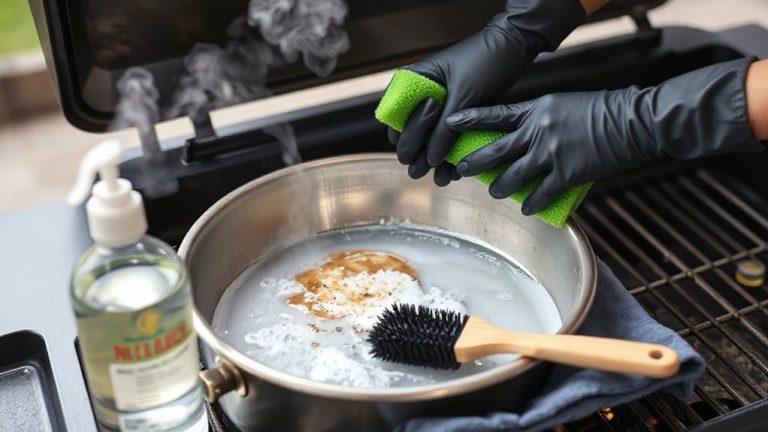
After each use, cleaning your grill mat properly guarantees it remains effective and durable over time. Let it cool, then wipe with a damp cloth or sponge-avoid abrasive tools that damage the non-stick surface. Mild dish soap works well for stuck-on bits. Rinse and dry thoroughly before considering mat storage solutions. Most users fold or roll their mats, but storing flat prevents creasing and extends lifespan. Always keep it in a clean, dry place away from direct sunlight to prevent warping.
| Cleaning Method | Effectiveness | Notes |
|---|---|---|
| Damp Cloth | High | Best for light residue |
| Soapy Water | Very High | Ideal for greasy spills |
| Dishwasher | Low | Risk of warping; not recommended |
Replace your mat if it shows cracks or discoloration-safe grill mat disposal means placing it in household trash, not recycling.
Safety Tips for High-Heat Grilling
Now that your grill mat is clean and safely stored, it’s worth shifting focus to how you use it under intense conditions. When grilling at high heat, heat safety is critical-always check your mat’s maximum temperature rating, typically around 500°F, to prevent melting or fumes. Never leave the grill unattended, especially when searing fish or veggies on high, as flare-ups can compromise both food and equipment. Keep a fire extinguisher nearby and avoid using oil-heavy marinades that increase fire risk. Position the mat flat on a clean, preheated grill to reduce warping and hot spots. Remember, while mats make cooking delicate foods easier, they don’t eliminate the need for fire prevention. Use long-handled tools, wear gloves, and maintain a safe grilling zone. Smart habits guarantee your cookouts stay safe and successful every time.
On a final note
You’ve seen how a grill mat keeps delicate fish and veggies from sticking or falling through. It’s a simple tool, but effective-especially with proper seasoning and high-heat care. While it won’t replace grilling directly over flame, it expands your options, boosting success with fragile foods. Just clean it gently and store it flat. For consistent results and less mess, the mat proves its worth.