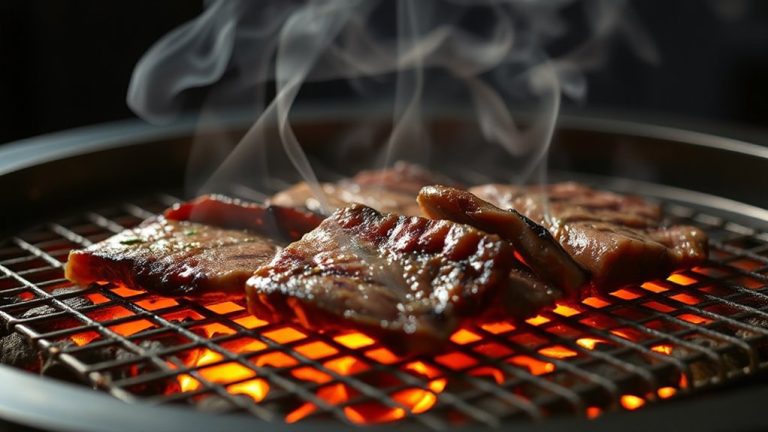
How Volatile Compounds Released From Burning Charcoal Enhance Meat Aroma
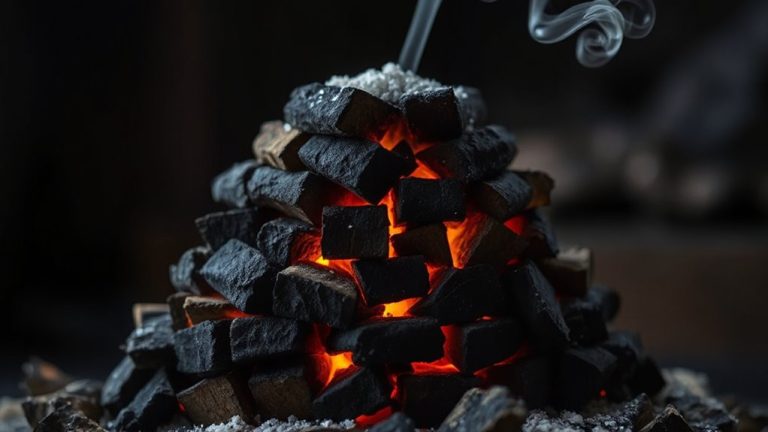
When you grill with charcoal, volatile compounds like aldehydes and ketones form during high-heat combustion, enhancing meat aroma through Maillard reactions and fat pyrolysis. Phenols from lignin breakdown add that classic smoky depth, while clean-burning hardwood charcoal guarantees richer, more balanced smoke. Compared to gas or briquettes, lump charcoal releases fewer impurities and more flavor-forward volatiles. You get superior searing, crust development, and aromatic complexity-especially when matching wood type to meat. There’s more to mastering this balance just ahead.
Notable Insights
- Burning charcoal releases aldehydes and ketones that add warm, fatty, and buttery aroma notes to grilled meat.
- Phenolic compounds like guaiacol form when lignin in wood breaks down, imparting a rich, smoky flavor.
- Maillard reactions on the meat surface are enhanced by charcoal’s high, dry heat, boosting savory complexity.
- Volatile compounds from pyrolyzed dripped fat interact with charcoal smoke, deepening meat aroma.
- Clean-burning lump charcoal produces steady, aromatic smoke with balanced volatiles for consistent flavor infusion.
Why Charcoal Gives Grilled Meat Its Best Flavor
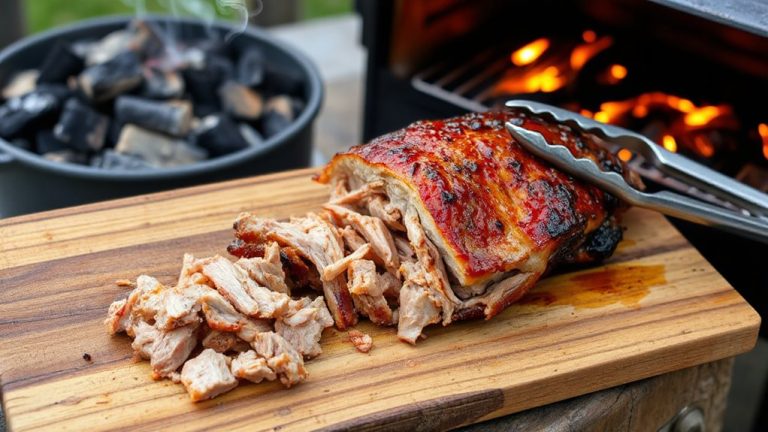
The reason charcoal delivers superior flavor in grilled meat comes down to the volatile compounds it produces during combustion. You get a smoky, richer taste because charcoal burns hotter than gas, enhancing meat searing and locking in juices efficiently. That high heat also promotes better crust formation, boosting flavor through Maillard reactions. Plus, the steady temperature allows for deeper marinade penetration, letting seasonings infuse further into the meat. Unlike other fuels, charcoal doesn’t emit excess steam, so surfaces stay dry-ideal for searing. You’ll notice the texture and aroma improve noticeably, especially with thicker cuts. Charcoal grilling demands attention, but the payoff is tangible. It’s not just tradition; it’s performance. For serious outdoor cooking, the combination of intense heat, effective searing, and improved marinade penetration makes charcoal a top choice among BBQ enthusiasts who prioritize flavor depth and control. Among the top performers, the best charcoal grill smokers deliver optimal airflow and temperature control for consistent, flavorful results.
How Charcoal Combustion Releases Aromatic Compounds
| Stage | Process | Aromatic Output |
|---|---|---|
| Ignition | Charcoal heats up | Light smokiness |
| Pyrolysis | Molecular breakdown | Rich, woody notes |
| Steady burn | Full combustion | Balanced, savory aroma |
The type of charcoal used significantly influences the aromatic profile, with premium lump hardwood charcoal producing cleaner smoke and enhancing the meat’s natural flavors.
How Aldehydes and Ketones Enhance Grilled Meat Smell
While you’re grilling, the sizzle and smoke aren’t just about heat-they’re chemistry in action. Aldehydes and ketones, formed during the Maillard reaction and fat pyrolysis, play a key role in shaping that rich, grilled meat smell. When amino acids and sugars heat up on the meat’s surface, the Maillard reaction releases aromatic aldehydes like nonanal, giving off warm, fatty, and slightly citrusy notes. At the same time, dripping fat hitting hot coals undergoes pyrolysis, breaking down into volatile ketones such as diacetyl, which adds buttery, creamy hints to the aroma. Together, these compounds create complexity, transforming simple searing into a sensory experience. Though subtle, their presence distinguishes well-developed grilled aromas from bland char. You’re not just cooking-you’re curating a chemical profile that defines great barbecue, one that balances browning, fat drip, and smoke in precise harmony.
Why Phenols Are Behind That Classic Smoky Taste
Smoke’s unmistakable charm on grilled meat? That’s phenols at work. When charcoal burns, especially if it’s made from wood, it releases phenolic compounds-key players in flavor chemistry. You’re not just smelling smoke; you’re detecting guaiacol, cresol, and other phenols that cling to the meat’s surface. These compounds form when lignin in wood breaks down, creating that familiar, rich smokiness linked to wood smoke. Compared to other volatiles, phenols stick around, both on the palate and in aroma memory, offering depth and persistence. In flavor chemistry, they’re prized for delivering complexity without overwhelming bitterness-when balanced. Too much heat or flare-ups, though, and phenols can turn acrid. But at steady temps, they meld perfectly with meat, building that classic taste you recognize instantly. So next time you enjoy a smoky bite, you’re tasting the result of smart combustion and well-managed wood smoke chemistry. Using the right best wood chips for smoking can significantly influence the profile and balance of these phenolic compounds.
Charcoal vs. Other Fuels: Which Delivers More Smoky Flavor?
What makes charcoal the go-to choice for deep smoky flavor compared to gas or pellet grills? It’s all about combustion chemistry and physical properties like fuel density and flame height. Charcoal burns hotter and with less moisture than other fuels, creating ideal conditions for releasing volatile compounds that enhance meat aroma. Its high fuel density supports longer, more consistent burns, while adjustable flame height gives you precise control over searing and smoking. Gas grills lack the same fuel density, producing cleaner burns but fewer aromatic compounds. Pellet grills offer smoke, but their regulated flame height often limits charring intensity.
| Fuel Type | Smoky Flavor Intensity |
|---|---|
| Charcoal | High |
| Wood Pellets | Medium |
| Propane | Low |
Boost Smoky Flavor: Charcoal Choices and Grilling Tips
When you’re aiming to amplify that rich, smoky character in grilled meats, the type of charcoal you choose plays a decisive role-not all briquettes and lump woods deliver the same depth of flavor. Hardwoods like hickory or oak impart bolder notes, especially when aged properly; charcoal aging allows volatile compounds to mellow, yielding cleaner combustion and more nuanced aroma. You’ll notice sharper, harsher smoke from fresh batches-let them cure a few weeks. Also, consider grilling altitude: higher elevations reduce oxygen levels, slowing burn rates and prolonging cook time. This can intensify smoke exposure if unmanaged. Opt for natural lump charcoal over chemical-laden briquettes when possible-it lights faster and burns hotter, essential for searing at elevation. Balance airflow to avoid bitter flavors, and pair wood types with meats thoughtfully. Master these variables, and you won’t just grill-you’ll engineer flavor.
On a final note
You get richer aroma when grilling with charcoal because its combustion releases key volatile compounds like aldehydes, ketones, and phenols. These chemicals interact with meat’s surface, enhancing flavor through complex browning and smoke deposition. Compared to gas or electric, charcoal delivers superior smokiness due to incomplete combustion and lignin breakdown. Opting for hardwood lump or blended briquettes increases aromatic intensity, giving you more control over taste, making charcoal ideal for authentic, flavor-forward BBQ.