Adjusting Ventilation to Control Secondary Combustion and Improve Flavor Clarity
You control flavor clarity by adjusting vents to fuel clean secondary combustion, where hot gases reignite and break down harsh smoke particles. Keep airflow balanced-too little oxygen creates thick, bitter smoke, while proper vent settings sustain blue-tinged smoke for clean taste. Match openings to fuel type and cook phase, like opening top vents during crust development. Fine-tune gradually, and you’ll see how precision shapes better barbecue.
Notable Insights
- Open vents to sustain temperatures above 500°F, enabling secondary combustion that reduces harsh smoke compounds.
- Adjust bottom and top vents to balance airflow, promoting re-ignition of smoke for cleaner flavor delivery.
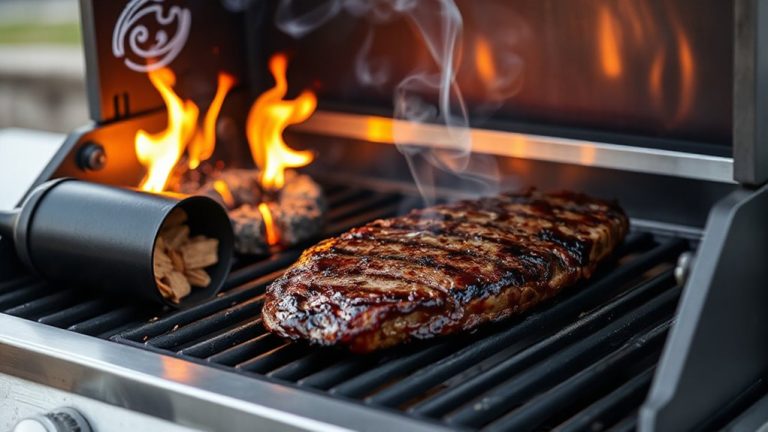
- Aim for thin, blue-tinged smoke, indicating complete combustion and optimal flavor clarity.
- Reduce vent openings slightly when using lighter fuels like fruitwoods to prevent overheating and excessive burn rates.
- Correct thick white smoke by increasing airflow, ensuring dry fuel and proper damper settings for efficient secondary burn.
What Secondary Combustion Does to Your Smoke Flavor
While it might not be obvious at first glance, secondary combustion plays a crucial role in shaping the flavor of your smoked meats. When smoke re-ignites above the firebox, it breaks down harsh compounds, refining the smoke before it hits your meat. Without proper secondary combustion, you risk flavor degradation-your brisket or ribs can taste acrid or bitter from unburned particles. Achieving the right combustion balance means ensuring enough heat and oxygen for this secondary burn to occur. You’ll notice cleaner, more nuanced flavors when volatile gases are fully consumed. This isn’t just about temperature; it’s about consistency. Skilled pitmasters watch for that invisible shift-when smoke turns from thick and white to barely visible-indicating ideal combustion. Your smoker’s design supports this, but your airflow adjustments make it actionable. Ignoring this phase dulls the complexity you’ve worked so hard to build. Ultimately, mastering secondary combustion elevates your results from passable to exceptional.
How Airflow Controls Smoke Cleanliness and Burn Efficiency
Since combustion relies as much on oxygen flow as it does on fuel and heat, getting your smoker’s airflow right means you’re not just feeding the fire-you’re fine-tuning the entire smoke profile. You control how cleanly the wood burns by adjusting airflow velocity: too slow, and you get smoldering smoke full of creosote; too fast, and you risk cooling the chamber. Proper airflow velocity sustains a high enough combustion temperature to burn off impurities, turning thick, acrid smoke into a light, flavorful vapor. When combustion temperature stays above 500°F, incomplete combustion drops, reducing bitter compounds and harshness. That sweet spot means efficient fuel use and crisp smoke flavor. You’re not just managing fire-you’re curating flavor clarity through science. Consistent airflow keeps temperatures stable, prevents gusts from disrupting smoke circulation, and supports secondary combustion, where leftover gases ignite for cleaner output. Mastering this balance elevates your BBQ from passable to exceptional-without overcomplicating the process.
When to Open or Close Vents for Better-Tasting Meat
You’ve got clean smoke rolling and your combustion temperature steady-now it’s time to put that control to work by adjusting your vents to shape the flavor of the meat itself. Proper vent timing directly impacts smoke density, which in turn affects taste clarity. Too much airflow and you risk thin, flavorless smoke; too little and you’ll drown the meat in bitter, acrid fumes. For rich, clean flavor, modulate your vents to maintain thin, blue-tinged smoke. Early in the cook, slightly open vents promote steady combustion. As meat renders fat, brief top vent closures increase smoke density for depth. Use this table to guide adjustments:
| Stage | Bottom Vent | Top Vent | Smoke Density |
|---|---|---|---|
| Stabilizing fire | 75% open | 50% open | Light blue |
| Flavor building | 50% open | 75% open | Thin gray |
| Fat rendering | 50% open | 25% open | Medium gray |
| Crust development | 75% open | 100% open | Nearly invisible |
| Final hour | 50% open | 50% open | Consistent blue |
Adjusting Vents Based on Fuel and Cooking Phase
When managing a cook from start to finish, how you tweak the vents shouldn’t stay fixed-it needs to shift with both the fuel you’re burning and the phase of cooking underway. Early on, with dense hardwoods like hickory or oak, open the vents wider to handle the high fuel density and guarantee clean primary combustion. As the fire stabilizes and cooking duration extends, you’ll want to throttle back airflow slightly to maintain a steady, flavorful secondary burn. During long cooks, like brisket or pork shoulder, small vent adjustments help regulate temperature without suffocating the fire. You’re not just feeding oxygen-you’re shaping flavor clarity. Lighter fuels, such as fruitwoods, demand less airflow, so close the vents a touch to avoid overheating and wasted fuel. Matching vent position to both fuel type and cooking phase guarantees efficiency, minimizes soot, and keeps smoke quality thin and blue-exactly what you need for clean, rich flavor. Choosing the right wood impacts both burn characteristics and taste, so consider a trusted list of best smoking wood picks when selecting your fuel.
Fixing Vent Mistakes That Create Bitter, Smoky Meat
Poor vent management often sabotages otherwise well-planned cooks, turning what should be tender, flavorful meat into something bitter and acrid. When top and bottom vents are too restricted, incomplete combustion occurs, letting thick smoke linger and coat your meat with harsh, acrid flavors. You’re not just grilling-you’re chemically treating your food. Open the dampers slightly to increase airflow, ensuring your charcoal burns hotter and cleaner. High charcoal quality matters here; superior briquettes or lump charcoal ignite evenly and sustain steady heat with less ash. Equally important is moisture content-wet or damp fuel emits more smoke, increasing bitterness. Store your charcoal in a sealed container to maintain dryness. Monitor combustion closely: clean, blue-tinged smoke means you’re on track; thick, white plumes mean a vent adjustment is overdue. Fixing airflow early preserves flavor clarity and prevents avoidable spoilage. A well-designed charcoal grill smoker can significantly improve airflow control and heat retention for more consistent results.
On a final note
You’ve seen how secondary combustion cleans smoke and enhances flavor clarity by burning off impurities. Proper vent control balances airflow, ensuring efficient burns without suffocating the fire or overheating the chamber. Opening vents during startup aids combustion; closing them slightly maintains steady temps during long cooks. Missteps-like overly restricted airflow-create bitter, smoky meat. Mastery lies in adjusting vents according to fuel type and cooking phase, optimizing both flavor and performance throughout the process.