Why Modern Gas Grills Can Mimic Traditional Smoke Rings With Proper Technique
You can get a smoke ring on your gas grill by maintaining a steady 225°F, using a smoker box with soaked wood chips like hickory or apple, and setting up indirect heat. The key is consistent smoke from nitrogen dioxide reacting with the meat’s myoglobin. While gas grills often lack natural wood smoke, proper setup mimics traditional results. Flare management and tight seals help, too-there’s more to mastering this than just turning knobs.
Notable Insights
- Modern gas grills can produce smoke rings by maintaining low-and-slow cooking temperatures around 225°F.
- Using a smoker box with quality wood chips ensures consistent nitrogen dioxide for myoglobin reaction in meat.
- Indirect heat setup mimics traditional smokers, allowing prolonged smoke exposure and even temperature control.
- Proper lid sealing and airflow management stabilize heat and trap smoke for effective ring formation.
- Choosing the right wood chips, like hickory or cherry, enhances smoke quality and NO penetration below 140°F.
Can You Get a Smoke Ring on a Gas Grill?
Can you really get a smoke ring on a gas grill, or is that deep pink halo just a perk of charcoal and wood? With modern technology and the right approach, you can coax one out of a gas unit, though it’s not guaranteed. Success hinges on low-and-slow cooking at around 225°F, using a smoker box with quality wood chips to generate consistent smoke. Effective flare up management is essential-dripping fat can cause sudden flames that disrupt smoke production and char the meat. Keep the burners on indirect heat and trim excess fat to minimize risks. A solid lid sealing technique guarantees stable temperatures and traps smoke efficiently. While gas grills weren’t built for authenticity, precise control and attention to detail let them mimic traditional results-proving that technique often outweighs equipment limitations in serious outdoor cooking. Models with dedicated smoker features offer enhanced smoke flavor and temperature control for more reliable results.
How Smoke Rings Form (And Why Gas Grills Miss Them)
What exactly creates that elusive pink halo beneath the bark of a smoked brisket? It’s a chemical reaction between nitrogen dioxide in smoke and myoglobin in meat. As smoke clings to the surface, NO penetrates slightly, stabilizing the pink color during cooking. This only happens below 140°F-once protein denaturation sets in, the window closes.
| Factor | Traditional Smoker | Gas Grill |
|---|---|---|
| Smoke Exposure | Consistent, long-lasting | Weak, intermittent |
| Temperature Control | Less precise | Highly precise |
| NO Availability | High (wood combustion) | Low (no real smoke) |
Gas grills miss the ring because they lack sustained, wood-based smoke. Without enough nitrogen oxides, that chemical reaction barely occurs. Even with wood chips, fluctuating airflow and fast burns limit NO production. So while you get great sear and safety, that signature ring stays out of reach-unless you tweak technique.
Best Wood Chips for Real Smoke on Gas Grills
You’ll want to pick your wood chips wisely if you’re hoping to coax real smoke flavor-and maybe even a hint of a smoke ring-from your gas grill. Your wood selection directly impacts the intensity and character of the smoke: hickory and mesquite deliver bold, robust notes ideal for red meat, while apple or cherry offer a sweeter, milder touch perfect for poultry or pork. Avoid softwoods like pine-they burn too fast and can introduce off-flavors. Chip soaking is often debated, but a 30-minute soak can help delay ignition, promoting smolder rather than flare. That said, don’t over-soak, as excess water delays smoke production. Use a smoker box or foil pouch to contain chips directly over a burner. You’ll get cleaner, more consistent smoke with hardwood chips that are dry enough to smolder, yet tempered enough to last. For best results, consider the type of wood and its flavor profile when selecting from the best wood chips for smoking.
Set Up Indirect Heat for Smoke Ring Success
While achieving a smoke ring on a gas grill might seem like a feat reserved for charcoal purists, setting up indirect heat properly makes it not only possible but reliable. You’ll need to use indirect placement-turning on only one side of the burners-so the meat cooks away from direct flame. This setup mimics the slow, even environment of traditional smokers. Effective heat balancing guarantees the temperature stays consistent across the cooking surface, preventing hot spots that could ruin delicate proteins. Position your meat on the cooler side, above the drip pan, while the lit burners sit opposite. This configuration maintains steady airflow and smoke circulation, both critical for smoke ring development. Proper heat balancing also reduces flare-ups, allowing smoke to interact with the meat longer. With this method, your gas grill stops acting like just a searing tool and starts performing like a true low-and-slow smoker.
Keep Your Gas Grill at Smoke-Friendly Temperatures
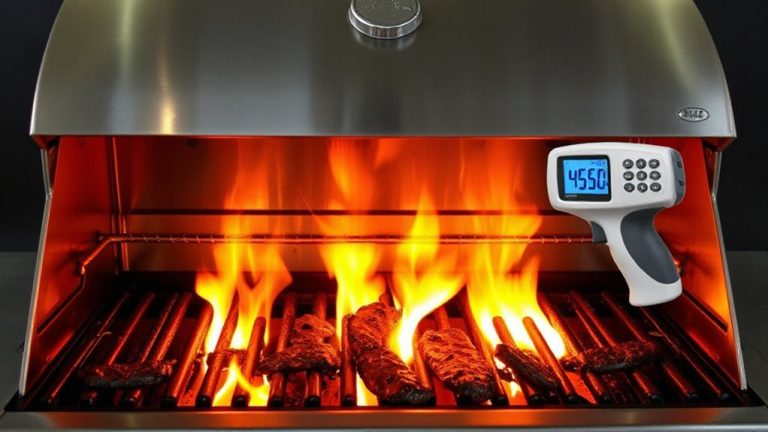
How do you maintain that ideal low-and-slow environment on a gas grill without tipping into temperatures that shut down smoke absorption? You rely on precise temperature control. Most gas grills default to high heat, but smoke rings form best between 225°F and 250°F. Use indirect heat and adjust burners to sustain consistent heat in that range. Avoid wide fluctuations-opening the lid too often or setting burners too high disrupts the balance. A quality grill with tight seals and good insulation makes maintaining consistent heat easier, but even mid-tier models can perform well with attention. Use an external thermometer for accuracy, since built-in dials are often unreliable. Mastering temperature control isn’t just about patience-it’s about maximizing your equipment’s potential. When you nail the sweet spot, smoke penetrates deeply, setting the stage for visual and flavor results that rival traditional smokers. For best results, consider models featured in a comprehensive best gas grills roundup to ensure reliable performance.
When to Check for the Perfect Smoke Ring
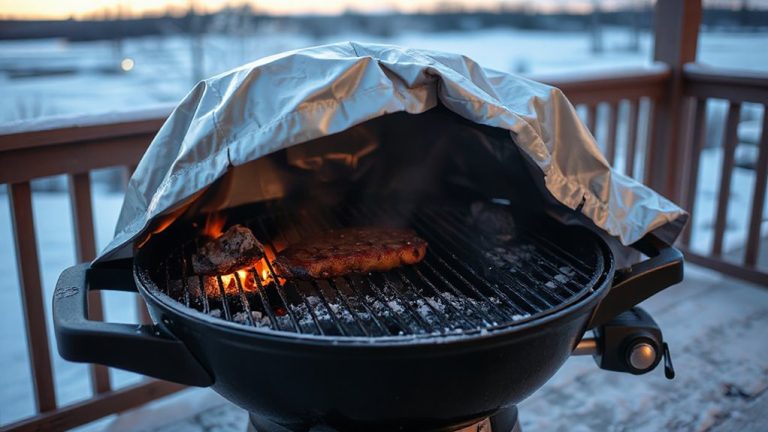
When should you peek under the foil or lift the lid to check for that prize-worthy smoke ring? Not too early-patience is key. The best visual cues appear near the end of cooking, once the meat hits around 160–170°F internally. That’s when the myoglobin layer stops absorbing smoke, locking in the pink ring. Lift the lid sparingly to avoid heat loss, but one well-timed glance helps. Look for a distinct pink band no more than 1/4 inch deep-wider isn’t better, as it can signal incomplete smoke absorption. These timing tips guarantee accuracy: check during the final hour, especially when wrapping or finishing. Modern gas grills offer consistent control, making it easier to time your inspection right. Rely on temperature probes, not guesses. Proper timing tips and sharp visual cues separate amateur results from competition-grade barbecue every time.
On a final note
You can achieve a smoke ring on a gas grill with the right technique, though it’s trickier than on charcoal. Using hardwood chips, maintaining a steady 225–250°F, and setting up indirect heat are essential. While gas grills lack natural smoldering combustion, diligent smoke management delivers flavor and visual appeal. It’s less authentic but practical, blending convenience with tradition. Success hinges on patience, precision, and proper setup-proof that modern tools, when used well, can mirror old-school results.