How to Use a Grill Grate Over a Campfire for Versatile Outdoor Meals
Choose a cast iron or stainless steel grill grate that fits your fire ring-12×16 to 18×24 inches works for most groups. Set it over stable, medium-hot coals arranged in heat zones for better control. Sear steaks on high heat, move veggies to cooler spots, and use foil packs or skillets for delicate foods. A well-seasoned grate prevents rust and guarantees even cooking. Keep it clean and stored properly, and you’ll master campfire meals with backyard-like precision every time.
Notable Insights
- Choose a grill grate size and material suited to your group and desired cooking style, such as cast iron for heat retention or stainless steel for durability.
- Set up a stable campfire with a crisscross or lean-to log structure, letting it burn down to consistent embers before placing the grate.
- Position coals unevenly under the grate to create heat zones, enabling precise control for searing and gentle cooking.
- Use the grate for direct grilling of meats and vegetables, ensuring even placement and avoiding overcrowding for optimal browning.
- Enhance versatility by using foil packs or a cast iron skillet on the grate for steam-cooking, baking, or preparing delicate foods.
Choose the Right Grill Grate for Your Fire
Size matters when picking a grill grate for your campfire, but it’s not the only factor. You need to balance grill size with your fire setup and meal demands-too small limits cooking space, while too large becomes unwieldy and slow to heat. Most portable grates range from 12×16 to 18×24 inches, ideal for serving two to six people. Material type is just as critical; cast iron retains heat beautifully but rusts if not seasoned, while stainless steel resists corrosion but may warp under intense, uneven flames. Chrome-plated steel offers a middle ground-affordable and fairly durable-though not built for long-term abuse. Heavier materials generally perform better but aren’t always practical to pack. For versatility and durability, go with a medium-sized cast iron or high-grade stainless grate. Always match the grill size to your group’s needs and prioritize material type based on how often you cook and your willingness to maintain it. A top-performing option combines durability with ease of transport, making best campfire grill grates a smart choice for frequent outdoor cooks.
Set Up a Stable Fire for Even Grilling
While you might be keen to slap food on the grate as soon as flames appear, building a stable base fire actually sets the stage for consistent, even grilling-anything less and you’ll battle hot spots and flare-ups. Proper fire placement guarantees heat circulates evenly, keeping your cooking surface predictable. You’ll want sturdy logs arranged in a crisscross or lean-to pattern to promote steady airflow and long-lasting embers. Once your fire settles, focus on grate leveling to prevent food from sliding or cooking unevenly. An unlevel grate leads to frustrating shifts in temperature and uneven searing. Use flat, heat-resistant stones or adjustable legs to stabilize the grate. A well-chosen campfire grill can greatly enhance stability and heat control. Here’s how key factors stack up:
| Factor | Why It Matters |
|---|---|
| Fire placement | Guarantees even radiant heat below |
| Grate leveling | Prevents food drift and hot zones |
Control Heat With Campfire Coals
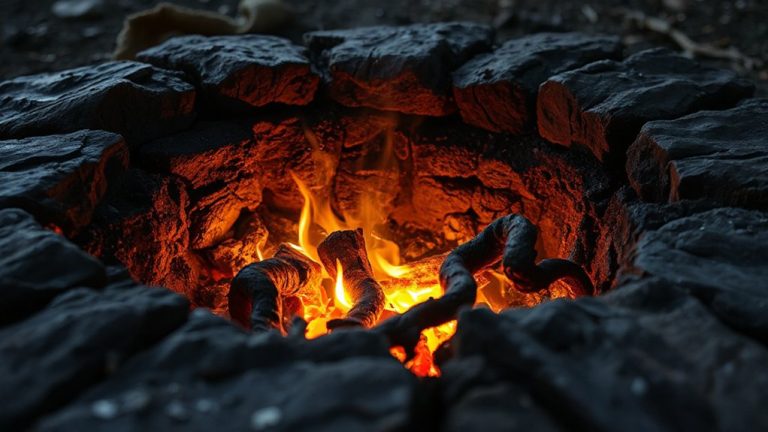
How do you maintain precise heat control when grilling over a campfire, where temperatures fluctuate more than in a backyard setup? The answer lies in smart coal management. Once your fire burns down to hot coals, spread them unevenly to create distinct heat zones-high heat on one side, medium to low on the other. This setup lets you sear foods quickly and then move them to cooler areas to finish cooking without burning. You can adjust the heat by adding more coals or shifting them around with a stick or poker. Proper coal management gives you far more control than an open flame, making your campfire behave like a real outdoor grill. Using heat zones effectively means you’re not just cooking over fire-you’re mastering it, even in unpredictable conditions. A well-designed fire pit for cooking can enhance coal management by providing a contained, elevated surface ideal for grilling with precision.
Grill Burgers, Steaks, and Veggies With Ease
You’ve already learned how managing your campfire’s coals gives you precise heat control, and now that setup becomes your best tool for cooking a full range of foods right on the grill grate. Place your cast iron grate over medium-hot coals to achieve consistent direct heat, ideal for searing burgers and steaks while locking in juices. Lean cuts like flank steak respond well to this method, browning quickly without drying out. Thick burgers develop a flavorful crust in minutes. Veggies like zucchini, bell peppers, and onions grill evenly when sliced uniformly and turned once. The grate’s iron construction retains heat efficiently, eliminating cold spots. Unlike flimsy grills, cast iron withstands intense direct heat and lasts for years with proper seasoning. Avoid overcrowding-give each item space to caramelize. With this technique, you’re not just cooking over fire; you’re mastering it, turning basic ingredients into restaurant-quality meals through controlled exposure and steady temperatures.
Use Foil Packs and Skillets on Your Grate
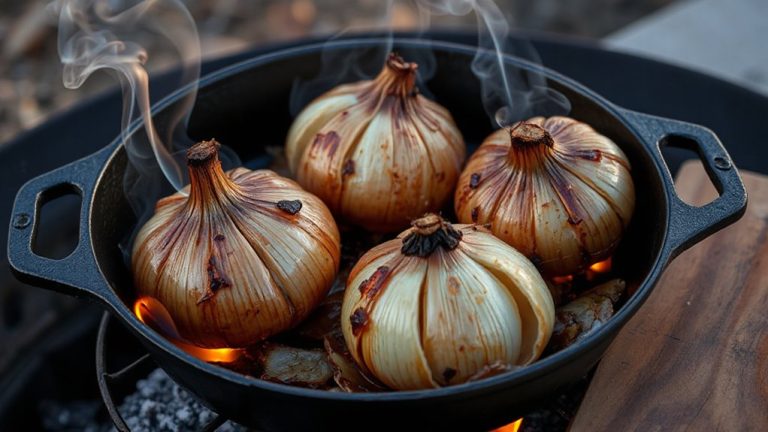
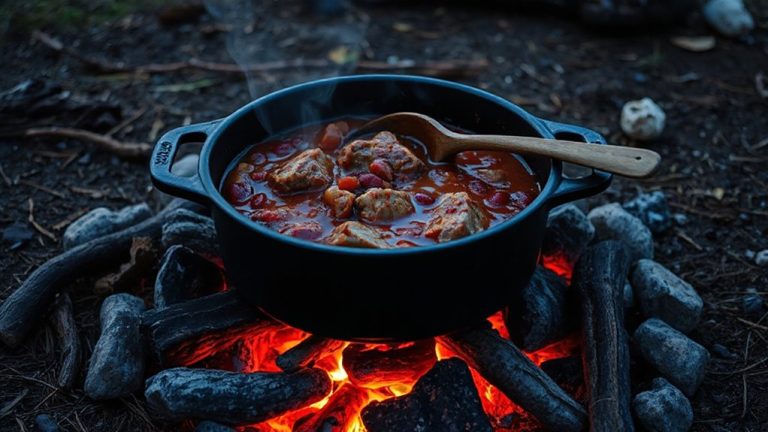
Foil packets and cast iron skillets open up a world of cooking versatility when placed directly on your grill grate. Foil packet meals let you enclose ingredients like veggies, fish, or chicken with seasonings, steaming them evenly while locking in flavor-no flipping required. They’re ideal for delicate foods that might fall through the grate. Meanwhile, cast iron cooking delivers exceptional heat retention and browning, perfect for sizzling onions, frying bacon, or even baking cornbread over coals. The skillet distributes heat more evenly than direct flame, reducing scorching. You’ll find cast iron handles high temperatures without warping, and with a little oil, it stays nonstick. Foil packet meals simplify cleanup and minimize gear, while cast iron adds robustness to campfire dishes. Together, they expand your menu beyond grilling basics. Both methods shine on the grate, offering practical, flavorful upgrades to outdoor cooking without needing extra tools or fuel sources.
Clean and Store Your Grate After Cooking
A well-maintained grill grate not only extends the life of your equipment but also guarantees better cooking results over time. After cooking, while the grate is still warm, scrub it with a stiff wire brush to remove food debris-this prevents buildup and maintains hygiene. For cast iron grates, avoid soap, as it strips the valuable grate seasoning that develops with repeated use and protects against rust. Instead, wipe it down with a paper towel and a thin layer of high-smoke-point oil like flaxseed or vegetable oil. Make sure the grate cools completely before storing. For long term storage, keep it in a dry place, preferably coated in oil and wrapped in breathable fabric to prevent moisture accumulation. Proper cleaning and care preserve performance, protect your investment, and guarantee consistent heat transfer and flavor in every outdoor meal.
On a final note
You’ve got the tools and know-how to make your campfire cooking more versatile. A solid grill grate turns open flames into a reliable grilling surface, letting you sear meats, char vegetables, or rest a skillet with precision. Proper heat control through coal management guarantees even results. When cleaned and stored correctly, your grate lasts for seasons. For outdoor meals blending simplicity and flavor, this method works-and works well.