Campfire Chili: One-Pot Wonder With Minimal Cleanup
You’re using a Dutch oven over glowing hardwood coals to make campfire chili because it delivers rich, smoky flavor with just one pot to clean. Position the pot carefully-simmer over indirect heat to avoid scorching while extracting depth from ingredients like beans, lentils, or ground meat. A well-seasoned oven prevents sticking and rust, while sturdy utensils help manage heat quickly. Toppings add freshness and variety without extra dishes. You’ll find smart swaps and heat control tips that make this meal truly adaptable.
Notable Insights
- Use a seasoned Dutch oven for even heat distribution and easy cleanup after cooking over campfire coals.
- Simmer chili over glowing hardwood embers to maintain consistent, indirect heat and avoid scorching.
- Opt for one-pot cooking to minimize dishes and streamline meal prep in outdoor settings.
- Swap ingredients like lentils, corn, or zucchini for beans to maintain heartiness and adapt to available supplies.
- Clean pot while warm with hot water and a camp sponge to prevent stuck-on residue.
How to Make Campfire Chili in One Pot
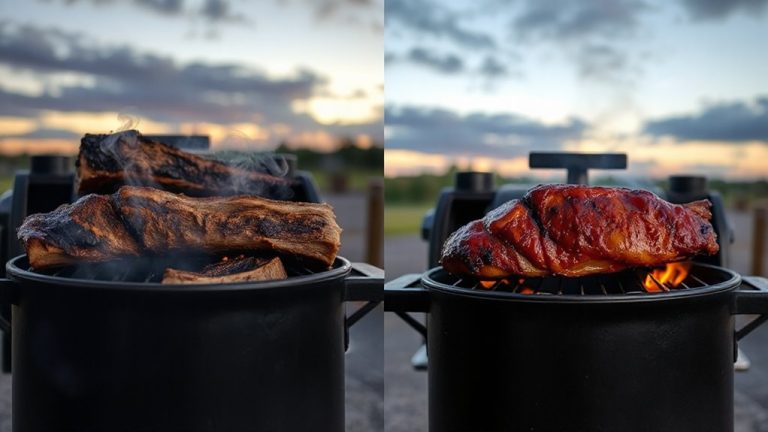
While outdoor cooking demands simplicity, it doesn’t mean sacrificing depth of flavor-especially when you’re making campfire chili in a single pot. You’ll rely on solid fire management to maintain consistent heat; too hot, and your chili burns, too low, and it never simmers properly. A bed of glowing coals beside and under your Dutch oven gives even cooking, but you’ll need to rotate it occasionally for uniform results. Proper Dutch oven care starts before you even cook-seasoning the cast iron guarantees a non-stick surface and prevents rust. After cooking, avoid soap; instead, scrape, rinse with hot water, and re-season lightly. This maintenance keeps it performing well over years of outdoor use. Though primitive in setup, this method delivers complex flavor through controlled, radiant heat. With practice, fire and pot become extensions of your technique-efficient, reliable, and perfectly suited to rugged, one-pot meals under the open sky. For seafood boils over the fire, a durable seafood boil pot ensures ample space and even heat distribution.
Use What You Have: Easy Chili Ingredient Swaps
Since you’re cooking off the grid, flexibility matters-especially when it comes to ingredients. You might not have every item on hand, but that’s where smart swaps shine. Out of beans? Try lentils or canned corn as bean alternatives-they hold up well over open flames and add heartiness. Diced potatoes or zucchini also work, offering texture and bulk without spoiling. As for spice blends, you don’t need a perfect mix. A dash of cumin and smoked paprika can substitute for chili powder, while a pinch of oregano boosts depth. If you’ve got a pre-mixed blend, great-but adjusting ratios lets you tailor flavor to taste. These substitutions don’t just solve shortages; they let you adapt to campsite realities without sacrificing quality. In outdoor cooking, resourcefulness often beats precision. With the right mindset and simple swaps, your one-pot chili delivers robust flavor, no matter the pantry limits.
Control the Heat Without a Stove
When cooking over a campfire, mastering heat control means the difference between a rich, evenly simmered chili and a scorched pot. You’ve got to work with what the fire gives you, using fire placement and heat zones to your advantage. Position your pot in the right zone-direct flame for boiling, glowing coals for gentler cooking. Adjusting where you place the pot changes everything. For more consistent results, consider using a portable propane fire pit, which offers adjustable flame settings and even heat distribution.
| Heat Level | Fire Placement | Best For |
|---|---|---|
| High | Center, active flames | Bringing to a boil |
| Medium | Edge of flame | Steady simmering |
| Low | Off to side, coals | Slow, even warming |
Skilled camp cooks don’t just build fires-they shape heat zones. Use long tongs or a grill grate to shift the pot as needed. This method beats guessing, giving you reliable control without a stove.
Keep It Simmering: Timing Over Fire
Now that you’ve set up your heat zones and gotten the pot to a boil, the real test begins: keeping your chili at a steady simmer without constant attention. Managing heat intensity is key-too high, and your chili scorches; too low, and flavors won’t meld. Position your pot on the edge of the fire where embers provide consistent, indirect warmth. Hardwoods like oak or hickory are ideal; their slow, even burn maintains a stable temperature longer than softwoods like pine, which flare quickly and fade. The right wood type influences not just heat intensity but also subtle flavor infusion. Monitor occasionally, shifting the pot if the simmer turns to a rapid bubble. With the right setup, you’ll achieve a rich, deep taste, proving that timing-and fire control-trumps constant stirring. Simmering well is less about vigilance, more about smart planning and fuel choice. For deeper flavor development, consider using best pellets for smoking in your fire setup.
Clean Up Fast With One Pot
Your campfire cookout ends with one pot to wash, and that’s the real win. Using a single heavy-duty pot minimizes gear and streamlines cleanup, making post-meal tasks far less intimidating. Once the chili’s gone and the fire’s out, you’re left with just one surface needing effortless washing. A quick scrubbing with a camp sponge and soapy water removes residue without soaking, especially if you clean while the pot’s still warm. Cast iron or enameled steel holds up well, resisting stuck-on burns when maintained properly. Unlike multi-pan meals, there’s no stack of greasy utensils or hidden crumbs in serving dishes. This method isn’t just about convenience-it’s about smart outdoor cooking. Less equipment means lighter packing, and less cleanup preserves your time and energy. With one pot, you gain efficiency without sacrificing flavor or function, a practical edge for any camper or weekend griller.
Make It Your Own: Toppings and Variations
Cleaning up after a satisfying meal leaves room to think about how you can improve next time, and that’s where personalizing your campfire chili really pays off. You can elevate the dish with creative toppings like sour cream, pickled jalapeños, or shredded cheddar, each adding texture and contrast. Crumbled tortilla chips give crunch, while a squeeze of lime brightens the deep flavors. For bold variations, consider swapping in ground bison for richness or adding smoked paprika to amplify the campfire essence. Black beans or lentils boost fiber and make it heartier without sacrificing flavor. Even the heat level is yours to control-toss in chipotle peppers for smoke and fire or tone it down for broader appeal. These tweaks don’t complicate cleanup, since they’re added after cooking. Thoughtful customization enhances enjoyment without undermining simplicity, making your one-pot meal both adaptable and reliable in outdoor conditions.
On a final note
You’ve got a reliable, one-pot meal that performs well outdoors. Campfire chili simplifies cooking and cleanup, ideal for variable conditions. Direct heat management lets you simmer steadily with practice. Using accessible ingredients and easy swaps keeps it flexible and efficient. Toppings add flair without complexity. This method proves effective for feeding a group with minimal gear. Overall, it’s a practical, satisfying choice for outdoor cooking done right-no fuss, just results.