How to Build a Snake-Style Charcoal Fire for Extended Low-and-Slow Grilling Sessions
Use a grill with tight airflow control, like a Weber Kettle or Kamado Joe, and arrange unlit high-quality lump charcoal or hardwood briquettes in a tight U-shape along the edge. Light only one end with a charcoal chimney or paraffin cubes-never lighter fluid. The fire creeps slowly along the snake, maintaining 225–250°F for up to 14 hours. Adjust top and bottom vents slightly to regulate oxygen and stabilize heat. This method’s reliability for brisket or pork shoulder comes from steady, even burnout with minimal interference-there’s more to mastering low-and-slow efficiency.
Notable Insights
- Use a kettle or offset smoker with precise airflow control for consistent low-and-slow heat.
- Arrange high-quality lump charcoal or hardwood briquettes in a tight U-shaped coil around the grill perimeter.
- Light only the first few briquettes at one end of the snake using a chimney starter or natural fire starter.
- Maintain steady 225–250°F by slightly opening bottom and top vents to regulate oxygen flow.
- Let the fire burn slowly along the coil for 10–14 hours, ideal for brisket, ribs, or pork shoulder.
Pick the Right Grill and Charcoal
When it comes to mastering the snake-style charcoal fire, your choice of grill and fuel isn’t just a detail-it’s the foundation. Your grill selection must prioritize tight airflow control and ample cooking space; a kettle or offset smoker works best, as they allow precise oxygen regulation through dampers. Models like the Weber Kettle or Kamado Joe deliver consistent performance, holding steady temps for hours. Equally critical is your charcoal choice. Skip the cheap briquettes-they often burn unevenly and contain fillers. Opt instead for high-quality lump charcoal or uniform hardwood briquettes, like those from Kingsford or Rockwood, which ignite reliably and sustain low-and-slow heat. These coals produce minimal ash, reducing airflow blockage in the snake formation. Together, proper grill selection and premium charcoal choice set the stage for success, balancing efficiency, burn time, and temperature stability-key for ribs, brisket, or any long session where control trumps convenience. For even more reliable performance, consider one of the top-rated charcoal grills for 2025 that are engineered for superior heat retention and airflow management.
How the Snake Method Works
While it might look like a simple ring of coals, the snake method is actually a carefully engineered burn pattern designed to extend cook times with minimal temperature swings. You get steady heat distribution because only one end of the snake lights initially, letting the fire crawl slowly along the coil. This controlled progression relies on smart airflow dynamics-oxygen feeds the burning end while the unlit portion stays dormant, reducing flare-ups and hot spots. It’s ideal for low-and-slow barbecue, maintaining 225–250°F for 12+ hours with little intervention.
| Feature | Benefit |
|---|---|
| Gradual burn | Stable temps, no need for constant tweaks |
| Indirect layout | Even heat distribution across the grate |
| Natural draft | Optimized airflow dynamics, fewer restarts |
Build the Snake Fire in 5 Steps
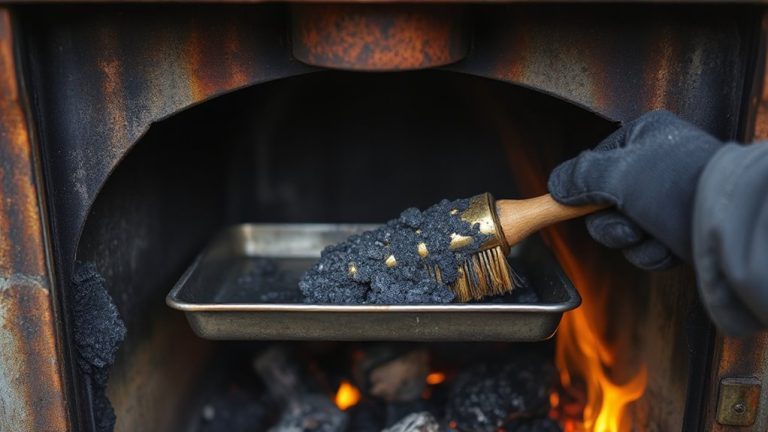
Since consistency and control are critical for long cooks, setting up the snake fire properly makes all the difference. Start by arranging unlit briquettes in a tight U-shape or circular pattern along the grill’s edge-this charcoal arrangement forms the slow-burning backbone of the method. Place lit coals only at one end, so the burn progresses gradually through the chain. Keep gaps minimal to maintain steady heat and guarantee even burn-off. Use the top grate to monitor clearance, avoiding contact with coals. For airflow management, slightly open the bottom vents and control temperature via the upper lid vent-this regulates oxygen without spiking heat. The design leverages radiant transfer and convection symmetry, making it reliable for 12+ hour sessions. Proper setup reduces flare-ups and fuel top-offs, offering unmatched efficiency over dump methods or hot-plate configurations.
Light the Fire for Steady Heat
Though you’ve laid the coals in that careful snake pattern, the real test begins when you ignite the fuel-get this step right and you’ll lock in a steady, predictable burn for hours. Your ignition technique directly affects airflow and initial temperature stability. Avoid dousing coals with lighter fluid; it leaves a chemical aftertaste and risks flare-ups. Instead, use natural fire starters like paraffin cubes or wood-based starters-they’re clean, reliable, and give you controlled ignition. Place the starter at the snake’s head, then light it. This front-end ignition guarantees the burn progresses gradually down the coil. For consistent results without chemical additives, consider using a charcoal chimney starter as part of your fire-lighting routine.
| Method | Fuel Type | Best For |
|---|---|---|
| Chimney Starter | Charcoal | Even lighting, no taste |
| Paraffin Cubes | Charcoal, Wood | Easy control, clean burn |
| Electric Coil | Charcoal | No additives, instant |
| Lighter Fluid | Charcoal | Quick, but risky flavor |
Quality fire starters make all the difference.
Control Temperature for Hours
Once the fire takes hold at the head of the snake, you’ve got to manage airflow and coal layout to maintain a consistent temperature over several hours. Proper heat management guarantees even cooking without constant intervention. Keep the vents partly open-top and bottom-to regulate oxygen flow, slowing the burn without starving the coals. Adjust them slightly if you notice fluctuations; small tweaks prevent dramatic swings. The unlit coals in the coil gradually ignite, feeding the fire steadily, which enhances temperature stability. This setup outperforms pile-style fires by delivering a longer, more predictable burn. You’ll find that after an hour or two, the heat output remains within 225–250°F, ideal for low-and-slow work. Monitoring the thermometer on your lid helps catch drifts early. With minimal fuss, the snake method offers reliable performance, especially when cooking briskets or ribs that demand hours of steady heat. It’s efficient, smart design in practice. For those using a beginner offset smoker, this method simplifies temperature control and improves cooking consistency.
When to Use the Snake Method
When should you choose the snake method over other charcoal setups? You’ll want it when planning long, low-and-slow cooks-like smoking briskets, ribs, or pork shoulder-where steady heat and minimal intervention matter most. Unlike direct grilling, this method delivers consistent temperatures for 10, even 14 hours, without reloading coals. It’s especially effective on offset smokers or kettle grills where airflow control is key. The snake method pairs well with best wood pairings like hickory for beef or apple for pork, enhancing flavor without overwhelming. Use it when you’ve got time to let ideal spice rubs penetrate and form a rich bark. It’s not for quick sears or high-heat work, but for when patience yields depth. If you value control, flavor development, and hands-off management, this setup outperforms most alternatives in endurance and reliability.
On a final note
You’ve built the snake fire, managed the heat, and grilled low-and-slow for hours-proof it’s ideal for long sessions. This method delivers consistent, adjustable temperatures without frequent monitoring. While it demands planning and quality charcoal, the payoff is even cooking and rich smoke flavor. For briskets or ribs, it outperforms quick-start techniques. Use it when time and control matter most.