How to Grill Halloumi Cheese on a Hibachi Without Melting
Choose fresh, firm Cypriot halloumi made from sheep and goat milk-it holds up better on the hibachi thanks to its springy texture and high melting point. Cut it into ¾-inch slices to maintain structure, then pat dry and brush with oil to prevent sticking and guarantee even browning. Preheat your hibachi to medium heat; this lets the cheese sear properly without collapsing. Grill 2–3 minutes per side, flipping once, until golden and firm. Serve right away for that ideal contrast of crisp exterior and chewy interior-there’s more to get right for perfect results every time.
Notable Insights
- Choose fresh, firm Cypriot halloumi made from sheep or goat milk for its high melting point and grilling resilience.
- Cut halloumi into ¾-inch thick slices to maintain structure and prevent collapsing over heat.
- Pat slices dry and brush with high-smoke-point oil to ensure even browning and prevent sticking.
- Preheat hibachi to medium heat to allow gradual searing without melting the cheese.
- Grill 2–3 minutes per side until golden, then serve immediately to preserve texture and grill marks.
Choose Fresh, Firm Halloumi for Grilling
A good grilling experience starts with the right block of halloumi-so don’t just grab the first one you see. You need a fresh, firm wedge that holds its shape under high heat, and that’s where quality matters. Authentic halloumi, true to its Cypriot Halloumi origin, uses a blend of sheep and goat milk, giving it a springy texture and high melting point-ideal for hibachi grilling. Imitations made with cow’s milk often fall apart or turn rubbery, so check the label. While cheese alternatives like paneer or tofu might suit vegans, they lack the savory richness and grill resilience of real halloumi. Firmer isn’t just better-it’s essential. Pressed properly, fresh halloumi sears cleanly, develops grill marks, and retains a satisfying chew. Always inspect for excess brine; a slightly dry surface sears more effectively. Choosing wisely upfront means fewer stuck slices and more consistent results on the griddle.
Slice Halloumi Thick for Better Grill Results
Skip the flimsy slices-thick-cut halloumi, around ¾ inch, holds up best on the roaring hibachi griddle. Thin pieces soften too quickly, risking collapse or over-browning before achieving that ideal sear. A substantial slice maintains structural integrity under intense, direct heat, allowing for even browning and distinct grill marks without falling apart. This thickness also creates a better contrast between the crisp exterior and the tender, slightly chewy interior. Plus, thicker blocks absorb marinating options more gradually, enabling deeper flavor infusions without becoming soggy. Whether you opt for lemon-herb blends or bolder spice mixes, the extra density gives the cheese time to take in nuances without breaking down. You’ll get a more balanced taste and pleasing mouthfeel. Thick slicing isn’t just practical-it’s essential for maximizing texture and flavor when grilling on high-heat surfaces like a hibachi.
Pat and Oil Halloumi to Prevent Sticking
That thick slice of halloumi you just cut won’t do you any good if it sticks and tears on the griddle, so it’s worth taking a moment to pat each piece dry with a paper towel-moisture on the surface can cause sticking and undermine browning. Once dry, lightly brush both sides with a high-smoke-point oil like grapeseed or avocado; this creates a barrier that promotes even searing without gluing the cheese to the metal. Skipping this step risks frustrating flips and uneven grill marks. While some opt for marinating options-like olive oil, lemon, and oregano-keep in mind that acidic components don’t tenderize cheese but can enhance flavor pairings post-grill. Oiling is non-negotiable for structural integrity, even with marinated batches. Proper surface prep guarantees clean release, golden crust development, and maintains the halloumi’s resilient chew-critical when serving alongside grilled vegetables or pita for balanced, satisfying plates.
Heat Hibachi to Medium Before Cooking
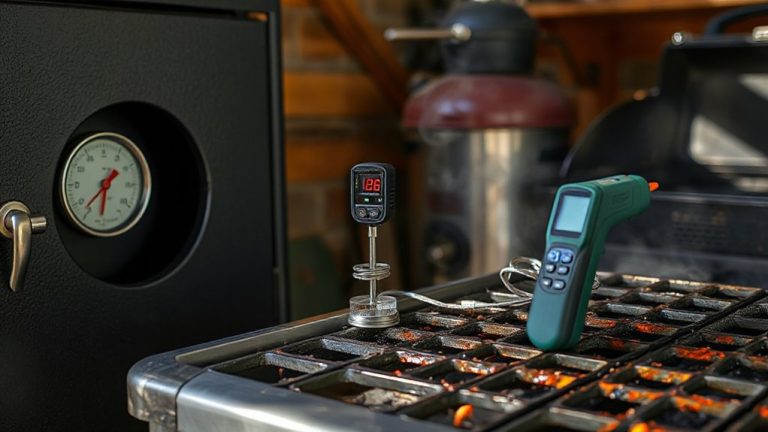
While getting the hibachi ready might seem straightforward, heating it to medium before you cook makes all the difference in how your halloumi turns out. You see, hibachis can hit high heat fast, but that’s exactly what you don’t want-too much intensity leads to a cheese meltdown before the exterior firms up. Medium heat gives you control, letting the halloumi sear slowly without collapsing into a gooey mess. You’re aiming for texture, not surrender. When the grill’s evenly warmed, the cheese holds its shape, developing structure as the surface caramelizes. Skip preheating, and you risk uneven cooking or sticking, even with oil. But with steady, moderate temps, you avoid the pitfall of high heat while still achieving that desirable crust. It’s not just about avoiding failure-it’s about precision. Proper heat management is what separates grilled success from a sloppy cheese meltdown.
Grill Halloumi Until Golden and Firm
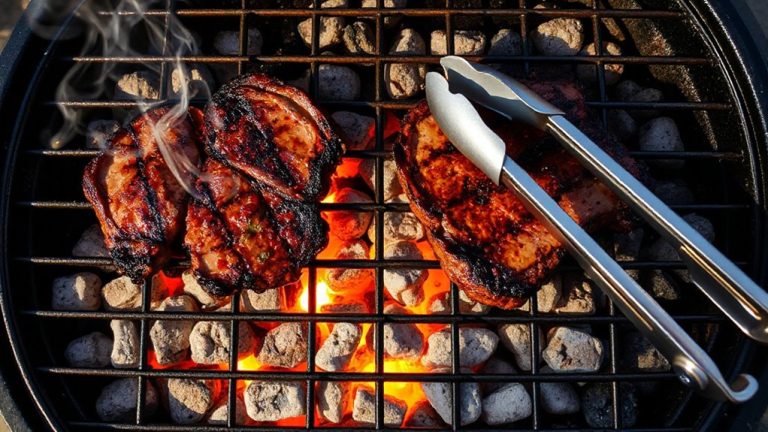
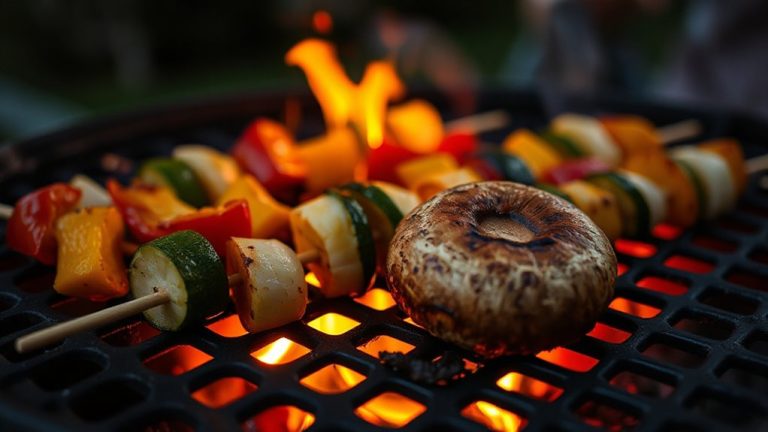
Now that your hibachi’s warmed to a steady medium, you’re set to start grilling the halloumi with confidence. Place the marinated halloumi directly on the grates, where the even heat will sear the surface without forcing it to melt. You’ll notice it firms up quickly-this is essential. As it cooks, the cheese develops a resilient crust and takes on a subtle smoked flavor from the charcoal, enhancing its natural saltiness. Don’t rush it; give it time to brown properly, about 2–3 minutes per side, depending on thickness. The ideal result is golden edges with a slight give in the center. This method outperforms higher heat, which risks collapse or sticking. Grilling halloumi this way preserves structure while adding depth-perfect for salads or flatbreads. The hibachi’s open design guarantees consistent airflow, vital for maintaining that firm, grill-ready texture.
Flip Once for Crisp, Even Grill Marks
Usually, the best results come from flipping the halloumi just once-doing so guarantees crisp, even grill marks and a uniformly seared crust. Letting the cheese sit undisturbed allows the intense heat of the hibachi to caramelize its surface fully, creating distinct, restaurant-quality grill marks. Premature flipping disrupts this process, leading to uneven browning and sticking. Your flip timing matters: wait until the underside is golden-brown and releases easily, typically after 2–3 minutes, depending on heat intensity. A well-preheated griddle makes certain of immediate searing, locking in structure without melting. Turning too early risks tearing; waiting builds better texture. One precise flip maximizes contact time needed for ideal crispness while preserving the cheese’s integrity. With consistent heat and patience, you achieve not just visual appeal but enhanced flavor through controlled Maillard reaction. This method proves especially effective on hibachis, where flat surfaces distribute heat more evenly than open grates.
Serve Immediately for Chewy, Satisfying Texture
Once you’ve achieved those crisp, golden grill marks with a single confident flip, timing becomes just as important off the heat as it was on. Halloumi’s unique high melting point allows it to hold its shape, but its ideal texture-firm yet springy-begins to shift as it cools. To preserve that satisfying chew, serve warm within minutes of grilling. The contrast between the slightly charred exterior and the soft, salty interior diminishes with delay, so immediate serving guarantees peak quality. For best results, plate directly from the hibachi and enjoy fresh, either on its own or with accompaniments like lemon-dressed greens or grilled vegetables. Letting it sit not only cools the cheese but also dulls the textural complexity you worked to achieve. Immediate plating enhances both flavor and mouthfeel, making timing a vital, often overlooked, step in outdoor cooking.
On a final note
You’ve grilled halloumi successfully when it holds its shape, develops golden sear marks, and stays firm without melting. A well-heated hibachi at medium temperature guarantees even cooking, while oiling the cheese prevents sticking. Flipping once preserves texture and delivers crisp edges. Served right off the grill, halloumi offers a warm, chewy bite that works in salads or as a standalone dish. It’s a reliable, flavorful option for outdoor cooking when technique and timing align.