Understanding Thermometer Types for Different Outdoor Cooking Methods
You lose heat control outdoors fast when wind gusts or fuel swings throw off your grill, so matching your thermometer to the cooking method matters. Instant-reads give you quick, accurate meat temps for searing steaks, while leave-in probes track slow smokes without opening the lid. Infrared models let you check grate heat without contact, ideal for setting up sear zones. Each type varies in speed, range, and weather resistance-picking the right one sharpens your control and consistency. Choose wisely, and you’ll see how small upgrades transform your results.
Notable Insights
- Instant-read thermometers provide quick, accurate surface readings for high-heat grilling of steaks, burgers, and chicken.
- Leave-in probes offer continuous monitoring during slow smoking, ensuring precise core temperature control over long durations.
- Infrared thermometers measure surface heat without contact, ideal for checking grill grates or searing zones.
- Matching thermometer type to cooking method enhances precision, safety, and consistency in outdoor cooking.
- Environmental factors like wind and fuel fluctuations demand responsive tools and proactive temperature management.
Why Temperature Control Fails Outdoors
While you might have mastered temperature control in your kitchen, outdoor cooking introduces variables that often derail even experienced grillers. Wind interference disrupts heat distribution, creating uneven cooking zones and unpredictable flare-ups, especially on open grills or low-wind shields. You’ll notice temperature swings when gusts scatter heat or cool flames suddenly. Fuel fluctuations-common with charcoal and gas-are just as problematic. Charcoal burns down unevenly, while propane levels drop, altering BTU output. You can’t rely on settings alone; without monitoring, your sear might turn into a simmer. These outdoor-specific challenges demand constant attention and adaptive techniques. Unlike indoor ovens, grills lack insulation and stability, making external factors far more impactful. That’s why ambient conditions and fuel consistency directly affect cooking precision. To maintain control, you must anticipate changes, adjust vents or burners proactively, and understand how each variable alters the cooking environment. Using a reliable meat thermometer ensures accurate doneness readings despite fluctuating outdoor conditions.
Instant-Read Thermometers: Fast Checks for Grilled Meats
Because you need precise, real-time temperature readings when grilling meats over open flames, an instant-read thermometer becomes essential for avoiding undercooked centers or dried-out steaks. These tools deliver a surface reading in seconds, making them perfect for quick verification during searing or flipping. Unlike leave-in models, they’re designed for spot checks, not continuous monitoring. Their thin probes slide easily into burgers, chicken breasts, or steaks without losing juices. A reliable option pairs well with best wireless meat thermometers for cooks who also want remote monitoring capabilities. Below is a comparison of common features:
| Feature | Standard Model |
|---|---|
| Response Time | 3–5 seconds |
| Accuracy | ±1°F to ±2°F |
| Probe Length | 3–4 inches |
| Water Resistance | Limited |
| Battery Life | 1,000+ uses |
Choose one with a backlit display and auto-off for convenience. With proper care, it guarantees reliability and helps you master high-heat cooking through accurate, real-time feedback.
Leave-In Probes: Maintain Control During Slow Smoking
When you’re smoking meat at low temperatures for hours, a leave-in probe thermometer becomes your most trusted tool for maintaining consistent control without constantly opening the grill or smoker. These probes stay inserted in the thickest part of the meat, sending real-time temperature data to a display, so you can monitor progress remotely. Models with wireless capabilities are convenient, but be mindful of signal interference, especially in crowded backyard setups or near large metal structures. Accurate readings depend on regular probe calibration-most units recommend checking against boiling or ice water every few uses. A drift of even 2–3°F can result in undercooked or dried-out brisket. While they require more setup than instant-reads, their ability to deliver continuous feedback makes them ideal for long cooks. With proper care, a quality leave-in probe enhances precision, helping you achieve tender, perfectly smoked results every time. For best results, choose a model known for accuracy and durability, such as those highlighted in reviews of the best temperature sensors.
Infrared Thermometers: Measuring Grill and Surface Heat
You’ve got your meat under control with a leave-in probe, but knowing how hot your grill or griddle actually is makes all the difference in searing, reverse searing, or managing zones in a charcoal setup. Infrared thermometers give you instant surface readings without contact, ideal for checking grates or cast iron. Accuracy depends on proper use-emissivity settings and surface reflectivity can skew results, especially on shiny metals. Adjust emissivity if your model allows, or aim for matte, soot-covered areas for better readings.
| Surface Type | Reflectivity Level | Ideal Reading Approach |
|---|---|---|
| Polished Steel | High | Low; adjust emissivity |
| Cast Iron Griddle | Medium | Stable; pre-seasoned preferred |
| Charcoal Grate | Low | Most accurate; high emissivity |
| Ceramic Coating | Medium-Low | Consistent; avoid glare spots |
They’re fast, durable, and perfect for quick checks-just don’t rely on them for internal temps.
How Accuracy Varies by Thermometer and Cooking Method
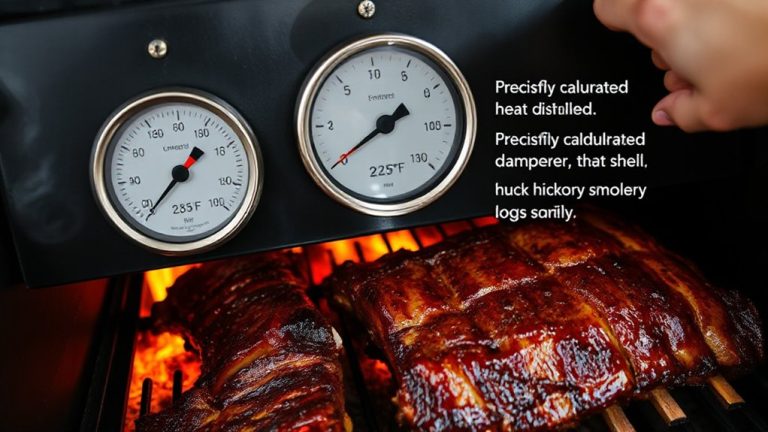
While each thermometer type brings specific advantages to outdoor cooking, their accuracy largely depends on matching the tool to both the cooking method and the conditions in which it’s used. Infrared models give instant surface readings but can falter when steam or smoke distort results, especially in fluctuating ambient conditions. Dial thermometers, common in grills, often suffer from calibration drift over time, leading to misleading internal temperature reports unless regularly checked. Digital probe thermometers offer better precision for meats, though prolonged exposure to high heat or moisture may affect sensor reliability. You’ll find that even minor shifts in placement or airflow impact readings, so relying solely on one type isn’t ideal. For consistent accuracy, choose your thermometer based on the cooking environment and monitor for calibration drift with routine ice or boiling water tests. Matching tool to task improves both safety and results.
Must-Have Features: Speed, Range, and Weather Resistance
A reliable outdoor thermometer does more than just display a number-it performs under pressure, from the scorching flare-ups of direct grilling to the damp chill of an early morning smoke. You need speed to react quickly when searing steaks, so look for models that deliver readings in under three seconds. A wide temperature range-ideally -40°F to 572°F-guarantees versatility across methods, whether you’re cold smoking or searing over coals. Don’t overlook weather resistance; a waterproof design protects against rain and grease splatter, keeping internal components safe. Battery longevity matters, too-swapouts in the middle of a cook are frustrating. Opt for thermometers with auto-shutoff and energy-efficient sensors to extend runtime. Together, these features guarantee consistent, dependable performance, letting you focus on flavor, not gadget failures. A thermometer built for real conditions saves time, prevents errors, and stands up to the unpredictability of outdoor cooking.
Match Your Thermometer to Grill, Smoker, or Campfire
The right thermometer can make or break your outdoor cooking experience, especially when conditions change fast or equipment varies. When grilling over gas or charcoal, you need instant readings to manage high heat zones and avoid hot spots-here, a fast digital thermometer shines. For smokers, where fuel types like wood or pellets create fluctuating temperatures, a dual-probe model helps monitor both ambient heat and meat doneness over long sessions. Campfire cooking is less controlled, so a durable, weather-resistant thermometer with a wide range works best when heat zones shift unpredictably. Infrared models are handy here, letting you check surface temps without contact. Match your tool to your method: accuracy and response time matter most, regardless of fuel types. A well-chosen thermometer guarantees consistency, whether you’re searing over flame or slow-smoking for hours.
On a final note
You’ll need the right thermometer to master outdoor cooking, since each method demands precision. Instant-reads excel for quick checks on seared steaks, while leave-in probes help regulate smoker temps over hours. Infrared models reveal grill surface heat without contact. Accuracy varies, so choose devices with fast response, wide range, and weather resistance. Matching your tool to grill, smoker, or campfire boosts control, ensuring food cooks safely and evenly every time.