Grilling Pork Belly on a Hibachi for Crispy, Juicy Results
Choose thick-cut pork belly, 1 to 1.5 inches thick, for best results on the hibachi. Score the skin and dry it overnight in the fridge to maximize crispness. Heat your hibachi to 450°F–500°F using even charcoal for consistent searing. Place skin-side down over direct flame, sear undisturbed for 6–8 minutes, then flip once. Serve with kimchi, raw garlic, and ssam wraps for balanced flavor. Proper reheating restores crispness. There’s more to mastering the ideal char and tenderness just ahead.
Notable Insights
- Choose thick-cut pork belly (1 to 1.5 inches) for even fat rendering and better texture under high heat.
- Score the skin and refrigerate uncovered overnight to ensure a dry surface for optimal crisping.
- Use high, even heat (450°F–500°F) with well-distributed hot charcoal for effective searing and fat rendering.
- Sear skin-side down without moving for 6–8 minutes to achieve a crispy, blistered exterior.
- Serve with kimchi, raw garlic, and ssam wraps for balanced flavor, or reheat using steam crisping to restore texture.
Pick Thick-Cut Pork Belly for Hibachi Grilling
You’ll want to go for thick-cut pork belly when planning a hibachi grill session-it holds up better under high heat and renders fat more evenly. Thin slices risk overcooking or curling, which leads to uneven texture and less control over crispness. When considering pork sourcing, aim for reputable butchers or farms that prioritize humane and sustainable practices; the quality of the meat directly impacts both flavor and mouthfeel. Thicker cuts, around 1 to 1.5 inches, allow for a balanced sear without burning. This thickness also supports effective flavor pairing, letting bolder marinades-like miso, garlic, or mirin-penetrate over time without overwhelming the natural richness. You’ll notice that well-sourced, thick-cut belly develops a deeper umami character on the hibachi, where radiant heat enhances complexity. Consistency in cut guarantees predictable cooking, making it easier to time each batch. Choose wisely-your results depend as much on your starting ingredient as your technique.
Score and Dry the Belly for Maximum Crisp
Since achieving ideal crispness is essential when grilling pork belly on a hibachi, scoring and drying the meat beforehand makes a noticeable difference in texture and browning. You’ll want to use a sharp knife or razor to apply a precise scoring technique-shallow, even cuts about 1/4-inch apart across the skin. This not only helps render fat more efficiently but also disrupts the surface, encouraging uniform crisping. Drying the belly overnight in the fridge, uncovered, further improves results by reducing surface moisture, which can hinder browning. A dry surface guarantees better sear development and enhances overall pork texture-crispy on the outside, tender within. Skipping this prep may leave you with chewy skin and uneven results. Properly scored and dried, the belly reacts predictably to high heat, yielding reliable, restaurant-quality crispness every time.
Heat the Hibachi to High, Even Heat
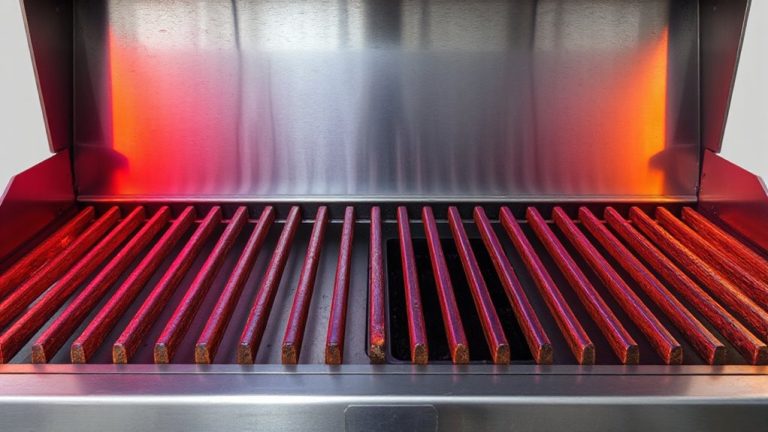
When preparing to grill pork belly on a hibachi, getting the heat right is just as essential as the prep work you’ve already done. You’ll need high, even heat to render fat properly and build a consistent sear without burning. Start by arranging hot charcoal in an even layer-this guarantees uniform temperature across the grilling surface. Good charcoal management means using lump charcoal or high-quality briquettes that burn clean and hot. Adjust the airflow control vents at the base to regulate oxygen flow; open them wide to increase heat, close them slightly to stabilize it. A well-ventilated fire reaches and holds 450°F–500°F, ideal for pork belly. Use the hand test or a reliable grill thermometer to confirm. Avoid hot spots by redistributing coals if needed. Proper airflow control not only sustains heat but also minimizes excessive smoke, giving you a cleaner, more efficient cook. For best results, choose a top hibachi grill that offers excellent heat distribution and durability.
Sear Over Direct Flame for Golden Crackle
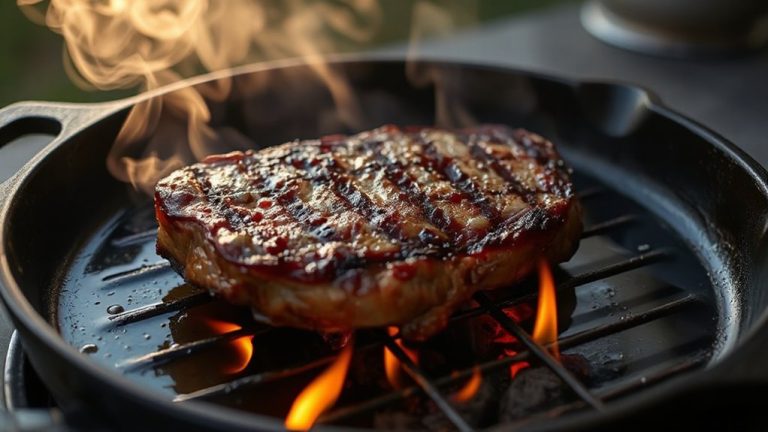
Now that your hibachi is holding steady at 450°F–500°F, it’s time to place the pork belly directly over the flame, skin-side down, where the intense heat will begin breaking down fat and tightening the surface for a crisp finish. You’ll hear it sizzle immediately-this is when the magic starts. Let it sear undisturbed for 6–8 minutes, allowing the skin to caramelize and puff slightly under the consistent radiant heat. Charcoal smoke will curl around the meat, imparting a subtle, earthy depth that gas grills can’t replicate. Avoid flipping too soon; patience guarantees even crackle formation. Once golden and blistered, move the pork belly off direct heat. This resting time-about 5 minutes-lets internal moisture redistribute, preserving juiciness beneath the newly formed crust. A well-seared exterior doesn’t just look impressive-it locks in flavor, creating the ideal contrast between airy crispness and tender meat. This step is essential for authentic, high-quality results.
Baste and Flip Once for Balanced Flavor
Though the initial sear builds structure and color, it’s the baste and single flip that fine-tune flavor and texture across the cut. You’ll want to wait until the pork belly has developed a deep crust before flipping-typically after 4–5 minutes-so the fat renders evenly. Flip once, then apply the reserved marinade, now concentrated from marinade timing, which boosts umami without oversaturating. Too early, and the liquid prevents crisping; too late, and the flavors won’t adhere. Use a brush to control glaze thickness-a thin, even layer caramelizes without scorching. Thick glazes burn quickly over direct heat, creating bitterness. A single flip guarantees both sides cook evenly while letting the second side develop a glossy, sticky finish. This method balances surface crispness with rich depth, essential for hibachi’s high-heat precision. Done right, your pork belly sings: crisp, sweet, savory, and cohesive from edge to center.
Serve With Kimchi, Garlic, and Ssam Wraps
Since grilled pork belly delivers such bold, savory richness, pairing it with vibrant, contrasting elements elevates the dish from satisfying to exceptional-kimchi, raw garlic, and ssam wraps aren’t just accompaniments, they’re essential counterpoints. The tangy heat of fermented condiments like kimchi cuts through the fat, balancing each bite with acidity and spice. Raw garlic adds a sharp, clean bite that refreshes the palate. Together, they follow a Korean tradition of ssam-wrapping grilled meat in leafy greens with flavorful sides-for a harmonious mouthfeel. You’ll find that the interplay of crispy pork, cool lettuce, pungent garlic, and spicy kimchi transforms your hibachi experience into something dynamic and layered. This isn’t just about flavor contrast; it’s about texture and temperature too. Serving this way turns a simple grill session into a thoughtful, interactive meal rooted in balance, enhancing both the pork and the cultural context it’s shared within.
Reheat Hibachi Pork Belly for Next-Day Crisp
If you’re lucky enough to have leftover hibachi pork belly, reheating it properly means the difference between a soggy disappointment and a second act of crisp, caramelized delight. Avoid microwave reheating-it draws out moisture, leaving the skin flaccid and chewy. You’re better off reviving the pork belly in a hot skillet or oven. For best results, use the steam crisping method: gently warm the meat with a splash of water in a covered pan, then uncover and sear over high heat to re-crisp the exterior. This technique restores texture while preserving juiciness. The goal is a balance-reheating without drying, crisping without burning. A well-executed reheat brings back the contrast of crackling skin and tender fat, proving good barbecue can indeed have a satisfying encore.
On a final note
You’ve got the right cut, the scored skin, and a properly heated hibachi-now it’s about control. Searing over direct flame gives unmatched crackle, while minimal flipping preserves juiciness. Kimchi cuts richness, ssam brings balance. Reheating on the grill restores crisp better than a microwave. Hibachi pork belly isn’t just tasty; it’s a study in heat management, texture contrast, and smart prep-outdoor cooking at its most rewarding.