How to Smoke Brisket in an Open Pit Using Hickory and Mesquite
Pick a well-marbled USDA Choice or Prime brisket with a thick flat and even fat cap. Trim fat to about a quarter-inch, then smoke low and slow over a steady fire of seasoned hickory and mesquite-hickory for depth, mesquite for punch, but use it sparingly to avoid bitterness. Keep your pit between 225°F and 250°F, managing airflow and adding wood gradually. Wrap the brisket at 160°F to lock in moisture, and cook to 195°F–203°F for tender, pull-apart results. Rest it wrapped for at least an hour before slicing against the grain. You’ll find the best outcomes come from consistent fire control and patience through each phase of the process. More details on refining each step follow.
Notable Insights
- Select a well-marbled packer brisket and trim fat to a quarter-inch for optimal protection during smoking.
- Combine hickory and mesquite woods, using mesquite sparingly to avoid bitterness and ensure clean, flavorful smoke.
- Maintain a steady fire temperature between 225°F and 250°F by managing airflow and adding seasoned wood gradually.
- Wrap the brisket at 160°F to retain moisture and continue cooking until internal temperature reaches 195°F–203°F.
- Rest the brisket for at least one hour before slicing against the grain for maximum tenderness.
Choose the Right Brisket for Smoking
While selecting the perfect brisket might seem straightforward, it’s actually one of the most critical decisions you’ll make when preparing for a successful smoke. Your cut selection directly impacts tenderness and flavor absorption, so always go for a whole packer brisket with a thick, even flat and ample fat cap. Look for bright red meat and creamy-white fat-avoid any grayish hues or dry spots. The grain direction matters more than many realize; slicing against it after cooking guarantees each bite stays tender rather than chewy. Stick with USDA Choice or Prime grades for the best balance of marbling and yield. A well-trimmed brisket saves time later, but don’t overdo it-leave about a quarter-inch of fat to protect the meat during the long smoke. Smart cut selection upfront sets the foundation for a flawless cook.
Start and Tend Your Hickory-Mesquite Fire
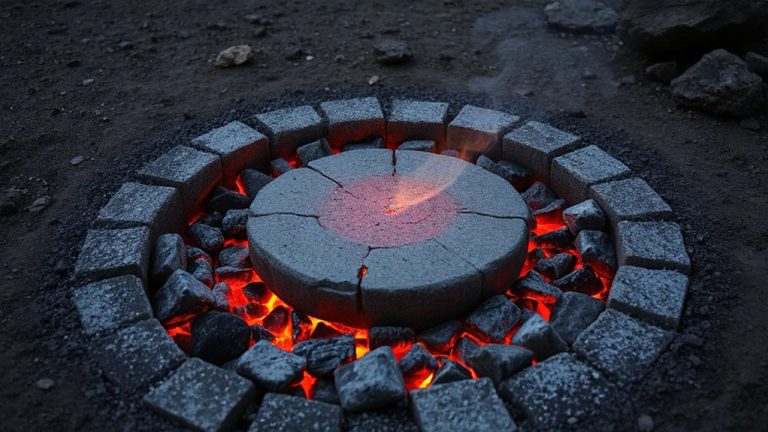
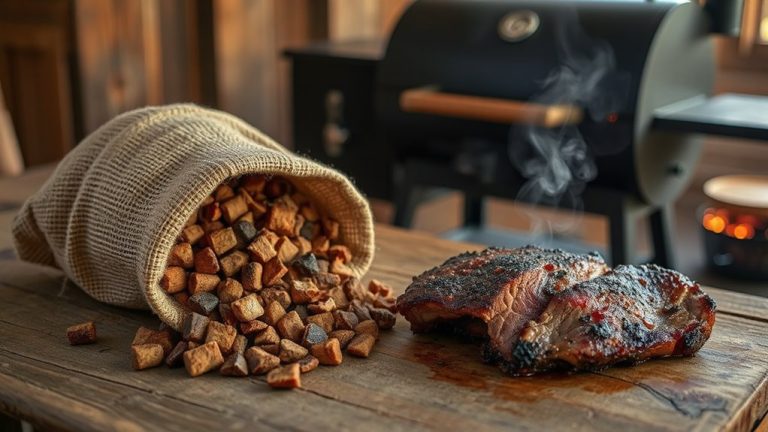
If you’re aiming for a bold, robust flavor that stands up to the richness of brisket, combining hickory and mesquite woods delivers a powerful punch without tipping into bitterness, provided you manage the burn correctly. Start your fire with well-seasoned hardwoods-green or wet wood creates harsh smoke and poor combustion. Proper wood seasoning guarantees cleaner, hotter burns and better flavor. Use a chimney starter or teepee arrangement to ignite the coals, letting them burn down to a steady glow before adding brisket. Maintain fire management by monitoring airflow and avoiding over-packing the pit. Hickory burns long and steady, while mesquite, more intense, should be used sparingly to avoid overpowering the meat. Tend the fire every 30–45 minutes, removing ash and adjusting fuel as needed. Consistent tending keeps smoke quality high and burn efficiency peak throughout the cook. For optimal results, choose Best Hickory Picks known for their density and consistent smoke profile.
Keep the Heat Steady When Smoking Brisket
Maintaining a steady temperature isn’t just helpful-it’s essential when smoking brisket, and most seasoned pitmasters agree that keeping your smoker between 225°F and 250°F delivers the best balance of texture and flavor. You’ll need consistent fire management to avoid wild swings that can toughen meat or create hot spots. Start with properly seasoned wood, and add chunks gradually-too much at once spikes the heat. Airflow control is just as critical; adjust your vents to maintain a slow, steady burn. Restricting oxygen too much starves the fire, while excessive airflow drives temps too high. A well-placed lid damper and bottom intake work together to regulate this balance. Digital thermometers with probes help monitor pit conditions in real time, but don’t rely solely on them-watch the smoke quality and flame behavior. Proper heat control separates good barbecue from exceptional, turning raw brisket into tender, flavorful results through disciplined, responsive fire management. For enhanced flavor, consider using a high-quality BBQ rub that complements the smokiness of hickory and mesquite.
Check Brisket Doneness and Avoid Drying It Out
You’ve kept the fire under control and held that steady low-and-slow rhythm, but now comes the real test: knowing when your brisket is truly done without pushing it past its prime. Relying on time alone is risky-internal temperature is your most reliable indicator. Aim for 195°F to 203°F in the thickest part of the flat, probing gently to avoid heat loss. At this range, collagen fully breaks down, yielding tender, pull-apart texture. If you’ve used the wrap technique-aluminum foil or butcher paper-around 160°F, you’ll likely see a more even cook and retained moisture, though unwrapped briskets develop a stronger bark. Still, wrapping helps prevent drying, especially in fluctuating open-pit conditions. Don’t pull the brisket too early, even if it hits 195°F-let it stabilize. The internal temperature should plateau or rise slightly before cooling, signaling completion without overcooking. For accurate and consistent readings, use a high-quality instant-read thermometer that responds quickly and precisely to temperature changes.
Rest and Slice for Maximum Tenderness
Once the brisket hits the target temperature range, pulling it off the smoker isn’t the finish line-letting it rest is just as critical to achieving peak tenderness and juiciness. You should let it rest for at least one hour, wrapped snugly in foil or butcher paper, to allow the internal fibers to reabsorb moisture and relax. Skipping this step risks dry, tough meat, no matter how perfectly smoked. When ready, carve against the grain-this shortens the muscle fibers for a noticeably more tender bite. Use a sharp slicing knife and aim for even, quarter-inch slices to preserve texture. Serving brisket right after slicing guarantees it stays warm and flavorful, with juices intact. Never serve cold; the fat should remain soft for ideal mouthfeel. Serve warm with your favorite sides, and you’ll taste the full reward of slow, deliberate pit mastery.
On a final note
You’ve picked a rugged, rewarding method: open-pit smoking with hickory and mesquite delivers bold flavor and a deep bark when managed well. Success hinges on fire control-consistent 225–250°F-and avoiding heat spikes. The brisket must rest fully to retain juices. While demanding, this technique offers unmatched smoky depth, especially for those who value tradition and patience in barbecue. It’s not just cooking; it’s craft.