Safety Protocols When Operating Large Vertical Charcoal Water Smokers
Set your large vertical charcoal water smoker on a stable, non-flammable surface like concrete or gravel, never on grass or wood. Always wear heat-resistant gloves and a durable apron to protect against burns. Inspect the smoker for rust, cracks, and seal integrity before use. Never use lighter fluid-opt for a chimney starter instead. Maintain steady temps between 225°F and 250°F, favoring thin blue smoke. Adjust dampers for clean combustion and airflow. Dispose of ash only when fully cool. Safety is key, and mastering these steps keeps your cook both effective and controlled-there’s more to get right with proper setup and maintenance.
Notable Insights
- Place the smoker on a stable, non-flammable surface like concrete or gravel to prevent fire hazards.
- Always wear heat-resistant gloves and a durable apron to protect against burns and grease splatter.
- Inspect the smoker regularly for rust, cracked welds, and damaged seals to ensure safe operation.
- Never use flammable liquids to ignite charcoal; use a chimney starter for safe, controlled ignition.
- Maintain proper airflow and monitor temperatures closely to keep combustion clean and within safe limits.
Choose a Safe Location for Your Smoker
When setting up your vertical charcoal water smoker, start by picking a spot that’s both stable and well-ventilating, since safety begins the moment you choose where to place the unit. You’ll need solid ground stability-uneven or soft surfaces can tip the smoker, especially when it’s loaded and hot. Avoid grassy or wooden decks that might catch fire or shift under heat. Instead, opt for concrete or gravel pads that handle weight and resist ignition. Weather conditions matter, too. Wind can fan flames unpredictably, while rain might cool the chamber too fast or cause rust over time. Position your smoker in a sheltered area, but never indoors or under low-hanging branches. Good airflow helps combustion and smoke dissipation, reducing flare-ups. You’re not just cooking-you’re managing a controlled burn. Choosing right means fewer risks and better BBQ.
Wear the Right Safety Gear
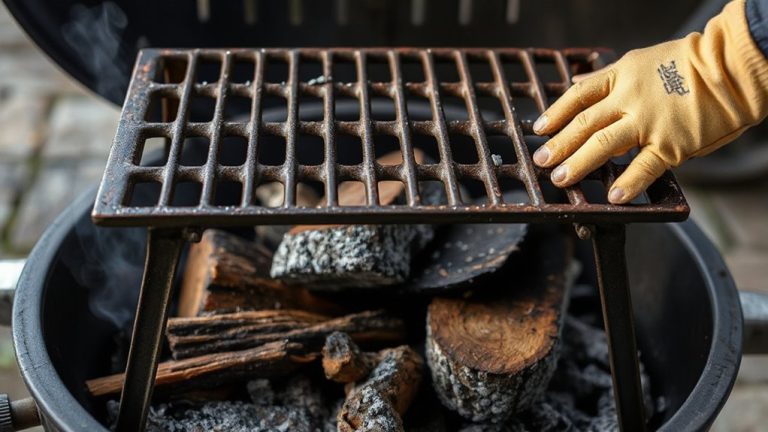
You’ll want to protect yourself properly before lighting up your smoker, because even a well-setup vertical charcoal water smoker can deliver burns, splashes, or heat fatigue if you’re not equipped. Wearing heat resistant gloves is essential-they shield your hands when adjusting dampers, adding charcoal, or handling hot racks. Look for gloves rated for at least 500°F to guarantee lasting protection and dexterity. A durable apron made from heavy cotton or treated canvas adds another critical layer, guarding your torso from sparks, grease spatters, and accidental contact with hot surfaces. These items aren’t just accessories; they’re functional gear that enhances safety during extended cooks. In real-world use, pitmasters who skip proper attire often report discomfort or minor injuries, especially during high-heat smoking sessions. Investing in quality heat resistant gloves and a durable apron reflects a serious, safety-first approach to outdoor cooking. For optimal hand protection, consider best cooking gloves for safety that combine high heat resistance with comfort and grip.
Inspect Your Water Smoker Before Use
A thorough pre-use inspection of your vertical charcoal water smoker isn’t just routine-it’s the foundation of safe, consistent performance. You should always begin by evaluating the structural integrity of the smoker’s body, legs, and shelves-if anything wobbles or bends, it’s not safe. Check weld points and seams carefully; cracks or warping can compromise stability and heat retention. Pay close attention to rust detection, especially near the water pan and base, where moisture lingers. Surface rust can be cleaned, but deep pitting means metal fatigue and potential failure. Don’t ignore rust on the cooking grates or firebox either-it affects heat distribution and food safety. Damaged insulation or loose door seals reduce efficiency and temperature control. You’re better off repairing or replacing compromised parts than risking a malfunction mid-smoke. Consistent inspections extend your smoker’s life and guarantee every cook starts safely and predictably.
Light Charcoal Safely Without Accelerants
Now that you’ve confirmed your water smoker is in solid working condition, the next step-getting the fire started-demands equal attention to safety and technique. Never use gasoline, lighter fluid, or other accelerants; they pose serious risks and can taint your food. Instead, rely on proven charcoal ignition methods like chimney starters or electric heating elements. A chimney starter safely concentrates heat, igniting coals evenly in 15–20 minutes with minimal effort. It’s among the most effective fire prevention tips you can follow-removing the need for flammable liquids entirely. Wax fire starters or paraffin cubes are also acceptable when used sparingly. Position the chimney in the smoker’s lower chamber to promote natural airflow. This method guarantees steady ignition without flare-ups or toxic fumes. By choosing safe, controlled techniques, you protect both your cooking process and your surroundings, making each session more predictable, efficient, and secure. For reliable performance, consider one of the best charcoal chimneys recommended for even heating and durable construction.
Monitor Temperature and Smoke During Use
Consistently monitoring temperature and smoke while using a vertical charcoal water smoker guarantees both food safety and cooking precision. You need steady heat-ideally between 225°F and 250°F-for even cooking, so check your smoker’s built-in thermometer regularly and confirm with a reliable digital probe. Smoke density matters too; thin, blue smoke enhances flavor, while thick, white smoke can make food bitter. Adjust airflow control via the dampers to maintain clean combustion-open slightly to increase oxygen flow if the fire lags, or close to reduce intensity and conserve fuel. Good airflow control prevents temperature spikes and keeps smoke density ideal. Watching these elements means you’re not just passively waiting-you’re actively managing the cooking environment. That kind of attention delivers better results and keeps your session safe, predictable, and efficient every time. For accurate readings, consider using one of the best digital thermometers recommended for precision and durability.
Dispose of Ash and Charcoal Safely
Even though your cooking session has ended, how you handle the leftover ash and charcoal greatly affects both safety and equipment longevity. Proper ash containment isn’t just about cleanliness-it’s a critical part of fire prevention. Never toss hot coals into a trash can or leave them exposed. Let them cool completely in the smoker or a metal container designed for embers. Always use a dedicated ash tool and avoid plastic bins, which can melt or ignite.
| Practice | Benefit |
|---|---|
| Cool ash 48 hours before disposal | Guarantees no hidden embers remain |
| Use metal containers with lids | Enhances ash containment and reduces fire risk |
| Store away from combustibles | Supports effective fire prevention |
Responsible disposal protects your space and improves future cooks.
On a final note
You’ve taken smart steps by positioning your smoker safely, wearing proper gear, and inspecting it before firing up. Lighting charcoal without accelerants reduces flare-ups, while monitoring temperature guarantees consistent, safe cooking. Proper ash disposal prevents lingering hazards. These protocols aren’t just rules-they’re proven practices that protect you and improve results. Good safety enhances performance, letting you focus on flavor, not risks.