Rotating Racks of Ribs Between Zones to Develop Even Bark Without Burning
You rotate ribs between heat zones to even out cooking and build a consistent bark without burning. Hot spots cause some areas to char too fast while others stay pale, messing up texture and flavor. By shifting racks every 1.5 to 2 hours, you balance smoke exposure and drying time. This keeps the crust firm, flavorful, and free from gumminess. Proper rotation timing and technique make all the difference-and there’s more to mastering it than just swapping positions.
Notable Insights
- Rotate ribs every 1.5 to 2 hours to ensure even heat exposure and consistent bark formation.
- Map smoker temperature zones beforehand to strategically move ribs from hot to moderate areas.
- Use a two-zone setup with indirect heat to prevent scorching during rotation.
- Avoid rotating too early to allow the spice rub to adhere and begin bark development.
- Swap racks front-to-back and top-to-bottom every 45–60 minutes for uniform smoke and crust balance.
Why Uneven Heat Ruins Rib Bark
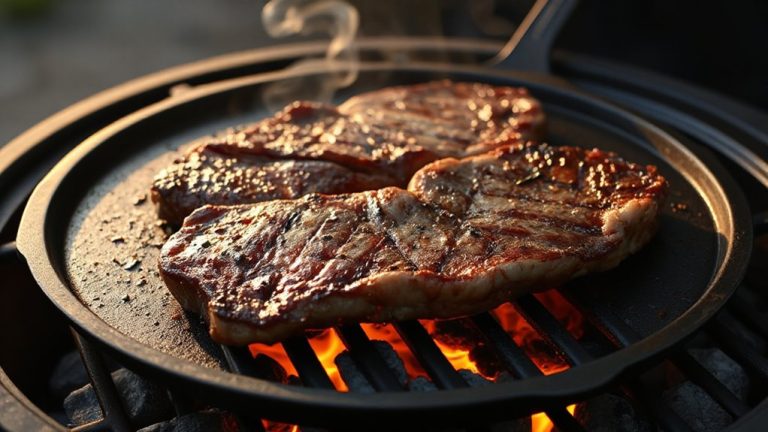
Ever wonder why your rib bark sometimes turns out patchy or overly charred on one side? It’s likely due to uneven heat exposure, especially when one portion of the rack faces direct flame while another sits in a cooler zone. Direct flame accelerates surface charring prematurely, often before the collagen and fat have rendered fully, leaving you with a brittle, bitter exterior and underdeveloped flavor. Meanwhile, areas farther from the heat lag in bark formation, resulting in inconsistency. Uneven heating also speeds up moisture loss in hotter spots, drying out the meat before the rest catches up. This imbalance undermines the Maillard reaction and spice rub adherence-both essential for a rich, uniform bark. Rotating ribs between zones helps counteract these disparities, promoting even drying and crust development without sacrificing tenderness or risking burnt edges. Proper airflow and heat management are key to avoiding this common pitfall.
How Hot Spots Cause Patchy Bark
When your smoker develops hot spots-localized areas particularly hotter than the surrounding cooking environment-you’re almost guaranteed to end up with patchy bark, no matter how perfect your rub or setup seems at first glance. These uneven temperatures often stem from poor smoker placement, like setting up too close to a wall or in direct wind, which disrupts heat distribution. An airflow obstruction-whether from built-up grease, blocked vents, or improperly arranged wood chunks-further exaggerates the problem by restricting smoke and oxygen flow. You’ll notice some rib sections darken too quickly while others barely form a crust. That inconsistency isn’t just cosmetic; it affects texture and flavor development. Reliable bark formation depends on steady, moderate heat and unimpeded circulation. Without addressing these root causes, even careful monitoring won’t save your racks from uneven results. Fixing airflow and repositioning the smoker are simple but critical steps. Choosing the right charcoal grill smokers can significantly reduce hot spots and improve heat retention and airflow.
How Zone Rotation Creates Even Bark
Since heat distribution in most smokers isn’t perfectly uniform, rotating your racks of ribs through different zones during the cook helps balance exposure and promotes consistent bark development. You’ll notice better smoke balance when ribs spend time both directly in the smoke’s path and slightly off-center, where airflow is steadier. This movement prevents one side from over-absorbing smoke while letting flavors build evenly. Without rotation, bark often forms unevenly-too thin in spots, bitter or thick in others-due to inconsistent heat and smoke contact. But by shifting racks from hot to moderate zones halfway through, you enhance flavor consistency across every surface. It’s not just about avoiding hot spots; it’s about optimizing how smoke and heat interact over time. Experienced pitmasters rely on this method because it produces more predictable, high-quality results, especially in offset or drum smokers where airflow varies most. Rotation is a simple, effective upgrade to your process. For beginners, choosing the right equipment like a well-designed best beginner offset smoker can make mastering zone rotation significantly easier.
Timing Your Rib Rotations for Flavor
You already know that moving racks between zones promotes even bark, but when you make those shifts matters just as much as the act itself. Early rotation, around the two-hour mark, helps lock in flavor while allowing the marinade consistency to stabilize and coat evenly. If you wait too long, the crust sets too fast, trapping moisture unevenly and dulling the spice blending. Rotate too soon, and the spices haven’t had time to meld with the meat’s surface. For ideal taste development, aim for consistent intervals-every 1.5 to 2 hours-depending on smoker temperature and rib thickness. This rhythm balances bark formation with flavor infusion, letting each seasoning layer react properly to heat and smoke. Proper timing doesn’t just prevent burning-it deepens complexity, ensuring the spice blending penetrates while the marinade consistency supports a rich, even crust without gumminess or patchiness. Optimal results start with selecting the best cuts, such as Best Cuts of Meat for Smoking, which respond well to rotational smoking techniques.
Step-by-Step: Rotating Racks in Any Smoker
How do you guarantee every rack develops that crisp, flavorful bark regardless of your smoker’s hot spots? Start by mapping your smoker’s temperature variance-most have uneven heat distribution. Position ribs bone-side down initially, placing them where heat is moderate, not extreme. Rotate racks every 45–60 minutes, swapping front to back and top to bottom to balance exposure. This adjustment ensures consistent rib placement across zones, promoting even drying and bark formation. Maintaining good smoke flow is essential; avoid overcrowding, as blocked airflow leads to patchy smoke rings and weak flavor adhesion. Use a two-zone setup when possible-indirect heat with mild convection-so ribs cook steadily without scorching. Rotate deliberately, not haphazardly, so each rack gets equal time in ideal conditions. Proper rotation isn’t just movement-it’s strategic repositioning aligned with your smoker’s unique heat and smoke behavior.
How to Avoid Burned or Pale Ribs
Consistent rotation keeps bark on track, but timing and heat management make the difference between a deep mahogany crust and ribs that are either scorched or stubbornly pale. You’ve got to watch your direct heat-too close, and the sugars in the rub burn fast, leaving bitter spots. Keep the rack farther from intense flames, using indirect zones to slow-cook evenly. Moisture retention is just as critical; tight foil wraps or water pans help maintain humidity, preventing dry, dull bark. If the surface dries too soon, you’ll get pale patches with no color. Aim for 225–250°F and rotate every 45 minutes to balance exposure. Thin racks heat faster, so adjust timing accordingly. Trust your eyes more than the clock-look for uniform color and a tacky, not wet or burnt, surface. Proper airflow and steady temps make all the difference.
Mistakes That Ruin Rib Bark When Rotating
Why do some racks end up with patchy, flaking bark no matter how often they’re turned? You might be rotating correctly, but overseasoning consequences can sabotage your crust. Too much rub absorbs moisture, creating a sludge that steams instead of searing, preventing bark formation. When you overapply salt and sugar, the sugars burn fast during rotation, leaving bitter spots and weak adhesion. Resting errors also play a role-slicing too soon or skipping the rest collapses internal structure, drawing moisture to the surface and softening your hard-earned bark. You need that 10–15 minute foil rest to stabilize juices. Also, flip racks gently; aggressive handling breaks fragile bark. Use tongs at the bone edge, not the meat side. Rotate only once halfway through cooking-constant turning disrupts drying. For a uniform crust, balance seasoning with airflow, then trust the process. Overthinking often does more harm than good.
On a final note
You’ve seen how hot spots sabotage bark, and why rotating racks between zones makes a real difference. It’s not just about avoiding burns-it’s about consistent texture and flavor development. Timing matters, and so does smoker layout. When done right, rotation delivers deep mahogany bark without sacrificing tenderness. Skip it, and you risk pale or charred sections. Master this technique, and your ribs will perform better on the plate, every time.