Achieving Restaurant-Quality Sear Marks With Ultra-Dense Argentine Asado Charcoal
You’ll get deeper, more consistent sear marks with ultra-dense Argentine asado charcoal because it burns hotter-often exceeding 1,000°F-and sustains intense radiant heat longer than standard lump or briquettes. Its high density guarantees even heat transfer, essential for a crisp crust via Maillard reaction. Pat your steak dry, use a tight two-zone setup, and avoid flare-ups by trimming fat. You’re already on track to mastering high-heat grilling secrets.
Notable Insights
- Use ultra-dense Argentine asado charcoal for consistent, high heat exceeding 1,000°F to rapidly sear meat.
- Pat steaks dry before grilling to eliminate surface moisture and promote deep, restaurant-quality sear marks.
- Stack charcoal two to three layers deep on one grill zone for intense radiant heat and even heat distribution.
- Maintain controlled airflow with partially open vents to sustain high temperatures without excessive flare-ups.
- Trim excess fat and avoid pressing meat to prevent flare-ups while ensuring clean, flavorful searing.
Why Argentine Asado Charcoal Gives Better Sear Marks
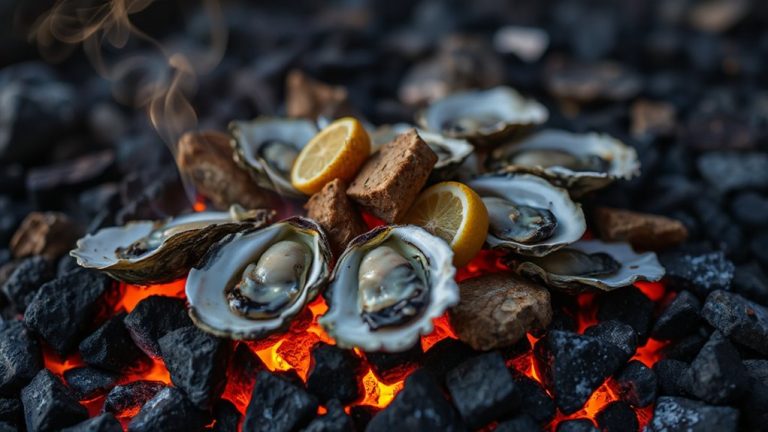
While you might think any charcoal can deliver a good sear, Argentine asado charcoal stands out due to its high density and consistent heat output, which are critical for achieving those crisp, restaurant-quality marks. You’ll notice right away that the charcoal density allows for tighter stacking, reducing airflow gaps and promoting even radiant heat. This isn’t just about burning hot-it’s about stability. The superior heat retention means once the coals reach peak temperature, they stay there, giving you a reliable searing surface for minutes, not seconds. Unlike cheaper charcoals that flicker in temperature, Argentine asado charcoal sustains the intense, even layer of heat needed to caramelize meat quickly without overcooking the interior. You get deeper grill marks, better crust development, and more consistent results, especially with thick cuts like ribeyes or churrasco. It’s not magic-it’s design. For those seeking optimal performance, choosing high-quality charcoal pellets can further enhance heat consistency and flavor.
How Argentine Charcoal Burns Hotter and Longer
Because it’s made from dense hardwoods like quebracho or eucalyptus and burned under controlled conditions with minimal oxygen, Argentine asado charcoal burns markedly hotter-often reaching 1,000°F or more-than standard lump or briquette charcoals, and you’ll see that difference the moment you lay meat on the grates. The high charcoal density means each piece packs more energy, allowing it to sustain intense heat without rapid breakdown. That density also contributes to a longer burn duration, so you won’t need to reload often, even during extended cooks. You’ll get steady, even temperatures that are ideal for searing steaks or roasting large cuts. Unlike lighter charcoals that flare or fade quickly, Argentine asado offers predictable performance. You can trust its consistency, whether you’re grilling for thirty minutes or several hours. These traits make it a top choice for serious outdoor cooks who want control, efficiency, and restaurant-grade results every time. For those seeking similar performance with traditional craftsmanship, consider exploring best Japanese charcoal picks as an alternative.
How to Set up a Two-Zone Fire With Asado Charcoal
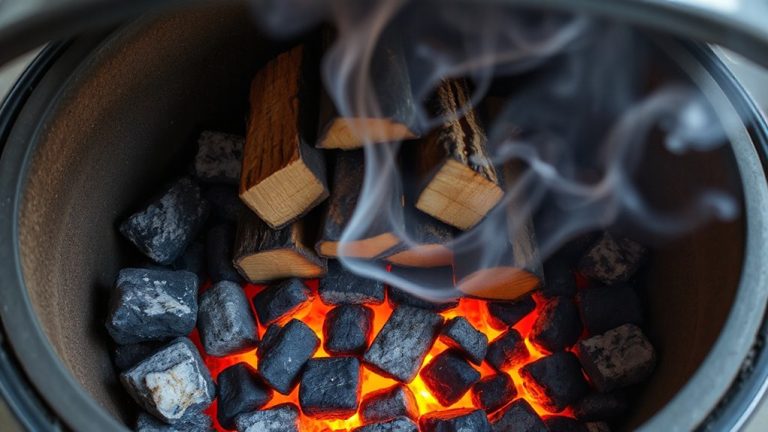
Start by dividing your grill into two distinct heat zones-one loaded with glowing asado charcoal and the other left bare-for precise control over searing and gentle cooking. Your charcoal arrangement is essential: pile the ultra-dense Argentine coals two to three layers deep on one side, ensuring intense radiant heat for grill marks, while the cool side allows for indirect finishing. This split setup leverages the coals’ extended burn time without needing constant adjustment. Maintain steady airflow control by partially opening the bottom vents-enough to feed the fire oxygen but not so much that it escalates beyond 500°F. You’ll find this balance prevents flare-ups while sustaining searing temperatures. Effective airflow control also reduces smoke bitterness, yielding cleaner flavor. Unlike looser charcoal arrangements with inconsistent density, asado charcoal holds its zone efficiently, making it ideal for layered cooking strategies that demand reliability, precision, and performance over long grilling sessions. For optimal results, choose high-fat best steak cuts that thrive under intense heat and benefit from precise temperature control.
The Real Key to Grill Marks: Surface Heat, Not Meat Type
If you’ve ever blamed a lackluster sear on the cut of meat, it’s time to shift your focus-surface heat is what truly makes or breaks those deep, caramelized grill marks, not whether you’re using ribeye or flank. The secret lies in driving off surface moisture fast and leveraging high thermal conductivity from your grates. Wet meat steams instead of searing, so pat it dry before grilling. Once it hits the grill, the intense heat of Argentine asado charcoal delivers consistent radiant energy, essential for that restaurant-grade crust.
| Factor | Why It Matters |
|---|---|
| Surface moisture | Prevents sticking and enables browning |
| Thermal conductivity | Guarantees even, rapid heat transfer |
| Surface heat | Directly creates defined sear marks |
How to Sear Steak Perfectly at Home
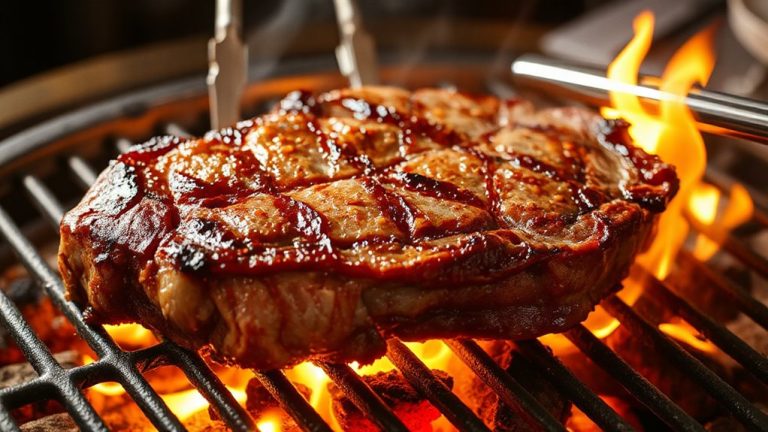
A sizzling crust, rich with deep mahogany sear marks, begins long before the steak hits the grill-it starts with proper prep and the right heat source. You’ll want ultra-dense Argentine asado charcoal; its sustained, radiant heat outperforms standard briquettes, delivering even searing without hot spots. Pat your steak dry-surface moisture fights browning-and skip wet marinades that steam rather than sear; go for oil-based rubs or dry marinades that enhance crust formation. Marinade selection shapes flavor but shouldn’t compromise texture. Preheat your grill until flames subside and coals glow white-hot. Sear each side 2–4 minutes, flipping only once. Afterward, use the resting technique: tent loosely with foil for 5–10 minutes. This preserves juices, ensuring every bite is as flavorful as it is perfectly textured.
How to Prevent Flare-Ups on High Heat
You’ve got your Argentine asado charcoal burning clean and steady, but one greasy flare-up can ruin a perfectly seared crust and leave your steak tasting like campfire. Flare-ups happen when dripping fat ignites, so grease management is critical. Position your steak over the coals with enough clearance-most Argentine grills allow height adjustment, giving you control. Trim excess fat, especially on thicker cuts, and use a drip tray if available. Airflow control also plays a role; restrict too much oxygen and you risk smoky, uneven combustion. Keep vents moderately open to maintain clean, high heat without encouraging sudden flames. Avoid pressing down on the meat-forcing juices out increases flare risk. With proper setup, Argentine charcoal’s dense, consistent burn gives you the stability needed. Master grease and airflow, and you’ll protect that restaurant-quality sear every time.
How Argentine Heat Transforms Any Steak’s Flavor
That controlled, steady heat you’ve worked to maintain isn’t just about avoiding flare-ups-it’s the foundation for deep flavor development. Argentine asado charcoal delivers exceptional heat retention, maintaining high temperatures without constant adjustment. This consistency allows Maillard reactions to occur fully, revealing rich flavor enhancement impossible with uneven fuel sources. Unlike quick-burning briquettes, ultra-dense Argentine coals radiate heat evenly across the cooking surface, ensuring each steak sears uniformly and develops complex, smoky depth.
| Factor | Benefit |
|---|---|
| High heat retention | Stable cooking temps for even searing |
| Clean burn | No chemical aftertaste, pure wood flavor |
| Long burn time | Less fuel added mid-cook, better control |
| Dense composition | Superior flavor enhancement vs. standard charcoal |
You’re not just grilling-you’re transforming meat at a molecular level.
On a final note
You’ll get restaurant-quality sear marks because Argentine asado charcoal burns hotter-often exceeding 700°F-and retains heat longer than standard briquettes. Its ultra-dense, pure hardwood composition minimizes flare-ups while maximizing radiant heat, essential for caramelizing meat’s surface fast. Paired with a proper two-zone setup, it gives precise control, transforming even modest cuts into deeply flavored, evenly seared results that mimic professional grills.