Pellet Stove E1/E2 Error Codes: Ignition Failure Fixes
If your pellet stove shows an ignition error code, check the hot rod first-it should glow red when powered. A weak or absent glow means it’s worn or corroded. Clear any pellet jams in the auger or ash buildup in the burn pot. Test the vacuum switch by blowing through the pressure hose; a click means it’s working. Reset the stove after a full cooldown. Faulty wiring or voltage drops can also trigger errors. Common codes like E1 or E2 narrow down whether it’s a temp, airflow, or igniter issue-knowing them sharpens troubleshooting for faster, smarter fixes.
Notable Insights
- Check for E1 error codes indicating no temperature rise, often caused by ignition or fuel delivery issues.
- Investigate E2 errors pointing to hot rod or airflow problems, such as a faulty igniter or blocked vent.
- Inspect the igniter for proper glow; lack of heat suggests damage or resistance failure needing replacement.
- Clean fuel pathways like the auger and burn pot to resolve blockages that prevent ignition and trigger error codes.
- Test the vacuum switch and pressure hose for cracks or disconnections, as malfunctions can halt ignition and set errors.
Check the Igniter for Ignition Failure
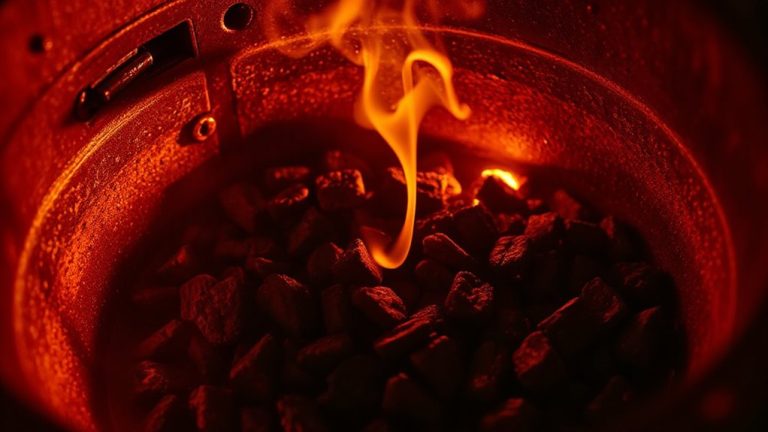
When your pellet grill won’t fire up, the igniter is often the first suspect-and for good reason. You rely on consistent heat output to sear or smoke, and a faulty igniter disrupts that from the start. Most models use a hot rod igniter that glows red when powered, lighting the pellets in the firepot. If it’s not glowing, check for visible damage or corrosion. Even if it looks fine, inadequate igniter resistance can prevent proper heating. Too high or too low resistance means the rod won’t reach the necessary temperature. Use a multimeter to test resistance-compare your reading to the manufacturer’s specs. A deviation usually means replacement. Over time, repeated heating cycles degrade performance, reducing reliability. Igniters aren’t meant to last forever, especially with frequent use. Replacing a worn rod restores dependable ignition, ensuring your cook starts smoothly.
Clear Fuel Blockages Preventing Startup
A working igniter won’t do much good if the pellets can’t reach the firepot, and that’s where fuel blockages often sabotage your startup. You might not realize it, but even minor fuel buildup in the auger or hopper can restrict pellet flow, especially with damp or low-quality pellets. Over time, this increases the risk of incomplete feeding and failed ignition. Ash accumulation also plays a role-when it clogs the burn pot or traps debris in the chute, it further disrupts proper fuel delivery. While some models handle residue better than others, routine cleaning is non-negotiable for reliable performance. You should inspect the auger, clean the feed system, and remove ash after every few burns. Doing so prevents restrictions, guarantees consistent startups, and extends your unit’s lifespan. Ignoring these steps leads to more than failed ignition-it creates avoidable wear.
Test the Vacuum Switch and Pressure Hose
Why isn’t your pellet grill igniting, even with a clear fuel path and fresh pellets? The issue might lie in the vacuum switch or pressure hose. These components monitor vacuum integrity during startup, guaranteeing proper airflow before allowing ignition. If the vacuum switch fails or the pressure hose is cracked, disconnected, or misaligned, the control board won’t proceed with the lighting sequence. Start by inspecting the hose for kinks or disconnections-proper hose alignment is essential for accurate pressure readings. Gently remove the hose and check for blockages or brittleness, replacing it if worn. Test the vacuum switch by blowing into the hose; you should hear a distinct click. No click means the switch isn’t engaging. Maintaining these parts guarantees reliable startups and prevents false error codes, keeping your grill ready for consistent, stress-free outdoor cooking sessions.
Reset the Stove After Ignition Failure
If the vacuum switch and pressure hose check out but your pellet grill still won’t light, it’s time to contemplate a simple yet often overlooked fix-reseting the stove. Most models require a complete stove cooldown before any diagnostic or corrective action works properly. Once the unit’s fully cooled, power it down at the outlet, wait five minutes, then restart. This process initiates a manual reset, clearing temporary error states in the control board that may mimic hardware failure. While it might seem too basic to help, a proper reset often restores normal ignition sequences without further intervention. In real-world use, many users skip the cooldown phase, undermining the reset’s effectiveness. For reliable performance, always let the stove cooldown completely-this isn’t just caution, it’s part of the system’s design logic. A correct manual reset pairs well with earlier diagnostics, making it a vital step before assuming component failure.
Decode Common Ignition Error Codes
What if that blinking display on your pellet grill is actually trying to tell you something useful? Those codes aren’t random-they reveal specific ignition failure points. When the ignition sequence doesn’t complete, your controller logs error patterns to help diagnose the problem. For instance, a short E1 usually means the unit didn’t detect a temperature rise within the expected time, pointing to ignition sequence failure. Repeated E2 codes often reflect inconsistent fire rod performance or poor airflow. Recognizing these error patterns saves time and reduces guesswork. While some brands use proprietary codes, most share common indicators around failed startups. You’re better off consulting your manual, but familiarizing yourself with typical signals builds confidence in troubleshooting. These diagnostics reflect smart design-turning frustration into feedback. By paying attention, you’re not just fixing a grill; you’re optimizing a system built for precision outdoor cooking.
Fix Faulty Wiring or Power Issues
How often do you consider the integrity of your pellet grill’s electrical system when startup fails? Faulty wiring or power issues are often overlooked but can directly cause ignition failure. Loose connections at the auger motor, igniter, or control board disrupt current flow, preventing proper startup. You should inspect all wiring harnesses regularly-especially after seasonal storage-since vibrations and temperature shifts can loosen terminals. A sudden power surge, even a minor one, may damage sensitive circuitry or degrade connectors over time, leading to intermittent faults. Using a surge protector isn’t just smart; it’s essential for longevity. While pellet grills are built for outdoor use, their electronic components aren’t immune to electrical stress. Ensuring tight, corrosion-free connections and stable power input greatly improves reliability. Ignoring these factors risks repeated failures, even after error codes clear.
When to Call a Technician for Ignition Problems
Ever wonder why some ignition problems just won’t resolve no matter how carefully you troubleshoot? Sometimes, the issue isn’t just a loose wire or poor fuel quality-it’s something deeper. If you’ve checked the auger, cleaned the burn pot, and verified power supply but still get error codes, it’s time to contemplate professional help. DIY fixes work in many cases, but technician experience makes a real difference when internal components like the ignition control board fail. Below are signs you should call a pro:
| Symptom | Likely Cause |
|---|---|
| Repeated failed ignitions | Faulty igniter or wiring harness |
| Error codes persist | Control board malfunction |
| Strange burning odor | Poor fuel quality or clinker build-up |
| No response after reset | Power supply or fuse issue |
| Visible damage to igniter | Needs replacement by a specialist |
Don’t risk further damage-get expert help.
On a final note
You’ve now addressed common causes of ignition failure in pellet models, from checking the igniter to decoding error codes. Proper maintenance and timely troubleshooting prevent most startup issues. While many problems are DIY-friendly, persistent faults demand a technician’s expertise. Mastering these steps guarantees reliable performance. Pellet stoves offer efficient, consistent heat when well-maintained, making them a practical choice for eco-conscious homeowners seeking dependable outdoor cooking or heating solutions.