The Complete Guide to Using Coconut Shell Charcoal for Low-and-Slow BBQ
You’ll find coconut shell charcoal burns hotter and longer than regular briquettes, giving you steady heat ideal for low-and-slow BBQ. It lights cleanly without chemical fillers and produces minimal ash, enhancing flavor and airflow control. Use a chimney starter and avoid lighter fluid to maintain purity. Pair it with a kamado or offset smoker for best results. With proper vent management, you’ll hold 225–250°F effortlessly-there’s more to mastering this efficient fuel.
Notable Insights
- Coconut shell charcoal burns hotter and longer than regular charcoal, ideal for maintaining steady low-and-slow cooking temperatures.
- Use a chimney starter to light coconut shell charcoal, avoiding lighter fluid to preserve clean flavor and consistent ignition.
- Opt for offset, Kamado, or drum smokers that handle high heat and offer precise airflow control for best results.
- Manage temperature between 225°F and 250°F by adjusting vents gradually, leveraging the charcoal’s slow response to airflow changes.
- Practice sustainability by using this renewable, low-emission fuel, and maintain performance with regular ash removal and airflow monitoring.
Why Coconut Shell Charcoal Beats Regular Charcoal
While traditional charcoal has long been a go-to for backyard grillers, if you’ve ever dealt with inconsistent heat or lingering ash cleanup, you’ll appreciate how coconut shell charcoal outperforms the standard briquettes. You get far better heat consistency, burning hotter and longer with fewer fluctuations-ideal for maintaining steady temps during long cooks. Unlike conventional briquettes, which often contain fillers, coconut charcoal is nearly pure carbon, so it lights efficiently and produces minimal ash. That means less mess and more control. You’ll also notice a cleaner flavor profile: subtle, slightly sweet, and free of the chemical aftertaste common in synthetic blends. It doesn’t overpower your food, letting the natural ingredients shine. Since it burns cleaner, you’re not fighting soot or off-notes in your smoke. If you’re serious about flavor profile precision and reliable heat consistency, switching to coconut shell charcoal isn’t just an upgrade-it’s a practical, performance-driven choice.
How to Light Coconut Charcoal for Low-and-Slow BBQ
Because low-and-slow BBQ demands stable, indirect heat over several hours, how you light your coconut shell charcoal makes a real difference in temperature control and overall cooking performance. Proper charcoal ignition guarantees even burn and long-term heat stability. Coconut shell charcoal lights slower than regular briquettes, so using a chimney starter is your best bet. Avoid lighter fluid-it affects flavor and makes airflow control tricky. Once lit, spread the coals for indirect heat and adjust vents gradually. Patience with ignition pays off in smoother temperature management. For best results, pair your charcoal with the right type of smoking wood to enhance flavor complexity-consider choosing from top-rated best smoking wood options based on your meat and desired smoke profile.
Best Grills and Smokers for Coconut Shell Charcoal
If you’re switching to coconut shell charcoal, you’ll want a grill or smoker that handles its unique burn characteristics well-namely high heat output, long burn times, and lower smoke volume. Offset smokers and kamado-style grills excel here, thanks to their thick walls and precise airflow control. These designs retain intense heat efficiently, letting you stretch those long burns without constant refueling. Drum smokers also work well, offering consistent temperatures and ample space for smoker accessories like water pans and diffusers. Look for models with durable construction and easy access for grill maintenance, since ash buildup can be denser with coconut charcoal. Avoid cheap, thin-walled units-they can’t stabilize heat effectively. While pellet smokers are popular, they’re not ideal unless modified. Stick with rigs built for real wood or charcoal. A well-chosen unit paired with proper smoker accessories guarantees you get the most out of coconut shell’s clean, steady burn. For top-performing options, check out the best smokers for exceptional BBQ flavor.
Maintain Steady Temperatures With Coconut Shell Charcoal
Getting steady temperatures with coconut shell charcoal comes down to understanding its burn profile and leveraging the right airflow setup. You’ll notice this fuel burns hotter and longer than traditional charcoal, making temperature control more predictable once mastered. Because coconut shell charcoal produces less ash and maintains consistent heat, you can focus on fine-tuning airflow management instead of constant adjustments. Use your grill’s vents strategically-limiting oxygen slows combustion, while opening them boosts heat. With a tight lid and proper vent settings, you’ll hold a steady 225°F to 250°F ideal for low-and-slow cooking. Unlike softer charcoals, coconut shell briquettes respond gradually to airflow changes, giving you more stable performance. This delayed reaction isn’t a flaw-it’s a feature that rewards patience. Effective temperature control hinges on this balance, letting you maintain ideal smoking conditions for hours with minimal intervention.
Best Meats to Smoke With Coconut Charcoal
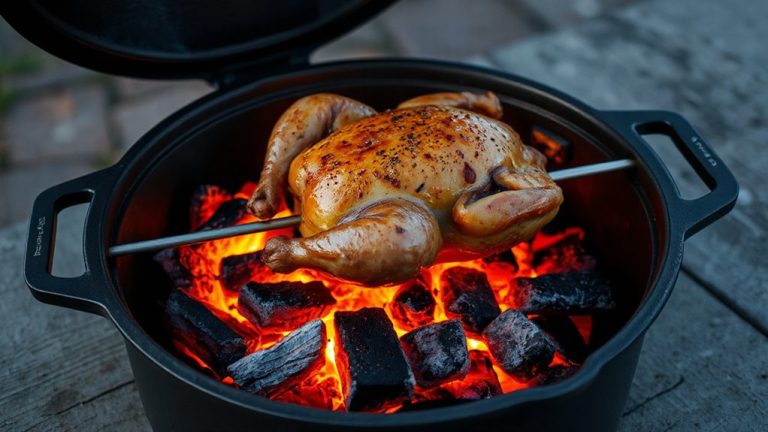
Smoky flavor and consistent heat define the advantage of using coconut shell charcoal, especially when you’re working with meats that benefit from long, even cooking. Smoking brisket shines with this fuel-its steady burn allows collagen to break down evenly, yielding tender, melt-in-your-mouth results without scorching. The subtle, natural smoke enhances the meat’s richness without overpowering it. Grilling ribs also benefits from the clean, long-lasting heat; whether baby back or spare, they cook uniformly, developing a beautiful bark while absorbing just enough aroma. Unlike wood chips, coconut charcoal doesn’t flare up aggressively, giving you control during the essential final hours. Pork shoulder and whole chickens respond well too, thanks to the even temperature profile. While not ideal for quick searing, coconut shell charcoal excels when time, flavor depth, and consistency matter most-hallmarks of true low-and-slow BBQ. The best cuts for smoking include those with rich marbling and connective tissue, such as best cuts of meat, which render down beautifully over low heat.
Mistakes to Avoid With Coconut Shell Charcoal
You’ve likely discovered how well coconut shell charcoal enhances slow-cooked meats like brisket and ribs, delivering steady heat and a clean, nuanced smoke. But even this efficient fuel demands attention to detail. One common mistake is poor ash management-letting ash build up restricts airflow and creates hot or cold spots. Since coconut charcoal burns longer and hotter than wood-based briquettes, you’ll generate less ash, but what accumulates still needs periodic removal, especially in offset or kamado grills. Another critical error is neglecting airflow control. Unlike quick-light coals, coconut shells need steady oxygen to maintain consistent temperatures. Closing vents too much can stall combustion, causing temperature drops that prolong cook times. Open them too wide, and you risk overheating. For best results, use dampers to fine-tune oxygen intake and monitor internal temps closely. Proper airflow control guarantees even burns, while smart ash management keeps your fire running efficiently throughout the cook.
Why Coconut Shell Charcoal Is the Sustainable BBQ Choice
While traditional charcoal often relies on deforested hardwoods, coconut shell charcoal stands out as a sustainable alternative because it’s made from a renewable agricultural byproduct-discarded coconut husks that would otherwise go to waste. You’re choosing an eco friendly alternative that reduces landfill use and lowers demand for timber. Because coconuts are harvested regularly across tropical regions, their shells offer a consistent, renewable resource. The production process captures methane and other volatiles, making it a more efficient, cleaner burn. Many producers now treat it as a carbon neutral option, since the carbon released was recently absorbed by the palm tree, not ancient carbon like fossil fuels. You’ll get longer burn times and higher heat with less environmental cost. It produces less smoke and fewer harmful emissions, making your backyard cookouts cleaner and more responsible. For the environmentally conscious griller, this isn’t just fuel-it’s a sustainable upgrade.
On a final note
You’ve seen how coconut shell charcoal delivers steady heat, clean smoke, and long burn times, making it ideal for low-and-slow BBQ. It lights reliably, sustains temperature with less maintenance, and imparts a subtle, sweet smokiness perfect for brisket, pork shoulder, and ribs. Though pricier than standard charcoal, its efficiency and eco-friendly sourcing justify the cost. With proper setup and attention to airflow, you’ll maximize flavor and control, proving coconut charcoal isn’t just sustainable-it’s a performance upgrade for serious outdoor cooks.