Troubleshooting Uneven Heating When Using Mixed-Hardwood Charcoal
You’ll face uneven heating with mixed-hardwood charcoal because variable densities and moisture levels cause unpredictable burns. Use a two-zone fire to manage hot and cold spots effectively. Pick a reputable, consistent blend to minimize erratic temperatures. Light with the snake method for steady, even ignition. Position coals to balance your grill’s hot zones, adjust vents for proper airflow, and rotate food regularly-each step sharpens control and improves results. There’s a smarter way to master consistency.
Notable Insights
- Inconsistent wood density in mixed-hardwood charcoal causes uneven burn rates, leading to hot and cold spots during grilling.
- Use a two-zone fire setup to manage temperature, with coals on one side and a cool zone for safe food relocation.
- Select high-quality, uniformly blended charcoal to minimize fluctuations in heat output and improve burn consistency.
- Employ the snake method for lighting, which ensures gradual, even ignition and sustained heat over long cooks.
- Adjust coal placement and grill vents to compensate for natural hot spots, airflow imbalances, and uneven heat distribution.
Understand Why Mixed-Hardwood Charcoal Heats Unevenly
Most batches of mixed-hardwood charcoal don’t burn as evenly as lump or briquettes, and that’s usually because of inconsistencies in wood density and moisture content. You’ll notice flames flare or die down unexpectedly, thanks to variable charcoal density-some pieces are harder and burn slower, while softer chunks ignite faster and fade. That inconsistency makes temperature control tricky. Moisture content also plays a big role; if the charcoal absorbed humidity during storage, it’ll ignite poorly and create uneven heat. Even high-quality mixed hardwoods can suffer from poor batch sorting, leading to unpredictable performance. You’re better off checking the charcoal before lighting-look for uniform color, dryness, and minimal dust. Realistically, mixed hardwood demands more attention than briquettes. But if you account for its flaws, you can still get decent results. Just understand: uneven heating starts long before the fire-it’s built into the fuel. For beginners struggling with heat management, an electric smoker can offer more consistent results through precise temperature control with Best Beginner Electric Smokers.
Control Uneven Heating With a Two-Zone Fire
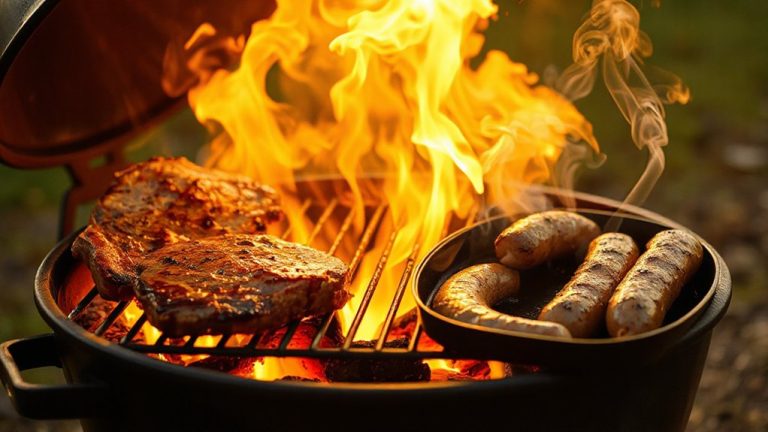
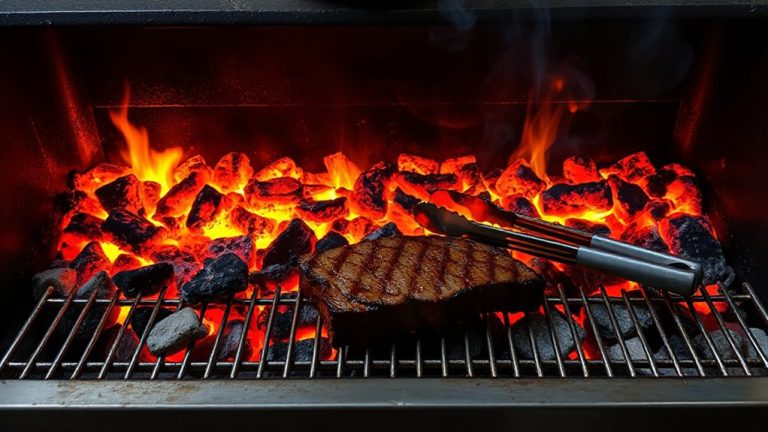
When you’re dealing with mixed-hardwood charcoal’s unpredictable burn, setting up a two-zone fire gives you much better control over cooking conditions. You pile coals on one side, leaving the other empty, creating distinct high-heat and low-heat areas. This method improves fire management by letting you move food between zones to manage doneness and avoid burning. Heat calibration becomes easier since you’re not relying on uniform coal distribution. Instead, you adjust placement based on real-time temperature shifts and food response. You’ll find flare-ups easier to handle-just shift steaks or veggies to the cooler side. It’s a flexible system, well suited to mixed charcoals that burn inconsistently. While it demands attention, the payoff in control and consistency is clear. For anyone serious about outdoor cooking, a two-zone setup isn’t just helpful-it’s essential for reliable results.
Choose a Consistent Mixed-Hardwood Charcoal Blend
A small number of blended mixed-hardwood charcoals deliver the steady performance you need for reliable grilling, and selecting one that maintains consistency across batches is key to mastering uneven heating. You’ll notice fewer temperature spikes and cold spots when you stick with a brand that prioritizes charcoal consistency. Random mixes often burn unpredictably due to varying wood densities and moisture levels, but a well-engineered blend guarantees uniform ignition and sustained heat. Look for products that advertise blend uniformity-this means each bag delivers the same mix of hickory, oak, maple, or other hardwoods without erratic ratios. Poor uniformity leads to frustrating hot zones and weak combustion. Trusted brands invest in quality-controlled sourcing and processing, which translates to smoother burns and better control. When you depend on even heat, especially during long cooks, consistent blend composition isn’t just convenient-it’s essential for predictable results. Choose wisely, and your grill will respond accordingly. For best results, consider trying one of the top picks for smoking charcoal known for reliable hardwood blends and consistent burn performance.
Light Coals Evenly: Snake or Pyramid Method
Though both the snake and pyramid methods aim to ignite coals evenly, they differ markedly in design and heat distribution, so choosing the right one depends on your cooking style and equipment. The snake method arranges coals in a circular or U-shaped trail with one end lit, delivering gradual, sustained ignition consistency over several hours-ideal for long smokes. Its flame distribution is indirect, minimizing hot spots. The pyramid (or mound) method stacks coals high and lights the center, creating rapid, intense heat with strong upward flame distribution, best for searing or shorter cooks. While the pyramid offers faster ignition consistency, it can burn out sooner and create uneven heat if not monitored. For mixed-hardwood charcoal, the snake method often proves more reliable, maintaining steady temps and reducing the risk of thermal imbalances. A well-chosen smoker, such as a best beginner offset smoker, can enhance heat control when using these techniques.
Place Charcoal to Match Hot Zones
Heat management begins the moment you position your coals, and matching their placement to your cooker’s hot zones makes or doesn’t make the difference between even searing and frustrating flare-ups. Your charcoal arrangement should mirror the natural temperature variances in your grill-most models run hotter on one side due to design or airflow. By adjusting fire placement, you compensate for these inconsistencies, creating targeted high-heat zones for searing and cooler areas for indirect cooking. Cluster more coals under cold spots, thin them out where heat builds easily. A strategic layout guarantees consistent results, especially with mixed-hardwood charcoal, which burns unevenly if left unmanaged. Proper fire placement also reduces the need for constant lid flipping or food shifting. Think of your charcoal arrangement as a heat map-not random fuel, but intentional energy distribution. Done right, it transforms unpredictable grilling into repeatable, controlled cooking.
Balance Air Vents for Even Heat
Getting just the right airflow can make or break your cook, especially when using mixed-hardwood charcoal that demands steady oxygen flow to burn cleanly. You need precise airflow management to maintain consistent temperatures across the grill. If your vents are too open, heat spikes can scorch food; too closed, and the fire starves, creating dead zones. Proper vent calibration guarantees balanced draft, letting air enter the bottom and exit the top in a controlled flow. Most grills come with adjustable dampers, but they often need fine-tuning. Start by opening both vents halfway, then tweak based on temperature readings and smoke behavior. You’ll find that even small adjustments can dramatically improve heat distribution. Effective airflow management isn’t just about temperature-it’s about stability. With accurate vent calibration, you create conditions where mixed hardwoods burn efficiently, minimizing hot spots and guaranteeing even cooking from edge to center.
Rotate Food to Counteract Heat Variance
Why does one corner of your grill sear faster than the other, even when the coals look evenly spread? Hot spots happen due to airflow inconsistencies and variations in charcoal density, creating uneven heat exposure across the cooking surface. That’s where food rotation comes in. By rotating your steaks, veggies, or chicken every few minutes, you balance their heat exposure and promote even cooking. Think of it like rotating tires-regular shifts prevent uneven wear. Consistent food rotation helps mitigate unpredictable temperature zones common with mixed-hardwood charcoal, which burns hotter in places depending on wood type and arrangement. You don’t just wait and hope; you actively manage the cooking process. It’s not a fix-all, but paired with proper vent control, it’s a practical step. Skilled grillers use rotation not out of guesswork, but as a deliberate move to counteract variance and achieve reliable results.
On a final note
You’ve learned that mixed-hardwood charcoal often burns unevenly due to variable wood densities and moisture levels. By setting up a two-zone fire, using consistent blends, and lighting coals properly-either in a snake or pyramid-you gain better control. Positioning charcoal to match hot zones, adjusting air vents, and rotating food help maintain even cooking. These steps, grounded in airflow dynamics and fuel management, markedly improve grilling performance, making your outdoor cooking more predictable and effective without relying on guesswork or costly equipment upgrades.