Creating a Three-Zone Heat Map on a Large Charcoal Grill for Complex Cooks
You set up a three-zone heat map by stacking coals heavily on one side for searing, spreading fewer across the center for moderate heat, and leaving one side empty for indirect cooking. This layout gives you precise control over doneness and smoke exposure, especially vital for large grills handling multiple proteins. Adjust airflow with vents to stabilize temperatures, and use quality briquettes for even, long-lasting heat. You’ll get better results when you match each cut to the right zone and move it strategically-keep going to refine your technique further.
Notable Insights
- Arrange coals in a heavy pile on one side for a searing hot zone, light spread in the center for medium heat, and leave one area empty for indirect cooking.
- Use quality briquettes or hardwood lump charcoal to ensure consistent, controllable heat across all three zones.
- Preheat the grill for 20–30 minutes with vents adjusted to stabilize temperatures before placing food on the grates.
- Sear meats over the hot zone, then move to medium or indirect zones to finish cooking and avoid flare-ups.
- Rotate delicate items regularly and use tongs to preserve juices, leveraging each zone for precise doneness and smoke flavor.
What Is a Three-Zone Heat Map and Why You Need It?
Think of your charcoal grill as a cooking landscape-divided not just by fire, but by function. A three-zone heat map separates your grill into hot, medium, and indirect zones, giving you precise heat control for different foods and stages of cooking. You’re not just grilling-you’re managing flavor development through strategic placement. The high-heat zone sears steaks quickly, locking in juices. The medium zone allows thicker cuts to cook through without charring. The indirect zone lets ribs or chicken finish slowly, absorbing smoke without burning. This setup mimics an oven with options, offering flexibility no single-temperature grill can match. It’s essential for complex cooks who want consistent results. You’ll reduce flare-ups, minimize guesswork, and elevate control. For serious outdoor cooking, a three-zone map isn’t optional-it’s fundamental. A well-designed charcoal grill smoker ensures even heat distribution across all three zones, enhancing your ability to master this technique.
How to Lay Coals for Hot, Medium, and Indirect Zones
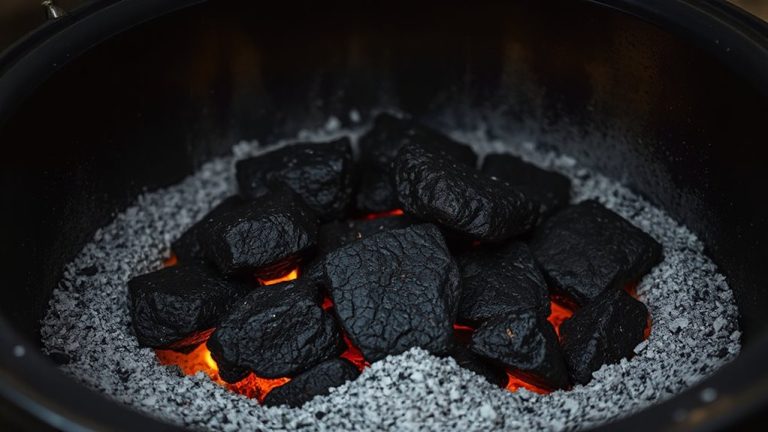
To build a three-zone heat map on your charcoal grill, start by banking the bulk of the lit coals on one side of the grill to create the hot zone-this is where you’ll get a strong sear on steaks or burgers. For the medium zone, scatter a thin layer of coals opposite the hot side. Leave the third section empty for the indirect zone, ideal for slow cooking. Proper coal placement guarantees temperature separation, while airflow control via the vents stabilizes heat. Adjusting the bottom and top vents helps manage oxygen flow, preventing flare-ups and hotspots. Choosing the right charcoal grill model can significantly enhance heat distribution and overall cooking performance.
| Zone | Coal Density | Use Case |
|---|---|---|
| Hot | Heavy pile | Searing meats |
| Medium | Light spread | Indirect grilling |
| Indirect | None | Slow-roasting, smoking |
| Airflow | Vents | Temperature control |
Pick the Best Charcoal for Balanced Zones
Charcoal quality shapes the backbone of your heat zones, and your choice directly impacts temperature stability and cook consistency. You’ll want to pick charcoal types that offer high burn efficiency, ensuring even heat distribution across hot, medium, and indirect zones. Lump charcoal lights quickly and gives intense heat, ideal for searing, but it can burn fast and unevenly. Briquettes, though slower to ignite, deliver steady, predictable heat-perfect for maintaining balanced zones over long cooks. Their uniform composition enhances burn efficiency, reducing the need for constant adjustment. While some pitmasters swear by natural lump for its raw heat, most find briquettes or hardwood blend briquettes offer superior control. Avoid cheap brands with fillers, as they compromise both burn efficiency and flavor. Your grill’s performance hinges on this choice, so invest in quality charcoal that supports consistent, zone-ready conditions from the start. For reliable performance, consider top-rated charcoal brands that are specifically engineered for smoking and long-duration grilling.
Preheat and Fine-Tune Your Three-Zone Grill
Now that you’ve selected a quality charcoal-whether lump for its quick, intense burn or briquettes for their steady output-the next step is turning that potential into precision. Begin by establishing your charcoal arrangement: pile coals high on one side for high heat, medium on the center, and leave the opposite side bare for a cool zone. This layout creates a reliable gradient. Light the coals and wait-patience pays. You’ll need 20–30 minutes for temperatures to stabilize. During this time, adjust the grill’s vents for airflow control; open wider for higher heat, close partially to reduce intensity. Use your hand 5 inches above the grates to test heat zones-count how long you can hold it there. Fine-tune airflow as needed until each zone holds steady. A well-tuned three-zone setup responds quickly to airflow changes and maintains consistent temps, giving you real cooking control.
Match Cook Times to Proteins by Zone
When you’re working with a fully heated three-zone charcoal grill, the real advantage becomes clear: you can match each protein’s ideal cook time and method to a specific heat zone, maximizing control and results. Place thick steaks over the hot direct heat zone for precise sear timing-just 2–3 minutes per side-to develop crust without overcooking. Then, move them to the indirect zone to finish gently, where residual heat and protein carryover add depth without risk of charring. Chicken thighs and pork shoulders thrive entirely in the indirect zone, where longer cooks at moderate temps guarantee tenderness. Delicate fish or shrimp need only brief exposure to direct heat, if any, to avoid drying. Using zones this way doesn’t just prevent burning-it synchronizes timing across multiple items, so everything rests and serves together. Proper zone use means you’re not just grilling; you’re orchestrating.
Fix Uneven Heat and Other Zone Problems
While even experienced grillers can run into hot spots or sluggish zones, recognizing these issues early keeps your three-zone setup performing like it should. Uneven heat often stems from inconsistent coal moisture-wet charcoal burns cooler and less predictably, creating cold zones that throw off cooking times. Always store your fuel in a dry place and let newly lit coals fully ash over before arranging them. Ash buildup is another common culprit; it restricts airflow, starving the fire and dampening heat in zones where oxygen flow is already marginal. Use a grill grate brush and ash tool to clear debris between cooks. Rotating coals mid-session helps maintain balance, especially in the two-high zone where fire concentration weakens over time. You’ll notice more stable temperatures and fewer surprises when maintenance stays ahead of problems. A clean, dry system just works better.
How to Rotate Meats Across Zones Without Overcooking
Because heat distribution varies considerably across a three-zone charcoal setup, moving meats at the right time and in the right way keeps them cooking evenly without risking overdone results. You should start steaks or chops over the hot zone for searing, then shift them to the warm zone to finish. This avoids burnt exteriors and undercooked centers. Larger cuts, like briskets or whole chickens, benefit from indirect heat after initial browning, allowing controlled internal temperature rise. Rotate items every 10–15 minutes if they’re smaller, ensuring even exposure without hot spots. Don’t skip meat resting-it lets juices redistribute, enhancing texture and perceived doneness. During rotation, avoid piercing meat; use tongs to limit juice loss and preserve moisture. Flavor carryover happens when accumulated smoky char transfers between zones, deepening complexity. Monitor carryover carefully, especially with delicate proteins. Smart rotation balances heat control with flavor development, turning temperature zones into strategic tools.
On a final note
You’ve set up your three-zone heat map, and it works-hot searing, moderate cooking, and indirect roasting all on one grill. This layout gives you control, mimicking an oven and stovetop combined. With the right charcoal and careful coal placement, temperature stability improves markedly. Rotating proteins across zones prevents overcooking while ensuring even doneness. Once mastered, this method becomes essential for complex BBQ, offering flexibility and precision that elevate your outdoor cooking results consistently.