How to Reuse Partially Burned Charcoal Safely Without Compromising Food Safety
You can reuse partially burned charcoal safely if it’s firm, black, and free of grease or moisture. After grilling, smother the coals by closing the lid and vents-never use water-then let them cool completely. Sift out crumbling or ashy pieces, keeping only dense chunks. Store them in a
dry, airtight container to prevent contamination. When reused, they ignite quickly and burn steadily, especially when mixed with fresh charcoal. Just make certain old coals are clean to protect flavor and safety-there’s more to get right with storage and performance.
Notable Insights
- Reuse only firm, black charcoal chunks with minimal ash and no grease or food residue.
- Ensure partially burned charcoal is fully extinguished and cooled for at least 48 hours before handling.
- Never reuse damp, cracked, or crumbling briquettes due to poor combustion and contamination risks.
- Store cooled, reusable charcoal in a dry, airtight container to prevent moisture and bacterial growth.
- Mix old and new charcoal during ignition to save fuel, ensuring even heating and no flavor transfer.
Can You Reuse Partially Burned Charcoal?
Why would you toss out charcoal that’s only been lit once? You shouldn’t-not if you care about saving money and maximizing resources. Partially burned charcoal can be reused, provided it retains structural integrity and hasn’t turned to ash. Charcoal quality plays a key role here; high-density briquettes or natural lump coal typically hold up well after one use. These pieces still contain usable carbon, meaning their ignition efficiency remains strong when reignited. In fact, mixing leftover coals with fresh ones often jumpstarts heating, reducing startup time and fuel consumption. You’ll notice less smoke and more consistent temperature control compared to starting cold. Just make sure the old pieces are free of grease buildup or contaminants. With proper storage and handling, recycling partially burned charcoal is both practical and efficient for your next cookout.
When It’s Safe to Reuse Leftover Charcoal
You can save time and stretch your fuel supply by reusing leftover charcoal, but knowing when it’s safe to do so makes all the difference in performance and safety. Reusing charcoal is practical only if the pieces maintain structural strength and haven’t absorbed moisture. Charcoal exposed to rain or humidity loses integrity and burns inefficiently. Inspect each piece closely-firm, black chunks with minimal ash coating are ideal. Avoid crumbling or damp briquettes, as they hinder ignition and heat consistency. Finding best charcoal deals can help you save money when restocking your supply.
| Condition | Reusable? |
|---|---|
| High charcoal integrity, dry | Yes |
| Cracked or degraded pieces | No |
| Evidence of moisture exposure | No |
Only charcoal that’s fully extinguished, stored properly, and retains density should be considered. Reusing such coals maintains reliable burn times and temperature control, essential for consistent outdoor cooking results.
How to Extinguish and Cool Used Charcoal Safely
Once the flames have died down and cooking is complete, properly extinguishing your charcoal guarantees both safety and the possibility of reuse. You’ll want to use effective charcoal smothering techniques-close the grill’s lid and shut all vents to cut off oxygen, letting the coals die naturally. Never douse them with water; that produces dangerous steam and can damage your grill. After smothering, allow ample cooling duration safety: wait at least 48 hours before handling. This guarantees the coals are completely cool and safe to store. Rushing this step risks accidental burns or reignition. Proper technique not only protects you but preserves usable coals for future grilling. Thoughtful extinguishing supports both performance and practicality in outdoor cooking, making your BBQ sessions safer and more efficient over time. Patience here pays off in reliability, safety, and fuel economy.
Pick the Best Reusable Charcoal After Grilling
A grill master’s success often hinges on attention to detail, and that includes selecting the right coals for reuse after cooking. You’ll want to sift through the used batch and keep only the chunks that retained their structure-intact, dense pieces with minimal ash coating. These likely burned cleanly and still have good charcoal quality. Avoid crumbling or powdery briquettes, as they’ve already sacrificed most of their fuel. High-quality lump charcoal typically offers better burn efficiency and is more suitable for reuse than lower-grade options. Look for coals that glow evenly when reignited-this signals consistent combustion and reliable heat output. Reusing wisely not only saves money but also maintains performance across grilling sessions. Prioritize pieces that haven’t fully degraded; they’ll light faster and hold temperature longer, ensuring your next cook starts strong.
Store Used Charcoal Dry and Secure
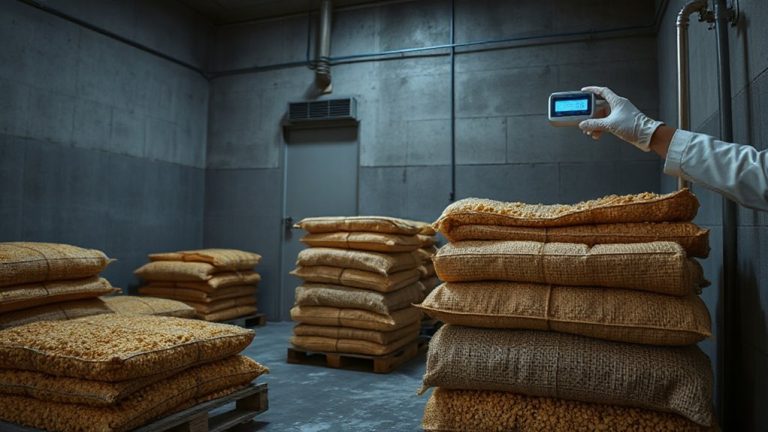
Several factors determine whether partially burned charcoal remains viable for future grilling, and proper storage ranks among the most critical. For effective charcoal storage, you need a dry, airtight container made of metal or heavy-duty plastic to guarantee moisture prevention. Even slight dampness can weaken charcoal’s flammability and reduce burn efficiency. Always cool the coals completely before storing-trapped heat can create pressure or ignite fumes. Keep the container in a sheltered area like a garage or shed, away from rain and humidity. Moisture prevention isn’t just about dryness; it’s about consistency. Damp charcoal often crumbles or smolders weakly, compromising heat control. You’ll notice poor ignition and uneven temperatures when moisture sneaks in. Secure storage also prevents pests and accidental spills. A well-stored batch retains its porous structure, guaranteeing reliable performance. Smart charcoal storage means you’re not just saving money-you’re maintaining a dependable heat source for serious outdoor cooking. Using a charcoal chimney can help maximize burn efficiency and minimize leftover partially burned coals.
Mix Old and New Charcoal to Reuse Effectively
Every third or fourth grilling session, you’re likely left with usable charcoal that never fully burned-coals that still retain heat-bearing potential if handled right. Instead of discarding them, you can extend their life through charcoal blending, which combines old coals with fresh ones. This method improves ignition efficiency since the existing embers help light the new batch faster, reducing lighter fluid use and startup time. For best results, place the partially burned pieces at the base of your charcoal chimney and layer fresh briquettes on top. This setup supports steady heat transfer and more consistent burn. You’ll notice quicker ignition and better temperature control, especially during shorter cooks. Charcoal blending isn’t just economical-it’s practical for routine grilling. Just make certain old coals are free of ash buildup, which can hinder airflow. With proper layering and proportion, you maintain performance without sacrificing reliability.
Prevent Food Contamination From Reused Charcoal
That lingering ash on reused charcoal isn’t just unsightly-it’s a real risk for food contamination if not handled properly. Charcoal ash contamination can introduce harmful particles and residues onto your food, especially if the coals were used previously with chemically treated starters or processed meats. You should always inspect and sift old coals, removing fine ash and debris before reuse. Stored improperly, used charcoal also poses a bacteria growth risk, particularly in damp environments where moisture encourages microbial development. Always keep reclaimed charcoal in a dry, sealed container and avoid prolonged outdoor storage. Prior to lighting, make sure the mix burns hot and clean-this helps sterilize the surface and reduces health hazards. When managed right, reusing charcoal is both economical and safe, but skipping these steps compromises hygiene and overall grilling performance.
On a final note
You can reuse partially burned charcoal safely if handled correctly. Always fully extinguish and cool the coals before storage. Pick out uncontaminated pieces free of ash or food residue. Store them in a dry, airtight container to preserve quality. Mixing old coals with fresh charcoal boosts efficiency and maintains steady heat. Proper reuse reduces waste without risking food safety, as long as hygiene and storage standards are followed consistently.