Gravity-Fed vs Offset Smokers: 18-24 Hr Burn & Heat Test
You get steady heat and set-it-and-forget-it convenience with a gravity-fed smoker, thanks to its sealed charcoal chamber and consistent airflow. Offset models demand hands-on control, adjusting dampers and fuel often for custom smoke and temp swings. Gravity smokers burn charcoal longer and more efficiently, while offsets offer flavor customization. You’ll save effort with gravity, but gain artistry with offset. There’s more to weigh based on your style and goals.
Notable Insights
- Gravity-fed smokers use vertical fuel chambers for automatic charcoal feeding; offset models require manual refueling from a horizontal firebox.
- Gravity smokers maintain even heat distribution with minimal hot spots; offset smokers often have uneven temperatures due to radiant heat proximity.
- Gravity models offer set-and-forget operation with stable airflow; offset smokers demand constant damper and fuel adjustments.
- Gravity-fed units burn charcoal longer-18–24 hours per load-thanks to sealed chambers and efficient combustion.
- Gravity smokers deliver consistent smoke flavor; offset smokers allow customizable smoke profiles through hands-on tuning.
How Gravity vs. Offset Smokers Work
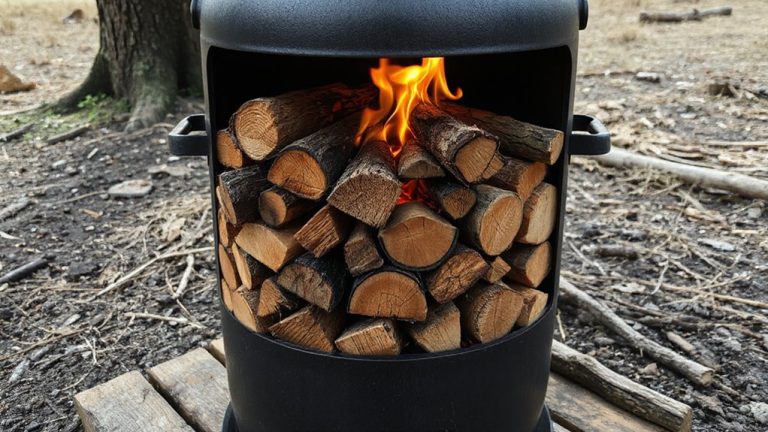
While both gravity-fed and offset smokers aim to deliver flavorful, slow-cooked barbecue, they take very different approaches to heat and smoke management. You’ll find the gravity-fed model uses a vertical charcoal chamber where fuel feeds automatically into the firebox, ensuring consistent airflow dynamics with minimal intervention. This design promotes even heat distribution across the cooking grates, making temperature maintenance easier over long sessions. In contrast, the offset smoker relies on a horizontal firebox attached to the side, requiring you to manually manage airflow dynamics through dampers. Its heat distribution tends to vary, often creating hot spots near the firebox and cooler zones farther away. Though both styles produce excellent results, the gravity-fed system simplifies control through smart engineering, while the offset demands more attention. Each demands understanding, but your preference may depend on how much hands-on involvement you want. A reliable way to maintain smoke quality during long cooks is by pairing your smoker with a high-performance cooler for brisket.
Heat Control: Steady Temps vs. Manual Tuning
What if you could maintain a steady 225°F for 12 hours without touching your smoker’s controls? With gravity-fed smokers, that’s exactly what happens. Their design leverages natural thermal dynamics and precise airflow regulation to deliver consistent heat. Unlike offset models, which demand constant adjustments, gravity smokers use a chute to feed charcoal gradually, stabilizing temperature with minimal input. You still need to understand airflow, but once set, it stays put.
| Feature | Gravity-Fed Smoker | Offset Smoker |
|---|---|---|
| Temp Stability | High (passive control) | Low (manual tuning) |
| Airflow Regulation | Simplified, bottom intake | Complex, multiple dampers |
| Thermal Dynamics | Consistent, convection-based | Variable, radiant-heavy |
Manual tuning has its place, but steady temps reduce guesswork and improve results. For beginners, choosing the right best beginner offset smoker can make mastering manual tuning significantly easier.
Ease of Use: Set-and-Forget vs. Hands-On Management
How much time do you really want to spend tending your smoker during a long cook? With a gravity-fed charcoal smoker, you’ll enjoy true set-and-forget operation. Once lit, its design guarantees steady temperature stability and consistent airflow consistency, minimizing the need for adjustments. You can walk away for hours without worrying about spikes or drops. Traditional offset smokers demand hands-on management-fiddling with dampers, adding fuel, and constantly monitoring the thermometer. While some pitmasters enjoy this active role, it’s not practical for everyone. If you value convenience without sacrificing smoke quality, the gravity-fed model’s ease of use wins. You still get rich flavor and even cooking, just with far less effort. For weekend cooks or busy schedules, that balance of reliability and simplicity makes a big difference. Temperature stability and airflow consistency aren’t just buzzwords here-they’re built-in advantages. For those transitioning from more automated options, even a beginner-friendly electric smoker can help illustrate the value of consistent, low-maintenance smoking.
Fuel Efficiency: Who Burns Longer?
A single load of charcoal can last appreciably longer in a gravity-fed smoker-often 18 to 24 hours-thanks to its sealed fuel chamber and precise airflow control, which together promote slow, steady combustion with minimal waste. You’ll notice far better fuel efficiency here, with low charcoal consumption over long cooks because the system only feeds fuel as needed. Traditional offsets demand more frequent top-offs, often every 4–6 hours, thanks to uneven airflow and higher oxygen intake. That uncontrolled burn rate spikes fuel use, especially when managing temperature fluc
Smoke Flavor: Consistent or Customizable?
You can count on a gravity-fed smoker to deliver a steady stream of clean, consistent smoke over long cooks, thanks to its regulated airflow and controlled fuel feed system that minimizes flare-ups and sudden temperature swings. This design gives you predictable smoke density and stable flavor intensity, ideal when you want hands-off reliability. Since the fuel drops automatically and airflow stays even, the smoke rarely turns harsh or thin-what you get is balanced and smooth. Traditional offset smokers, in contrast, offer more room to tweak smoke density by adjusting dampers or adding wood chunks. That hands-on control lets you customize flavor intensity, building bold, punchy notes or subtle hints as desired. While gravity-fed models excel in consistency, offset pits reward skill and attention with more nuanced smoke profiles. If flavor variability matters to you, offsets give you the creative edge. If stability wins, gravity-fed is your go-to.
Best Use Cases: Who Should Choose Which?
While both gravity-fed and offset smokers deliver excellent results, your choice should align with how you cook and what you value most in the process. If you prioritize hands-off convenience and consistent temperature control, a gravity-fed smoker suits you best. These units have higher build complexity but reduce maintenance frequency, making them ideal for long cooks with minimal attention. Their automated fuel feed means fewer lid openings and stable smoke output. On the other hand, if you enjoy actively managing fire dynamics and customizing flavor by adjusting airflow and fuel placement, choose an offset. It demands more skill and frequent monitoring, with lower build complexity allowing for easier repairs and customization. Serious pitmasters who love fine-tuning every variable will appreciate the hands-on control an offset offers.
On a final note
You’ll find gravity-fed smokers deliver steady temps with minimal tweaking, ideal for long cooks where consistency matters. Offset models offer hands-on control, rewarding skill with richer smoke flavor. Gravity units burn fuel more efficiently and simplify management, while offsets demand attention but provide customization. Choose gravity for ease and efficiency, offset if you prefer active involvement and traditional flair in your barbecue process.