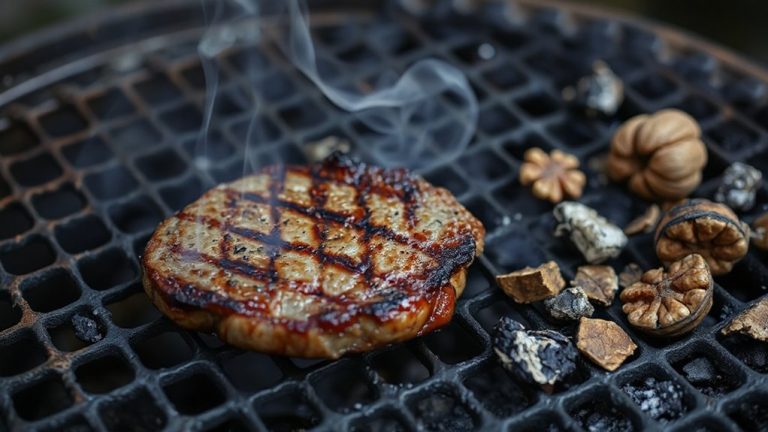
How to Grill Eggplant Slices for Vegetarian Sandwiches Outdoors
Choose firm, medium globe eggplants with glossy skin, then slice them 1/2-inch thick for even grilling. Brush both sides with high-smoke-point oil to prevent sticking and season with salt, smoked paprika, or garlic powder for enhanced flavor. Grill over medium-high heat 4–5 minutes per side until tender with distinct char marks. Avoid crowding the grates to guarantee proper caramelization. Reheat on the grill or in the oven to preserve texture-never microwave. There’s more to mastering the perfect sandwich build.
Notable Insights
- Choose firm, medium globe eggplants with smooth, glossy skin for best grilling results.
- Slice eggplants crosswise into 1/2-inch-thick rounds for even cooking and structural integrity.
- Brush slices with high-smoke-point oil and season with salt, smoked paprika, or garlic powder.
- Grill over medium-high heat 4–5 minutes per side until tender with distinct char marks.
- Reheat grilled slices on the grill or in the oven to preserve texture for sandwiches.
Choose the Best Eggplant for Grilling
When it comes to grilling, the foundation of a great vegetarian sandwich starts with picking the right egg 7plant-one that holds up under high heat and delivers rich flavor without turning to mush. You’ll want firm, medium-sized globe eggplants with smooth, glossy skin-these are less likely to be bitter and hold their structure better. If you’re using organic produce, rinse it well before grilling to remove any residues while preserving its natural taste. Look for ones with tight, creamy flesh; avoid those with soft spots or dimpled skin. A quality eggplant absorbs smoke beautifully, enhancing depth when seared over direct flame. With the right grilling tools-like a sturdy brush for oiling and a wide spatula-you’ll maintain control during flipping. Preheat your grill to medium-high and clean the grates thoroughly to prevent sticking. Choosing wisely guarantees flavorful, intact slices every time.
Slice Evenly for Fast, Uniform Cooking
Two or three evenly sliced rounds per eggplant guarantee everything cooks at the same pace, so grab a sharp chef’s knife and cut crosswise into 1/2-inch-thick slices. This consistent cut thickness guarantees heat penetrates each piece uniformly, preventing some slices from charring while others stay undercooked. Uneven cuts lead to uneven cooking time, which defeats the goal of efficient grilling. Thinner pieces might dry out or fall apart on the grill, while overly thick ones take too long and absorb excess oil. A 1/2-inch slice strikes the ideal balance-firm enough to hold their shape, tender when done. You’ll notice they sear cleanly and soften evenly, especially over medium-hot coals. Maintaining uniformity isn’t just about appearance; it directly impacts texture and doneness. Precision here simplifies monitoring, letting you flip and check with confidence. That consistency means better results every time, especially when building layered sandwiches later.
Oil and Season to Prevent Sticking
A light coat of oil isn’t just a suggestion-it’s essential for keeping eggplant slices from sticking to the grill grates, especially since their porous texture acts like a sponge when exposed to high heat. Without proper oiling, you’ll lose those beautiful grill marks and end up fighting with stuck-on pieces. But oil does more than prevent sticking-it aids in flavor enhancement, helping spices adhere and promoting even charring. For best results, use a high-smoke-point oil like canola or avocado, and brush both sides lightly before seasoning. Salt draws out moisture and improves texture, while a pinch of smoked paprika or garlic powder deepens taste without overpowering. Choosing the right oil matters, and high-smoke-point oils ensure your grilling process is both efficient and flavorful.
Grill for Smoky Char and Tender Flesh
You’ve prepped the eggplant with a careful hand-oiled each slice evenly, seasoned with salt and a touch of spice-so now it’s time to put that work to the test on the grill. Place the slices over medium-high heat, ensuring direct contact with the grates. This delivers distinct char marks, a visual cue of proper sear and heat control. Those marks aren’t just aesthetic; they lock in moisture while building a rich smoky flavor through controlled caramelization. Don’t crowd the slices-spreading them out promotes even cooking and prevents steam buildup, which undermines texture. You’ll want to flip them once, after about 4–5 minutes, when the underside releases cleanly. Grill another 3–4 minutes until tender but still firm enough to hold shape in a sandwich. The result? A balance of smoky flavor and silky flesh-ideal for layering with fresh veggies and spreads.
Reheat Without Sogginess or Burn
While reheating grilled eggplant might seem straightforward, doing it right means preserving the delicate balance between smoky char and tender texture without tipping into sogginess or burn. You want crisp texture, not mush-so skip the microwave. Dry heat is your best bet, especially if you’re near the grill. Reheating methods vary, but performance-wise, some clearly outshine others. Below is a quick comparison:
| Method | Heat Type | Result |
|---|---|---|
| Grill | Dry heat | Crisp texture, even warmth |
| Oven | Dry heat | Good texture, slower |
| Skillet | Direct heat | Risk of burn, uneven |
| Microwave | Moist heat | Soggy, loss of char |
Grill or oven maintains structure and flavor best. Skillet works in a pinch, but watch it closely. Microwave kills crisp texture-avoid it. For outdoor cooking, the grill reignites the original charm with minimal effort.
Build a Killer Veggie Sandwich
Since the foundation’s already set with well-grilled eggplant, it’s time to layer in the elements that turn a simple sandwich into something memorable. Start with robust marinade options-balsamic, garlic-herb, or lemon-tahini-since those flavors deepen the eggplant’s richness and carry through each bite. For sandwich assembly, choose a sturdy artisan roll that holds up to moisture without turning soggy. Spread a thin layer of hummus or roasted red pepper spread on both sides for creaminess and adhesion. Stack the eggplant high, then add crisp greens, thin cucumber slices, and perhaps a few pickled red onions for brightness. A sprinkle of feta or vegan cheese adds tang and texture. Keep proportions balanced-overstuffed isn’t better if ingredients slide out. The best outdoor builds prioritize structure and flavor synergy, letting grilled veg shine without overwhelming the palate.
On a final note
You’ve picked a firm, ripe eggplant, sliced it evenly, and oiled it well to prevent sticking. Grilling gave it that rich, smoky char while keeping the flesh tender. Reheating on the grill preserves texture better than a microwave. Built right-with sturdy bread, fresh veggies, and a bold spread-these sandwiches hold up beautifully. Outdoor grilling isn’t just practical; it enhances flavor through direct heat and smoke, making it ideal for plant-based meals that need depth.