Cleaning a Flat-Top Grill Used for Outdoor Breakfast Cooking: A Detailed Guide
Let your flat-top grill cool for 15 to 30 minutes after cooking-just enough so it’s warm, not scorching. This prevents warping and burns while making residue easier to remove. Use a sturdy metal scraper at a 30-degree angle to clear debris, then follow with a brass brush for stubborn bits. Avoid wire brushes; they shed bristles that can end up in your next breakfast. Clean while the surface is warm to stop grease from hardening overnight. For long-term performance, always season the steel with a high-smoke-point oil like avocado or canola after cleaning, heating it until it polymerizes into a protective layer. A well-maintained surface resists rust, prevents sticking, and guarantees your pancakes or eggs release cleanly every time. With the right tools and routine, cleaning becomes quick and effective. You’ll find the full routine pays off in flavor and durability.
Notable Insights
- Let the grill cool 15–30 minutes after cooking to prevent burns and warping while keeping residue easier to remove.
- Scrape the warm surface with a metal scraper at a 30-degree angle using firm, overlapping strokes for effective cleaning.
- Use a brass brush to scrub stubborn spots and avoid wire brushes that shed bristles into food.
- Apply a thin layer of high smoke point oil like avocado or canola to season the grill and prevent rust and sticking.
- Clean after every outdoor use to remove grease and moisture that accelerate corrosion and lead to food sticking over time.
Let the Grill Cool Before Cleaning
The safest and most effective way to begin cleaning your flat-top grill starts with letting it cool down after cooking. You need to balance grill safety and cleaning timing carefully-acting too soon risks burns or warping the metal, while waiting too long lets residue harden. Let the surface drop to warm, not hot, to the touch-about 15 to 30 minutes, depending on use. This temperature range preserves the grill’s integrity and makes later steps safer. Immediate scraping on a scorching surface can release harmful fumes and damage the seasoning layer. Waiting guarantees you’re not rushing against heat while still tackling residue before it fully sets. Proper cleaning timing reflects thoughtful outdoor cooking habits, emphasizing both performance and longevity. Grill safety isn’t just about flames-it’s about smart, measured responses after the meal ends, too.
Scrape and Scrub Grease and Food Residue
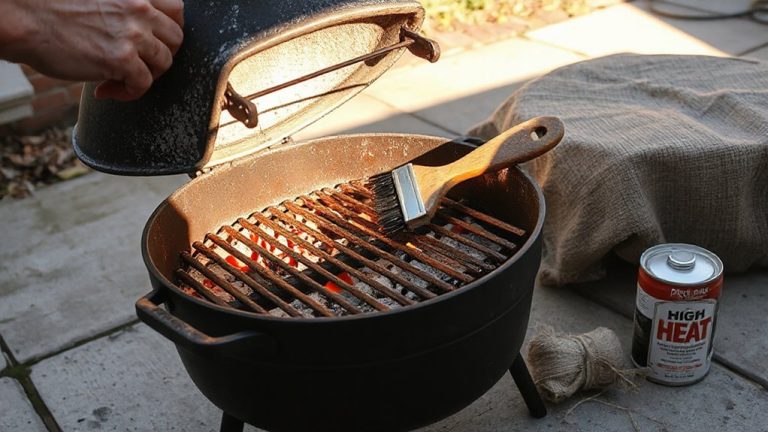
Once the grill’s cooled to a safe warmth, grab a high-quality metal scraper and start working the surface in firm, overlapping strokes-this is where proper technique makes all the difference. You’ll immediately notice how built-up grease and charred bits lift efficiently when scraped at a 30-degree angle. Proper tools matter: a warped or dull scraper won’t handle grease buildup as effectively, reducing residue removal efficiency. For stubborn spots, apply minimal water or a grill-safe degreaser and use a brass brush to scrub without damaging the surface. Don’t rush-methodical passes guarantee thorough cleaning without gouging the steel. This step is critical: lingering grease buildup compromises both flavor and hygiene, especially in outdoor cooking where temperature control can fluctuate. Effective residue removal isn’t just about cleanliness-it maintains heat distribution and extends the grill’s lifespan. Skip this, and you’re inviting uneven cooking and long-term corrosion, even if seasoning comes later. A reliable cleaning routine includes using the best grill brushes for safe and thorough maintenance.
Season the Grill to Prevent Rust and Sticking
Your flat-top’s freshly cleaned surface is primed for seasoning, a step that’s non-negotiable for long-term performance and cooking reliability. Proper oil application fills microscopic pores in the metal, creating a slick, non-stick surface that improves with each use. Heating the oil until it polymerizes bonds it to the steel, enhancing both heat retention and corrosion resistance. A well-seasoned grill responds more evenly to temperature shifts, essential for cooking delicate items like eggs or pancakes outdoors where conditions vary. Choosing the right outdoor griddles can significantly impact how well your cooking surface holds and distributes heat during seasoning.
| Oil Type | Smoke Point (°F) |
|---|---|
| Flaxseed | 225 |
| Canola | 400 |
| Vegetable | 450 |
| Grapeseed | 420 |
| Avocado | 520 |
High smoke point oils are ideal-they withstand the heat needed for effective seasoning without breaking down. Consistent seasoning builds a natural non-stick layer that boosts heat retention and guards against rust, especially in humid or rainy climates. It’s not just protection-it’s performance.
Top 5 Tools for Flat-Top Grill Cleaning
After you’ve wiped away debris and properly seasoned your flat-top to lock in protection and performance, attention shifts to the tools that make consistent cleaning fast and effective. A sturdy metal scraper is essential-its sharp edge cuts through residue quickly, reducing cleaning frequency over time. Grill brushes with brass or stainless-steel bristles work well, but avoid wire types that shed and contaminate food. A grill stone removes stubborn carbon buildup without scratching the surface. Use a spritz bottle for controlled water application during wipe-downs-too much moisture risks rust. Finally, high-quality grill accessories like heat-resistant gloves and custom cleaning blocks streamline upkeep. Together, these tools enhance efficiency and extend your grill’s lifespan. Choosing durable, purpose-built options guarantees each session stays safe, sanitary, and enjoyable, especially when cooking breakfast outdoors where grease accumulation accelerates. Invest wisely-they’re key to long-term performance. When selecting a grill brush, consider a wireless grill brush for safer, more convenient cleaning without loose bristles.
Stop Sticking and Rust: Why Clean After Every Use
Regularly cleaning your flat-top grill after each use isn’t just a good habit-it’s essential for preventing both rust and food from sticking. Leftover grease and food debris create a breeding ground for corrosion, especially in outdoor environments where moisture and temperature shifts accelerate deterioration. Without proper surface protection, the steel can oxidize quickly, compromising both performance and longevity. You’ll also notice food begins to stick more over time if residue builds up, making cooking and cleanup harder. Effective prevention methods include scraping the griddle clean while it’s still warm, using a quality grill brush, and applying a thin layer of oil afterward. This routine not only preserves the cooking surface but guarantees consistent heat distribution. Simple, regular maintenance beats intensive restoration later-protect your investment with smart, post-use care.
On a final note
You’ve cleaned and seasoned your flat-top grill, so now it’s ready for the next outdoor breakfast. Regular care prevents rust, reduces sticking, and extends the grill’s life. A well-maintained surface cooks more evenly and performs better over time. Skipping cleanups leads to buildup that’s harder to remove later. Using the right tools makes the job quicker and more effective. This routine isn’t just upkeep-it’s key to consistent, high-quality results every time you fire it up.