Positioning Smoking Vents Upwind to Maximize Flavor Penetration in Large Smokers
You position your smoker’s vents upwind to stabilize airflow and promote clean, thin blue smoke-the kind that enhances flavor without bitterness. Wind direction affects combustion efficiency, and aligning vents with prevailing winds helps regulate oxygen flow, reducing creosote and stagnant zones. Proper vent placement guarantees smoke circulates deeply through the chamber, especially in large smokers where even distribution is critical. Avoid common mistakes like blocked intakes or imbalanced vent sizing. You’re setting the stage for better control, cleaner burns, and richer results.
Notable Insights
- Position intake vents upwind to optimize airflow and promote clean, thin blue smoke for superior flavor.
- Upwind vent placement increases smoke circulation depth, enhancing even flavor penetration in large smokers.
- Aligning vents with prevailing winds stabilizes combustion, reducing acrid smoke and creosote buildup.
- Proper upwind and exhaust vent separation prevents stagnation and maintains consistent temperature zones.
- Balanced airflow from strategic vent positioning ensures efficient oxygen supply, supporting steady, complete burns.
How Wind Direction Impacts Smoke Flavor
Ever wonder why your brisk fetching sometimes tastes harsh or acrid, even when you’ve followed the recipe to the letter? It’s likely due to uncontrolled smoke density caused by wind direction. When wind hits your smoker’s vents from the wrong angle, it disrupts airflow and traps thick smoke inside, increasing bitterness. Properly positioning vents upwind helps regulate this flow, reducing excess smoke density and promoting cleaner combustion. You’re not just managing fire-you’re shaping flavor intensity. A steady, moderate smoke output delivers nuanced, rich notes without overwhelming the meat. Wind interference can suffocate the firebox, causing incomplete burn and creosote buildup, which harms taste and texture. By aligning vents to face upwind, you harness natural airflow to stabilize temperature and smoke dispersion. This subtle adjustment notably improves consistency, especially in large smokers where airflow lag is more pronounced. Control equals quality-don’t ignore the wind’s role in your smoke’s performance.
Find the Prevailing Wind for Better Smoke Control
How often do you check the wind before firing up your smoker? If you’re not tracking wind patterns, you’re missing a key factor in smoke control. Knowing the prevailing wind direction helps you position your smoker strategically, ensuring cleaner airflow efficiency and consistent flavor. Most regions have predictable wind patterns, especially during peak cooking seasons, so monitoring local forecasts gives you an edge. You’ll notice less smoke turbulence and more stable temperatures when you align your setup with these natural flows. It’s not just about avoiding gusts-it’s about using them to your advantage. Proper positioning minimizes stagnant air pockets and keeps smoke moving smoothly through the chamber. Over time, this boosts flavor penetration and reduces hot spots. Don’t leave airflow efficiency to chance; let prevailing winds do the work. It’s a simple step, but it makes a measurable difference in performance and results.
Place Vents to Maximize Smoke Flow
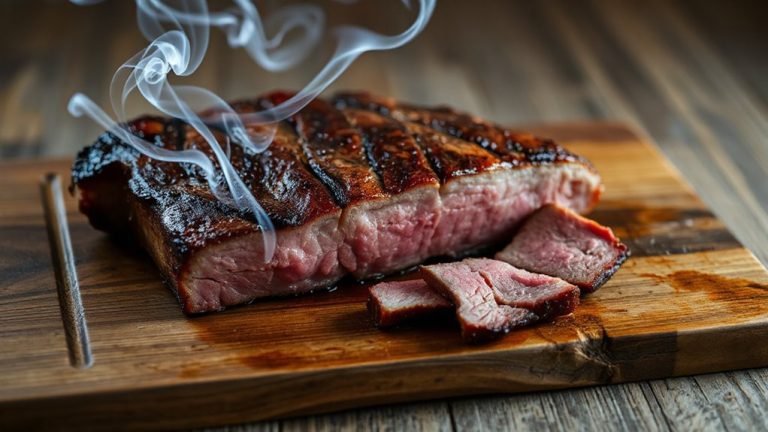
While you might think vent placement only affects airflow speed, it actually plays a critical role in how evenly and efficiently smoke circulates through your chamber. Positioning vents upwind forces smoke to travel deeper into the cooking area before exiting, increasing smoke density where it matters most. This isn’t just about flavor-it’s about consistency. You’ll notice richer color and better bark development on briskets and ribs when smoke lingers evenly. Upwind venting also supports superior heat retention by stabilizing airflow, preventing erratic temperature swings that disrupt long cooks. Unlike downwind setups that can create dead zones, a well-placed vent system maintains balanced pressure, pushing smoke through every corner. You’re not just venting excess heat-you’re directing flavor. For large smokers, this design consideration separates decent results from exceptional ones. With smart vent placement, you gain control over two of the most critical variables: smoke density and heat retention.
Avoid Bitter Smoke With Balanced Airflow
A well-balanced airflow system does more than regulate temperature-it’s essential for preventing the buildup of bitter, acrid smoke that can ruin even the most carefully seasoned meat. When your smoker’s vents are positioned correctly, you maintain ideal smoke density: thin, blue smoke that carries flavor without overwhelming. Too little airflow and the smoke thickens, turning white or gray, leading to soot and bitterness. Too much, and you lose heat retention, forcing longer cook times and uneven results. You want airflow that supports steady combustion-enough oxygen to burn cleanly, but not so much that you blow heat out. This balance guarantees consistent temperatures and clean flavor transfer. Skilled pitmasters adjust intake and exhaust vents to match external wind and fuel load, optimizing conditions throughout the cook. Proper airflow isn’t just about comfort-it’s foundational to quality barbecue.
Fix These Common Smoker Vent Mistakes
If you’ve ever pulled open your smoker only to find your brisket coated in harsh, lingering bitterness, chances are the culprits weren’t the rub or the wood-but the way you’re managing your vents. You might be restricting airflow too much, starving your heat source and causing incomplete combustion. That leads to thick, acrid smoke that ruins flavor. Your fuel type-whether wood, charcoal, or pellet-needs steady oxygen to burn cleanly. Another common mistake is placing intake and exhaust vents too close together, creating dead zones where smoke stagnates instead of circulating. Adjusting vent positioning upwind, as discussed, improves flow, but you’ve also got to match vent size to your heat source’s output. Larger smokers need proportionally larger vents to maintain consistent draft. Ignoring these details doesn’t just affect temperature control-it sabotages smoke quality. Fix these vent errors, and you’ll notice cleaner burns, even temps, and meat that tastes like smoke, not soot.
On a final note
You’ll get richer flavor by positioning your smoker’s vents upwind, where airflow carries smoke evenly through the chamber. Proper vent placement boosts heat retention and minimizes bitter compounds from stagnant, uneven combustion. Most pitmasters overlook how wind direction affects smoke density and flavor quality. Tuning your vents isn’t just about temperature-it’s about controlling smoke behavior. Master this, and your brisket, ribs, or pork shoulder will have deeper, cleaner smoke penetration every time.